In this mind-bending series, Professor Jim Al-Khalili explores the vast range of size in the universe, from tiny atoms to gigantic, interconnected galaxies. In the first episode, Jim will enter the world of objects that are too tiny to glimpse with the naked eye. Starting with the smallest insects, he moves on to encounter living cells with amazing superpowers and confronts some of humanity's deadliest enemies in the form of viruses. Going smaller still, he encounters wondrous new nanomaterials such as graphene, discovered by physicist Andre Geim. These are revolutionising engineering, medicine, computing, electronics and environmental science. Finally, Jim comes face to face with the fundamental building blocks of the world around us – atoms – and reveals why understanding the science of the 'small' is crucial to the future of humanity.
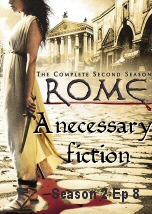
Octavian takes a new bride, Livia, and then introduces her to his family in a startling way... by having her witness the punishment he metes out to Atia and Octavia, for secretly defying the social constraints established through the facade of Octavia's marriage to Mark Antony. The vengeful Gaia carries out her plan to poison Eirene, which produces most dire consequences for Pullo, and no one else is the wiser. Meanwhile, Octavian, Antony, Maecenas, and their associates barely maintain their relationships of congenial contempt and hypocrisy, as everyone tries to figure out who has duped whom with the disappearance of the gold that was Herod's 'gift.'
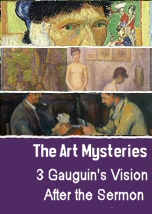
The Vision After the Sermon, also known as Jacob Wrestling with the Angel, is a painting full of symbolism and mystery. But what does Gauguin’s famous work have to do with a 17-year-old girl called Madeleine, with Victor Hugo’s Les Miserables, and with sumo wrestlers? Waldemar Januszczak reveals all as he investigates Gauguin’s epic religious painting about good and evil, temptation and desire.
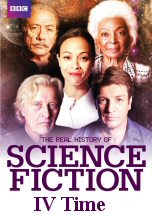
What if we could travel not just through space, but through time itself? If you could travel through time, would you change the past or the future? What if you found it couldn’t be changed? What price does the time traveller -- and the people they are closest to -- pay? This is a journey from H. G. Wells' The Time Machine through ideas like The Grandfather Paradox and The Butterfly Effect to the professional time traveller that is the ever popular Doctor Who. Steven Moffat, David Tennant, Karen Gillan, and Neil Gaiman offer a unique perspective on the Doctor. Edward James Olmos reveals the hidden meaning of the language he created for the vision of the future that is Blade Runner. Bob Gale and Christopher Lloyd take us behind the scenes of Back to the Future, while Ed Solomon describes the joy of solving a time travel conundrum for Bill & Ted’s Excellent Adventure. But what would be the physical and emotional cost to the time traveller? Audrey Niffenegger explains what inspired her novel The Time Traveller’s Wife. And what if someone from the future tried to travel back in time to warn us? Would we believe them? From the apocalyptic tones of 12 Monkeys to the drama of Quantum Leap and the comedy of Groundhog Day, time travel is a subject that has been irresistible to the creators of every type of science fiction.
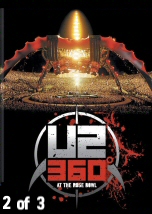
The tour was designed by Willie Williams, who has worked on every U2 tour since 1982. Williams had been toying with ideas for 360-degree stadium staging for U2 for a number of years, and presented sketches of a four-legged design to the group near the end of their Vertigo Tour in 2006. The inspiration for the 'spaceship-on-four-legs' design, nicknamed 'the Claw', came from the landmark Theme Building at Los Angeles International Airport.











In the first episode, Jim will enter the world of objects that are too tiny to glimpse with the naked eye. Starting with the smallest insects, he moves on to encounter living cells with amazing superpowers and confronts some of humanity's deadliest enemies in the form of viruses. Going smaller still, he encounters wondrous new nanomaterials such as graphene, discovered by physicist Andre Geim. These are revolutionising engineering, medicine, computing, electronics and environmental science. Finally, Jim comes face to face with the fundamental building blocks of the world around us – atoms – and reveals why understanding the science of the 'small' is crucial to the future of humanity.