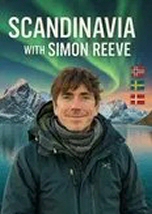
Journey through the awe-inspiring Nordic wilderness in a documentary that brings together all three episodes in a single feature-length video, unveiling the untamed beauty and surprising contrasts of northern Europe. From the icy remoteness of the Svalbard archipelago to the snowy vastness of Lapland and the tense frontier with Russia, the story unfolds across a dramatic landscape shaped by nature and history. Explore the fjords of Norway and the volcanic extremes of Iceland, before heading south to Sweden and Denmark, where behind the smiles and prosperity lie unexpected and shocking truths. This series offers not just breathtaking views, but deep insight into what makes these societies both fascinating and fragile.
Gaby Roslin and Amir Khan present a program in which they apply the latest science to some of the worst sleepers. They include an extreme snorer, a man who suffers from night terrors, a woman who has restless leg syndrome, and a man with chronic insomnia for 20 years. The film also shows a sleep deprivation experiment to test for risky behaviour, pain resistance and emotional control. When the subjects reach the final hours of the challenge, the experiment begins to take its toll as the participants' emotions go into overdrive, with one threatening to quit altogether.
The film explores how artificial intelligence (AI) is catching up to us in ways once thought to be uniquely human: empathy, emotional intelligence and creativity. AI has the potential to reshape every aspect of our world – but most of us are unaware of what looms on the horizon. This documentary shows viewers what they need to know about a field that is advancing at a dizzying pace, often away from the public eye. Have AI the power to disconnect us from fellow humans? What does it mean when AI makes art? Can really AI interpret and understand human emotions? How is it possible that AI creates sophisticated neural networks that mimic the human brain? The documentary includes interviews with global leaders, commentators and innovators from the AI field, including Geoff Hinton, Yoshua Bengio, Ray Kurzweil and Douglas Coupland, who highlight some of the innovative and cutting-edge AI technologies that are changing our world.
A powerful movement is exploiting our fears, persuading some to believe the vaccine was designed to control or even kill us. Who are the people behind the international anti-Covid-vaccine movement and why are they doing it? In the anti-vax movement - where is the money? The money comes from a small but very well-heeled network of donors and philanthropists who fund anybody reinforcing their opinions. The film is a journey inside the astonishing world of the anti-vaxxers.
When Homo sapiens, which means 'wise ones,' discovered and controlled fire hundreds of thousands of years ago, everything changed. Fire allowed us to cook food and heat dwellings, and it served as a focal point for storytelling and sharing cultural identity among community members. We don't yet have established parameters for what it means to be 'distinctly human,' It would seem the only thing that separates us from other animals, Neil deGrasse Tyson ponders, is our neurotic need to feel 'special'. Against the backdrop of the Halls of Extinction, Tyson insists that there must be a clear distinction between ourselves and animals that justifies our eating them, wearing them and even bringing an end to their species. From the birth of the devil in ancient Persia to a searing story of saintliness among macaque monkeys, this episode is an exploration of human potential for change. It concludes with the story of how one of history's greatest monsters was transformed into one of its shining lights.
Two and a half thousand years ago, the Greek philosopher Socrates worried that the wide use of writing would have a negative impact on people's minds. He said that writing would create forgetfulness, because people will not use their memories. They would trust the external written characters and not remember themselves. In a world with an ever-growing tech industry, Michael Stevens tries to find out what effect technology has on our brains. He finds Technology isn't just changing our lives, it's changing our brains. In his experiments he tests what just 10 days of gaming does to things like our spatial memory.
















This series offers not just breathtaking views, but deep insight into what makes these societies both fascinating and fragile.