








Last Watched

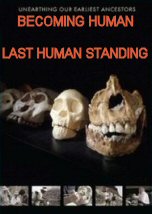
Last Human Standing

   2010    History
xamines the fate of the Neanderthals, our European cousins who died out as modern humans spread from Africa into Europe during the Ice Age. Did modern humans interbreed with Neanderthals or exterminate them? The program explores crucial evidence from the recent decoding of the Neanderthal genome. How did modern humans take over the world? New evidence suggests that they left Africa and colonized the rest of the globe far earlier, and for different reasons, than previously thought. As for Homo sapiens, we have planet Earth to ourselves today, but that's a very recent and unusual situation. For millions of years, many kinds of hominids co-existed. At one time Homo sapiens shared the planet with Neanderthals, Homo erectus, and the mysterious "Hobbits"–three-foot-high humans who thrived on the Indonesian island of Flores until as recently as 12,000 years ago. "Last Human Standing" examines why "we" survived while those other ancestral cousins died out. And it explores the provocative question: In what ways are we still evolving today?
Series: Becoming Human

Exploit

   2016    Technology
The digital era gives rise to unprecedented opportunity to exploit, and be exploited. Troves of child pornography are available at the click of a mouse. Who are these children - and who profits from their abuse? While facilitating the darker side of our impulses, technology is also being touted as a cure to rehabilitate predators. In this episode meet the children who are forced to perform sex acts on camera; people who use the same technology to protect kids and nab the perpetrators; plus, a pedophile who reveals the roots of his addiction.
Series: Dark Net

Your Brain on Tech

   2018    Technology
Two and a half thousand years ago, the Greek philosopher Socrates worried that the wide use of writing would have a negative impact on people's minds. He said that writing would create forgetfulness, because people will not use their memories. They would trust the external written characters and not remember themselves. In a world with an ever-growing tech industry, Michael Stevens tries to find out what effect technology has on our brains. He finds Technology isn't just changing our lives, it's changing our brains. In his experiments he tests what just 10 days of gaming does to things like our spatial memory.
Series: Mind Field Season 2

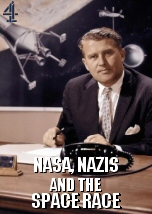
NASA, Nazis and the space race

   2025    History
Against the backdrop of Cold War tensions and a global race for supremacy, this riveting film unveils a deeply unsettling chapter in space history. It reveals how the triumph of the 1969 Moon landing was made possible through the morally contentious recruitment of former Nazi scientists—most notably Wernher von Braun—who had engineered Germany’s V‑2 rockets during World War II through Operation Paperclip. As America navigated the ethical maze of enlisting men with dark pasts, these scientists became pivotal in crafting the mighty Saturn V rocket and ushering in the age of space exploration. This documentary invites viewers to confront the unspoken complexity behind progress: the collision of ambition, conscience, and the weight of history.

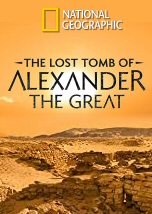
The Lost Tomb of Alexander the Great

   2019    History
The disappearance and fate of the tomb of Alexander the Great in Alexandria is among the most momentous and tantalising of all the mysteries we have inherited from the ancient world. Generations of scholars and historians have succumbed to the allure of the quest.
Now archaeologist Pepi Papakosta is on a mission to find Alexander the Great's lost tomb. Excavating in a public garden in the center of Alexandria, Egypt, the city he founded 2,300 years ago, she has discovered a rare marble statue of Alexander, Greek treasures and secret tunnels. But Pepi's biggest find is an extraordinary discovery even she was not expecting.

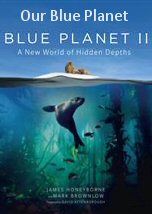
Our Blue Planet

   2017    Nature
Blue Planet II explores parts of the ocean that nobody has ever visited, encountered extraordinary animals, and discovered new insights into life beneath the waves. In Our Blue Planet, Sir David Attenborough examines the impact of human life on life in the ocean. In this final episode, we uncover the impact that our modern lives are having on our best-loved characters from across the series, including devoted albatross parents unwittingly feeding their chicks discarded plastic and mother dolphins potentially exposing their new born calves to pollutants through their contaminated milk. Scientists have even discovered that increasing noise levels may stop baby clownfish finding their way home.
Series: Blue Planet II
Cooked

Cooked

2016  Culture
Through the Wormhole

Through the Wormhole

2011  Science
Monsters of God

Monsters of God

2026  Culture
The Human Body

The Human Body

1998  Medicine
Leaving Neverland

Leaving Neverland

2019  Culture
Terror on the Space Station

Terror on the Space Station

2025  Technology
Meet the Romans

Meet the Romans

2012  History
Tyson

Tyson

2026  History