





Last Watched

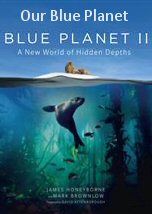
Our Blue Planet

   2017    Nature
Blue Planet II explores parts of the ocean that nobody has ever visited, encountered extraordinary animals, and discovered new insights into life beneath the waves. In Our Blue Planet, Sir David Attenborough examines the impact of human life on life in the ocean. In this final episode, we uncover the impact that our modern lives are having on our best-loved characters from across the series, including devoted albatross parents unwittingly feeding their chicks discarded plastic and mother dolphins potentially exposing their new born calves to pollutants through their contaminated milk. Scientists have even discovered that increasing noise levels may stop baby clownfish finding their way home.
Series: Blue Planet II
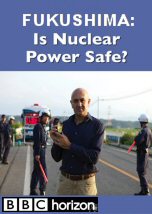

Fukushima Is Nuclear Power Safe

   2011    Technology
Professor Jim Al-Khalili sets out to discover whether nuclear power is safe. He begins in Japan, at the former Fukushima nuclear plant, where he meets some of the tens of thousands of people who have been evacuated from the exclusion zone. He travels to an abandoned village just outside the zone to witness a nuclear clean-up operation. Jim draws on the latest scientific findings from Japan and from the previous explosion at Chernobyl to understand how dangerous the release of radiation is likely to be and what that means for our trust in nuclear power.

Medina Azahara: The Lost Pearl of al-Andalus

   2022    History    HD
Madinat al-Zahra was given its Arabic name, which means "The Shining City," by the 10th century caliph Abd al-Rahman III, who had it built. Nicknamed the "Versailles of Andalusia", Medina Azahara, located in Cordoba, Spain, is today one of the most important Islamic archaeological sites. This unique capital city, built four centuries before the Alhambra in the mid-10th century, is the object of a new excavation campaign.
Five years ago, a team of European archaeologists began a new excavation project at this World Heritage site. For over 100 years, excavations here have concentrated inside the Caliph's palace. This new excavation project is focused outside the palace walls, in areas of the city never before studied. A massive new building came to light, its function unknown. Beyond the mystery of this building, the very location of this city is an enigma in itself. Why was a Muslim city of such importance built in a then primarily Christian area? The site is a complete urban complex including infrastructure, buildings, decoration, and objects of daily use. By following this mission and revealing the mysteries of this lost city, this film traces the history of the golden age of al-Andalus.

The Hacker Wars

   2014    Technology
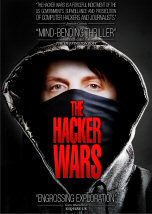
Ripped from international headlines, The Hacker Wars takes you to the front lines of the high-stakes battle over the fate of the Internet, freedom and privacy". Get ready to be shuttled between story lines at lightning speed mirroring the disjointed lives of the protagonists and life on the Internet. The Hacker Wars- a film about the targeting of (h)ac(k)tivists and journalists by the US government. Hacktivists are either terrorists or freedom fighters depending on ones perspective on who should control information. Meet weev, infamous hacker; Barrett Brown, journalist and propagandist for the hacktivist collective, Anonymous; and Jeremy Hammond, aka Anarchaos, number one on the FBI's cyber-criminal list. The fourth character is Sabu, the uber-hacker turned FBI informant who ran the FBI's cyber unit for 9 months and is responsible for many arrests. He is the shadowy protagonist in a high-stakes game of espionage and betrayal in the age of the Internet. Barrett Brown, American journalist, is facing 105 years in prison for publicizing information revealed through Jeremy Hammond's epic hacks. Hammond himself has just begun a 10-year prison term. Andrew Auernheimer, known by his hacker handle weev embarrasses large corporations. He was sentenced to 41 months for hacking AT&T, but his conviction was just overturned. He vows to continue doing what landed him in prison in the first place. These hacktivists are the rock stars of the Internetmodern-day folk heroes. Glenn Greenwald (Snowdon Leaks), Pulitzer Prize-winning journalist and others explain why these anti-heroes exposing the security surveillance state are essential to a functioning democracy.

Space: How Far Can We Go

   2021    Technology
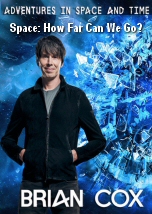
Professor Brian Cox tackles some of the most challenging and intriguing questions facing science. He looks back on a decade of discovery and towards the next space frontier.
Brian believes we are at the start of a new age of space travel, where space flight is on the verge of becoming routine. In this episode, he explores the latest science and takes a new look at his old films and asks: how far can we go in our exploration of the cosmos?
Series: Brian Cox Adventures in Space and Time

Super Telescope: Mission to the Edge of the Universe

   2022    Technology
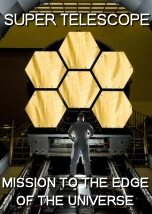
As NASA releases the first images from the James Webb Space Telescope, this film tells the inside story of the telescope's construction and the astronomers taking its first picture of distant stars and galaxies. Will it be the deepest image of our universe ever taken? The successor to Hubble, and 100 times more powerful, the James Webb is the most technically advanced telescope ever built. It will look further back in time than Hubble to an era around 200 million years after the Big Bang, when the first stars and galaxies appeared. Webb's primary mission is to capture the faint light from these objects on the edge of our visible universe so that scientists can learn how they formed, but its instruments are so sensitive it could also be the first telescope to detect signs of life on a distant planet.
The James Webb Telescope is an £8 billion gamble on the skills of its engineering team. It’s the first telescope designed to unfold in space – a complicated two-week operation in which 178 release devices must all work - 107 of them on the telescope's sun shield alone. If just one fails, the expensive telescope could become a giant piece of space junk.
From its conception in the late 1980s, the construction of Webb has posed a huge technical challenge. The team must build a mirror six times larger than Hubble’s and construct a vast sun shield the size of a tennis court, fold them up so they fit into an Ariane 5 rocket, then find a way to unfold them in space. This film tells the inside story of the James Webb Space Telescope in the words of the engineers who built it and the astronomers who will use it.