The last episode examines the fragile interdependence that exists between forests' wide variety of residents, including bald eagles, hunting dogs and Siberian tigers. Over half of all the world's trees, evergreen and deciduous, stand in great assemblies. For many of us, they are places of mystery and darkness. They are key to our climate, and home to countless unique species. The boreal forest contains 750 billion trees, and it stores over 40 percent of the world's carbon, making it a vital element in the fight against climate change. In the past, we have destroyed them without hesitation. Yet, forests do have an astonishing ability to recover. If we choose to give forests time and space, they could reclothe the earth with much of the rich and varied communities of animals and plants of which we have, so recently, robbed it. A future with more forests is key to the resilience of our planet.
A new force threatens our perfect planet. In the past, five mass extinction events were caused by cataclysmic volcanic eruptions. It was not the lava or ash that wiped out life, but an invisible gas released by volcanoes: carbon dioxide. Almost every part of modern life depends on energy created by burning fossil fuels, and this produces CO2 in huge amounts. Humans are changing our planet so rapidly, it’s affecting earth’s life support systems: our weather, our oceans and the living world. The greatest change to be made is in how we create energy, and the planet is brimming with natural power that can help us do just that. It’s these forces of nature - the wind, the sun, waves and geothermal energy - that hold the key to our future. Through compelling animal-led stories and expert interviews, we discover how CO2 is destabilising our planet. We meet rescued orphaned elephants in Kenya, victims of ever worsening droughts, and join ocean patrols off the coast of Gabon fighting to save endangered sharks. In the Amazon, we witness wildlife teams saving animals in the shrinking forests, and in San Diego we enter a cryogenic zoo preserving the DNA of endangered species before they become extinct.
At the very end of East Africa's Great Rift Valley, there's a 'land that time forgot'--the rolling grasslands of the Luangwa Valley. Seemingly untouched plains teem with Africa's most iconic animals. Some are unique to this place, others are critically endangered elsewhere. Here, prey exist in remarkable balance, each taking advantage of the secret at the heart of this Eden, the mighty Luangwa River and its dramatic annual transformation from dusty inferno to emerald paradise.
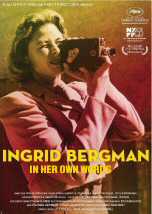
(Click CC for subtitles) Whether headlining films in Sweden, Italy, or Hollywood, Ingrid Bergman always pierced the screen with a singular soulfulness. Seven time Academy Award-nominee and three time Academy Award-winner Bergman was one of the most talented actresses of Hollywood's Golden Age with great performances in films such as Casablanca (1942), Gaslight (1944) and and Autumn Sonata (1978). In spring 2011, director Stig Björkman meets Ingrid Bergman's daughter Isabella Rossellini and she suggests him to 'make a film about Mama'. Through Isabella, Stig is able to tell Ingrid's story through her own words and images. With never-before-seen private footage, notes, letters, diaries and interviews with her children, this documentary presents a personal portrait and captivating look behind the scenes of the remarkable life of a young Swedish girl who became one of the most celebrated actresses of American and World cinema.
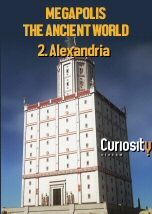
Feast your eyes on a reconstruction of the mega-city and its amazing buildings. Alexandria, built in the middle of rancid marshland, had become in less than a century, the greatest city of the Mediterranean. An ideal position at the crossroads of east and west, and one that brought her great riches. Huge, modern, gleaming white and cosmopolitan, like no other in antiquity, it created its own identity. While the beauty of its planning, its great arteries, its temples and its ports would be equalled only by its openness to the rest of the world. And the monumental achievements of its sovereigns, still shrouded in mystery, we'll never cease to fire our imagination for millennia to come.
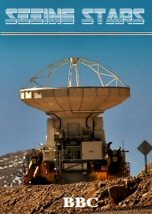
Around the world, a new generation of astronomers are hunting for the most mysterious objects in the universe. Young stars, black holes, even other forms of life. They have created a dazzling new set of super-telescopes that promise to rewrite the story of the heavens. This film follows the men and women who are pushing the limits of science and engineering in some of the most extreme environments on earth. But most strikingly of all, no-one really knows what they will find out there.









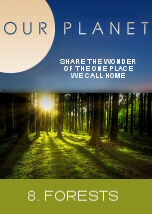






Over half of all the world's trees, evergreen and deciduous, stand in great assemblies. For many of us, they are places of mystery and darkness. They are key to our climate, and home to countless unique species. The boreal forest contains 750 billion trees, and it stores over 40 percent of the world's carbon, making it a vital element in the fight against climate change. In the past, we have destroyed them without hesitation. Yet, forests do have an astonishing ability to recover. If we choose to give forests time and space, they could reclothe the earth with much of the rich and varied communities of animals and plants of which we have, so recently, robbed it. A future with more forests is key to the resilience of our planet.