The centre of our galaxy is home to an invisible monster of unimaginable power – a supermassive black hole named Sagittarius A star, with four million times the mass of the Sun. Recent astronomical breakthroughs have confirmed not only that black holes like Sagittarius A star exist, but that these bizarre invisible objects may be the ultimate galactic protagonists. Stunning CGI takes us back to witness the fiery origins of our galaxy’s black hole 13.6 billion years ago, when the early universe was home to colossal blue stars, and when they ran out of fuel, they collapsed under their own enormous mass, crushing down into an object so small and so dense it punched a hole in the fabric of the universe. Over billions of years, Sagittarius A star feasted on nearby gas, stars, and through cataclysmic mergers with other black holes. A breakthrough discovery by Nasa’s Fermi gamma-ray telescope has shown that our black hole had the power to sculpt the entire galaxy, creating vast bubbles of gas above and below our galaxy and even protecting stars systems as ours. In a mind-bending conclusion, Brian Cox reveals how our modern understanding of black holes is challenging our concepts of reality to the breaking point. In trying to understand the fate of objects that fall into Sagittarius A star, scientists have come to a stunning conclusion: space and time, concepts so foundational to how we experience the world around us, are not as fundamental as we once thought.
An unflinching investigation into the chilling disappearances of vulnerable women whose lives were cut short along the desolate stretches of Long Island. When a desperate search for a missing woman unveils a hidden graveyard, detectives uncover a sinister pattern of violence and secrecy. As corruption within law enforcement threatens to derail justice, years of frustration and unanswered questions finally culminate in a long-awaited breakthrough that exposes even darker truths. We present all three episodes of this riveting series together—immerse yourself in the complete story from start to finish in one unforgettable experience.
Explore the science of attraction, the evolution of reproductive health, and the cultural taboos that shape our most private experiences. This illuminating series unpacks how desire begins in the brain, how birth control has transformed society, and why sex remains one of humanity’s most captivating mysteries. The first three episodes reveal how most sexual fantasies can be traced back to just a few provocative themes, and delve into the surprising science behind why we’re irresistibly drawn to certain types of partners. You’ll also discover the hidden factors that spark desire, and follow the long, often frustrating quest to control reproduction—from ancient herbal remedies to modern pills and IUDs—and why birth control remains such a complicated challenge even today.
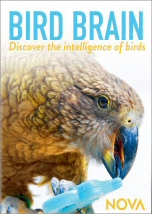
In the past few decades, scientists have learned that the basis of everything they thought they knew about bird brains—that they were largely comprised of the most primitive and instinctual of brain structures—was wrong. Fully 75 percent of the brains of parrots and thousands of other species of birds is actually made up of a sophisticated information processing system that works much the same way as the locus of human higher-mindedness, the cerebral cortex. The film shows scientists putting birds to the test. Can they solve problems? Can they cooperate? Do they feel emotion? New research demonstrates just how clever they can be.
A third of the population regularly struggle with our sleep, which rose to one in two during the pandemic - the highest it's ever been. However, as more and more people seek help, an explosion in sleep science is enabling the study of sleep in ways not possible before. What's more, recent breakthroughs are uncovering what's happening in our brains and bodies while we're asleep, getting us closer than ever to understanding the importance of sleep for our health. Michael Mosley shows why cutting our sleep short can be linked to a host of illnesses, including serious diseases like Alzheimer's. Revealing the very latest science breakthroughs and packed with personal anecdotes, this programme is a useful guide to anyone looking for tips and insights on how to get the benefits from learning how to sleep well.
The disappearance and fate of the tomb of Alexander the Great in Alexandria is among the most momentous and tantalising of all the mysteries we have inherited from the ancient world. Generations of scholars and historians have succumbed to the allure of the quest. Now archaeologist Pepi Papakosta is on a mission to find Alexander the Great's lost tomb. Excavating in a public garden in the center of Alexandria, Egypt, the city he founded 2,300 years ago, she has discovered a rare marble statue of Alexander, Greek treasures and secret tunnels. But Pepi's biggest find is an extraordinary discovery even she was not expecting.









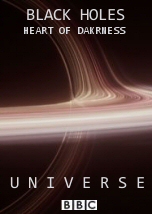



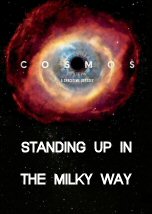



Stunning CGI takes us back to witness the fiery origins of our galaxy’s black hole 13.6 billion years ago, when the early universe was home to colossal blue stars, and when they ran out of fuel, they collapsed under their own enormous mass, crushing down into an object so small and so dense it punched a hole in the fabric of the universe. Over billions of years, Sagittarius A star feasted on nearby gas, stars, and through cataclysmic mergers with other black holes. A breakthrough discovery by Nasa’s Fermi gamma-ray telescope has shown that our black hole had the power to sculpt the entire galaxy, creating vast bubbles of gas above and below our galaxy and even protecting stars systems as ours.
In a mind-bending conclusion, Brian Cox reveals how our modern understanding of black holes is challenging our concepts of reality to the breaking point. In trying to understand the fate of objects that fall into Sagittarius A star, scientists have come to a stunning conclusion: space and time, concepts so foundational to how we experience the world around us, are not as fundamental as we once thought.