
Last Watched

"Diet"  Sort by

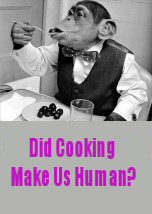
Did Cooking Make Us Human

   2010    Culture
We are the only species on earth that cooks its food - and we are also the cleverest species on the planet. The question is: do we cook because we're clever and imaginative, or are we clever and imaginative because our ancestors discovered cooking? Horizon examines the evidence that our ancestors' changing diet and their mastery of fire prompted anatomical and neurological changes that resulted in taking us out of the trees and into the kitchen.
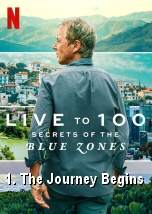
The Journey Begins

   2023    Medicine    HD
Most people hope they'll live a long, healthy, and happy life, but few are able to travel the world in an attempt to reverse-engineer the formula for longevity. That's exactly what Dan Buettner did: Beginning in the early aughts, Buettner collaborated with National Geographic, scouring the globe in pursuit of places where people live much longer than average, and thus, the concept of 'Blue Zones' came to be.
In the first episode, how can people live so long and with such great health? A trip to Okinawa reveals simple secrets about diet, lifestyle and longevity. They maintain a sense of purpose no matter what age and you won't find them laying on the sofa.
Series: Live to 100: Secrets of the Blue Zones

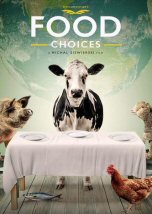
Food Choices

   2016    Medicine
Filmmaker Michal Siewierski explores the impact that food choice has on people's health, the health of our planet and on the lives of other species sharing our world. It looks at many misconceptions about food and diet, offering a new view on these issues. The film interviews world-renowned experts, including Dr. T Colin Campbell, Dr. Richard Oppenlander, Rich Roll, Joe Cross, Dr. John McDougall, Capitan Paul Watson, Dr. Toni Bark, Dr. Pam Popper, Dr. Michael Greger, Gloria Athanis, and several others. This film will certainly change the way you look at the food on your plate.

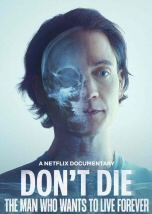
Dont Die: The Man Who Wants to Live Forever

   2025    Medicine    HD
This compelling documentary delves into the life of Bryan Johnson, a wealthy entrepreneur determined to defy aging and achieve immortality. The film provides intimate access to Johnson's extreme wellness practices, including his $2 million annual investment in Project Blueprint, which encompasses over 100 daily supplements, strict dietary regimens, and experimental treatments like multi-generational plasma exchanges and gene therapy.
The film not only showcases Johnson's relentless pursuit of youth but also examines the profound impact of his quest on his personal relationships and the ethical dilemmas surrounding radical life-extension efforts. Through expert interviews and candid footage, viewers are invited to contemplate the lengths one might go to challenge the natural aging process and the societal implications of such endeavors. Discover how magnate Bryan Johnson risks his body and fortune to defy aging and extend his life to unknown limits.

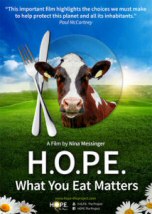
H.O.P.E. What You Eat Matters

   2018    Culture
Half of the population in Western society suffers from being overweight. Cardio-vascular diseases, diabetes and cancer are epidemic. Our meat consumption has quintupled over the past 50 years. 65 billion land animals are being slaughtered every year for food consumption. One third of the global grain production is fed to animals for fattening while 1.8 billion people worldwide suffer from hunger and starvation. Can there really be a solution to all these problems?
H.O.P.E. is a life-changing documentary uncovering and revealing the effects of our typical Western diet high in animal-based foods. It contrasts the limited interests of the pharmaceutical and agricultural industry with the all-encompassing interests of living beings on this planet and with the power of responsible consumer action. H.O.P.E. is an urgent call to action to all of us to commit to a change towards sustainability and safeguarding our living environment.

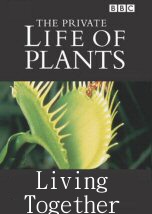
The Private Life of Plants Living Together

   1995    Nature
The fifth programme explores the alliances formed between the animal and plant worlds. Attenborough dives into Australia's Great Barrier Reef and contrasts the nocturnal feeding of coral, on microscopic creatures, with its daytime diet of algae. Some acacias are protected by ants, which will defend their refuge from any predator. Besides accommodation, the guards are rewarded with nectar and, from certain species, protein for their larvae as well. Fungi feed on plants but can also provide essential nutriment to saplings (Mycorrhiza). The connection is never broken throughout a tree's life and a quarter of the sugars and starches produced in its leaves is channelled back to its fungal partners. Meanwhile, fungi that feed on dead wood leave a hollow trunk, which also benefits the tree. Orchids enjoy a similar affiliation. Lichens are the product of a relationship between fungi and a photosynthetic associate, usually algae. They are extremely slow-growing, and a graveyard is the perfect location to discover their exact longevity. Mistletoe is a hemiparasite that obtains its moisture from a host tree, while using own leaves to manufacture food. Its seeds are deposited on another by the mistletoe tyrannulet, following digestion of the fruit. The dodder (Cuscuta) is also parasitic, generally favouring nettles, and siphons its nourishment through periodic 'plugs' along its stem. The rafflesia has no stem or leaves and only emerges from its host in order to bloom — and it produces the largest single flower: one metre across.
Series: The Private Life of Plants
Rise of Empires: Ottoman

Rise of Empires: Ottoman

2020  History
Reel Rock

Reel Rock

2015  Culture
Big Oil vs The World

Big Oil vs The World

2022  Nature
Through the Wormhole

Through the Wormhole

2011  Science
The Gene Code

The Gene Code

2011  Science
Empire of the Tsars

Empire of the Tsars

2017  History