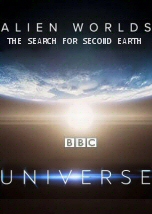
Humans have long gazed up at the night sky, wondering whether other lifeforms and intelligences could be thriving on worlds far beyond our own. But over the last few decades, ultra-sensitive telescopes and dogged detective work have transformed alien planet-hunting from science fiction into hard fact. We expected to find worlds similar to the planets in our own solar system, but we instead discovered a riot of exotic worlds. Vivid animation based on data from the most successful planet hunter of them all, the Kepler space telescope, brings these worlds into view: puffy planets with the density of polystyrene, unstable worlds orbiting two suns and 1,000-degree, broiling gas giants with skies whipped into titanic winds. But perhaps the most startling discovery was the number of worlds that may be contenders for a second Earth, at the right distance from their sun to have that ingredient so crucial for life as we know it, liquid water. Amongst them, we witness the most tantalizing discovery of all: a so-called ‘super-Earth’, situated in the Goldilocks zone - the area just the right distance from a sun to potentially support life - and with the faint signal of water in its atmosphere.
In episode 3, Artemis arrives on the exoplanet Minerva B, but will she find evidence of life? This is a vision of our future, the fateful day in a far-flung corner of the universe, when a probe from Earth initiates the first descent onto an alien world, looking for proof of life beyond our solar system. There are no witnesses, no cheering crowds in the control room. A decade or more will pass before news finally reaches us, back across the dark oceans of space. But the seeds of this mission are already being sowed today by the first generation of scientists bold enough to believe it could be possible.
In August 1977, the Big Ear Radio-telescope in Ohio received a strange signal from the Sagittarius constellation while searching for intelligent extra-terrestrial life. It had a duration of 72 seconds and an intensity 30 times higher than usual. Named the Wow signal, it is still being considered as one of the best examples of having being sent by intelligent extraterrestrial life. But, nothing has revolutionised the search of extra-terrestrial intelligent life as much as the recent discovery by the Kepler Satellite, of thousands of Earth-like planets where life could be possible. Join the debate with this stunning documentary, as we ask Is Anybody Out There?
Minerva B is a small rocky planet just like earth, where spacecraft Artemis has found water, organic molecules, and complex creatures. Is there something more to find? 'I am the mind of the spaceship, alone among the stars. 50 years ago, from a planet far away, the planet you call home, I launched. A journey of 28 trillion miles across the yawning time of space to the exoplanet, Minerva B: a small, rocky planet, much like Earth, but orbiting another sun. Here, I have found water, organic molecules, and microorganisms. When the news of my discovery reaches Earth years from now, some of you will be amazed. But others will remain unsatisfied, and you will ask, have I not found animals or birds? Have I not met intelligent life like us? And so, my search continues. I will find life of marvellous complexity, and the traces of a devastating loss.'
Once they were dreaded and thought to be dragons eating the sun--but modern science has dispelled mythology and we now look forward to total Solar Eclipses as one of the most spectacular phenomena in the heavens. Explore the complex movements of Earth, Moon and Sun that produce these unusual events and hear details why we may be the only intelligent beings in the known Universe to witness eclipses like we see on Earth. Man-made eclipses also figure into the science in the form of instruments called "coronagraphs." They blot out the sun and reveal its corona, uncovering secrets which, while enlightening, also warn of a disaster that could make our advanced technology crash and burn. Finally, travel into deep space, where the tiny eclipses caused by planets circling distant stars is now beginning to reveal hundreds more stars where "exoplanets" exist... perhaps even those in habitable zones like the Earth.
20 years ago, two astronomers made a remarkable discovery, one which would change the way we view the universe for ever. A planet outside our solar system, orbiting a distant star - an exoplanet. Since then, we have found worlds where it rains diamonds, ones that boil at 3,000 degrees centigrade
and even a world with four suns in its sky. But the big question is -
will we ever find another Earth? As we close in on the discovery of the 2,000th planet outside our solar system, or exoplanet, we investigates the techniques that are revealing so much about these alien worlds. The documentary asks if we are really any closer to finding another world like our own - a second Earth.






















But perhaps the most startling discovery was the number of worlds that may be contenders for a second Earth, at the right distance from their sun to have that ingredient so crucial for life as we know it, liquid water. Amongst them, we witness the most tantalizing discovery of all: a so-called ‘super-Earth’, situated in the Goldilocks zone - the area just the right distance from a sun to potentially support life - and with the faint signal of water in its atmosphere.