Starring globally renowned figures and the world's leading scientists, 'Eating Our Way To Extinction' will take you on a journey - A powerful cinematic feature documentary that opens the lid on the elephant in the room no one wants to talk about: Unsustainable beef cattle production leads to deforestation, increased pollution and plundering of resources. Alarming and entertaining, this compelling film will make you never look at your food or the food industry in the same way again. We cannot deny the destruction of our planet any longer. The damage is clear and we have nowhere else to go! It is time to face the truth, however uncomfortable that may be – we are on borrowed time. But every day we have the power to make great food choices for our planet, palate and person.
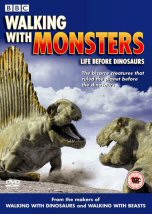
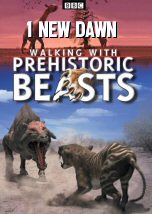
The series takes place after the extinction of the dinosaurs 65 million years ago and recreates animals of the Cenozoic with computer-generated imagery and animatronics. The first episode starts 49 million years ago, when Earth has fully recovered from the dinosaur extinction and is covered in a mysterious forest. This is a time that the world has almost forgotten - Germany was a hot sweaty jungle, birds ruled the earth and preyed on miniature horses and whales walked on land.
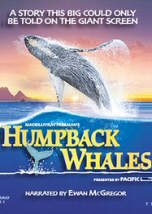
Narrated by Ewan McGregor, Humpback Whales is an extraordinary journey into the mysterious world of one of nature's most awe-inspiring marine mammals. Set in the spectacular waters of Alaska, Hawaii and the remote islands of Tonga, this ocean adventure offers audiences an up-close look at how these whales communicate, sing, feed, play and take care of their young. Humpbacks were nearly driven to extinction 50 years ago, but today are making a slow but remarkable recovery. Join a team of researchers as they unlock the secrets of the humpback and find out why humpbacks are the most acrobatic of all whales, why they sing their haunting songs, and why these intelligent 55-foot, 50-ton animals migrate up to 10,000 miles round-trip every year.
The risk of human extinction has never been higher. Recent years have seen a global pandemic, a renewed nuclear threat and runaway climate change. New research predicts a 1 in 6 chance that life as we know it won't make it to the end of this century. This compelling science documentary looks at the greatest risks to humanity and what we can do about it. Are we all doomed?
Earth may seem like the most hospitable planet in the solar system. But look again. Startling new discoveries reveal the blue planet has been plagued by more chaos and destruction than scientists once imagined. Stand on the Earth billions of years ago as a primitive planet called Theia slams into it. Shiver as our entire globe is frozen over like a gigantic snowball. Feel the heat as mammoth volcanoes scorch the landscape and darken the sky. From a cosmic gamma ray burst frying away the ozone layer to an Everest-size asteroid slamming into the ocean, we'll reveal new information about how these unparalleled events drove life to the brink of total extinction. Out of this continuous devastation, how has our planet--and life--got to where it is today? Are the worst days behind us--or lurking in the distant future?
The first episode looks at how birds first took to the skies in the wake of the insects. It begins in Mexico, where Sir Attenborough observes bats being outmanoeuvred by a red-tailed hawk. Pterosaurs were the birds' forerunners, some 150 million years after dragonflies developed the means of flight, but eventually went extinct together with the dinosaurs. Birds had by then already evolved from early forms like archaeopteryx, the first creature to possess feathers. Its ancestry can be traced through reptiles, and some current species, such as the flying lizard, possibly show paths this evolution may have taken." One of the biggest birds to have ever existed was the terror bird, which proliferated after dinosaurs vanished and stood up to 2.5 metres tall. By comparison, the ostrich, while not closely related, is the largest and heaviest living bird. It was probably the evasion of predators that drove most birds into the air, so their flightless cousins evolved because they had few enemies. Accordingly, such species are more likely to be found on islands, and Sir Attenborough visits New Zealand to observe its great variety, most especially the kiwi. Also depicted is the moa, another huge creature that is now gone. The takahē is extremely rare, and high in the mountains of New Zealand, Sir Attenborough discovers one from a population of only 40 pairs. Finally, another example on the brink of extinction is the kakapo, which at one point numbered only 61 individuals. A male is heard calling — an immensely amplified deep note that can be heard at great distances from its nest.








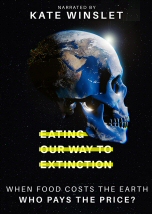




We cannot deny the destruction of our planet any longer. The damage is clear and we have nowhere else to go! It is time to face the truth, however uncomfortable that may be – we are on borrowed time. But every day we have the power to make great food choices for our planet, palate and person.