Now in HD and with a new 3D version. In May 2009, NASA astronauts embark on a mission to perform maintenance and repairs to the Hubble Space Telescope. As they go about their tasks, danger and beauty are never far away. The nature of space indicates that even the simplest routine can go fatally awry, while amazing photographs taken by the telescope celebrate the wonder of Earth's celestial surroundings. An IMAX 3D camera chronicled the effort of 7 astronauts aboard the Space Shuttle Atlantis to repair the Hubble Space Telescope.
The final episode of the series ponders the fate of planet Earth. Neil deGrasse Tyson opens with a reflection on science and those who help us understand it: 'We all feel the weight of the shadows on our future, but in another time, every bit as ominous as our own, there were those who could see a way through the darkness to find a star to steer by.' The young Carl Sagan and Neil Tyson first discovered their passion for science at the NY World's Fairs of the past. We visit the dazzling Pavilions of the 2039 NY World's Fair, where problems we currently think intractable have been plausibly solved through public commitment and scientific imagination. And our baby is a woman now, with a baby of her own and a future bright with possibilities.
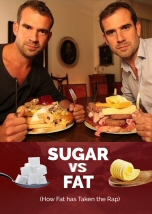
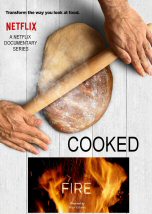
What's worse for us: sugar or fat? To answer the hottest question in nutrition, twin doctors Chris and Xand Van Tulleken go on month-long high-fat and high-sugar diets. The effects on their bodies are shocking and surprising. But they also discover that in the debate about fat and sugar, the real enemy might have been hiding in plain sight.
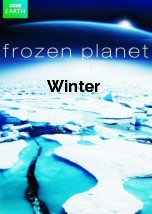
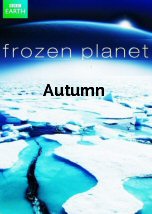
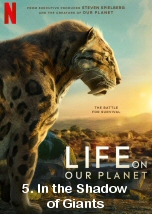
For the animals in the polar regions, autumn means dramatic battles and epic journeys. Time is running out - the Arctic Ocean is freezing over and the sea ice is advancing at 2.5 miles per day around Antarctica. Polar bears gather in large numbers on the Arctic coast as they wait for the return of the ice. Soon, tempers fray and violent sparring contests break out. Meanwhile 2,000 beluga whales head for one special estuary, a gigantic 'whale spa' where they will thrash their snow-white bodies against the gravel and exfoliate. Inland, the tundra undergoes a dramatic transformation from green to fiery red. Here, musk ox males slam head-first into each other with the force of a 30mph car crash as they struggle to defend their harems. Frisky young caribou males play a game of 'grandma's footsteps' as they try to steal the boss's female. Down in Antarctica, Adelie penguin chicks huddle together in creches. When a parent returns from fishing, it leads its twins on a comical steeplechase - sadly there's only enough for one, so the winner gets the meal. Two months later and the chicks are fully feathered apart from downy Mohican hairdos - they're ready to take their first swim - reluctantly though, as it seems penguins are not born with a love of water! And with good reason - a leopard seal explodes from the sea and pulls one from an ice floe, a hunting manoeuvre that has never been filmed before. As winter approaches and everyone has left, the giant emperor penguin arrives and makes an epic trek inland to breed. The mothers soon return to the sea leaving the fathers to hold the eggs and endure the coldest winter on earth.
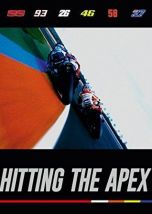
The combustion of fuel and air in the engine and the fire in the heart of a rider willing to risk everything to win. Time is the enemy. The fractions of a second lost or gained in every corner which add up to defeat or victory. And the few years that you have to make it to the top. 'Hitting the Apex' is the story of six fighters - six of the fastest motorcycle racers the world has ever seen - and of the fates that awaited them at the peak of the sport.
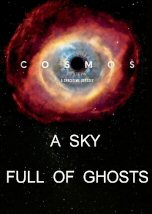
Tyson begins the episode by explaining the nature of the speed of light and how much of what is seen of the observable universe is from light emanated from billions of years in the past. Tyson further explains how modern astronomy has used such analyzes via deep time to identify the Big Bang event and the age of the universe. Tyson proceeds to describe how the work of Isaac Newton, William Herschel, and James Clerk Maxwell contributed to understanding the nature of electromagnetic waves and gravitational force, and how this work led towards Albert Einstein's Theory of Relativity, that the speed of light is a fundamental constant of the universe and gravity can be seen as distortion of the fabric of space-time. Tyson describes the concept of dark stars as postulated by John Michell which are not visible but detectable by tracking other stars trapped within their gravity wells, an idea Herschel used to discover binary stars. Tyson then describes the nature of black holes, their enormous gravitational forces that can even capture light, and their discovery via X-ray sources such as Cygnus X-1. Tyson uses the Ship of Imagination to provide a postulate of the warping of spacetime and time dilation as one enters the event horizon of the black hole, and the possibility that these may lead to other points within our universe or others, or even time travel. Tyson ends on noting that Herschel's son, John would be inspired by his father to continue to document the known stars as well as contributions towards photography that play on the same nature of deep time used by astronomers.





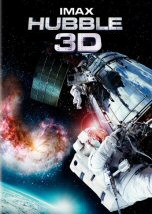


An IMAX 3D camera chronicled the effort of 7 astronauts aboard the Space Shuttle Atlantis to repair the Hubble Space Telescope.