Morgan Freeman will take viewers on a global journey to meet with people from all cultures whose lives are shaped in surprising ways by different fundamental forces, this time exploring themes that unite us all. Each episode will explore a single fundamental force or topic, including love, belief, power, war and peace, rebellion and freedom. In the first episode, Freeman travels around the world in search of a greater understanding of the concept of freedom. From solitary confinement and forced labor camps, to social taboos and laws that hinder speech and expression, freedom seems to be a constant struggle. As individuals and as entire nations, we are confronted with the question: Will we all ever be truly free?
Einstein's world-shaking Theory of Relativity says that time travel is perfectly possible -- if you're going forward in time. Finding a way to travel backwards requires breaking the speed of light, which so far seems impossible. But now, strange-but-true phenomena such as quantum nonlocality (where particles instantly teleport across vast distances) may give us a way to make the dream of traveling back and forth through time a reality. Step into a time machine and rewrite history, bring loved ones back to life, control our destinies. But if succeed, what are the consequences of such freedom? Will we get trapped in a plethora of paradoxes and multiple universes that will destroy the fabric of the universe?
Ripped from international headlines, The Hacker Wars takes you to the front lines of the high-stakes battle over the fate of the Internet, freedom and privacy". Get ready to be shuttled between story lines at lightning speed mirroring the disjointed lives of the protagonists and life on the Internet. The Hacker Wars- a film about the targeting of (h)ac(k)tivists and journalists by the US government. Hacktivists are either terrorists or freedom fighters depending on ones perspective on who should control information. Meet weev, infamous hacker; Barrett Brown, journalist and propagandist for the hacktivist collective, Anonymous; and Jeremy Hammond, aka Anarchaos, number one on the FBI's cyber-criminal list. The fourth character is Sabu, the uber-hacker turned FBI informant who ran the FBI's cyber unit for 9 months and is responsible for many arrests. He is the shadowy protagonist in a high-stakes game of espionage and betrayal in the age of the Internet. Barrett Brown, American journalist, is facing 105 years in prison for publicizing information revealed through Jeremy Hammond's epic hacks. Hammond himself has just begun a 10-year prison term. Andrew Auernheimer, known by his hacker handle weev embarrasses large corporations. He was sentenced to 41 months for hacking AT&T, but his conviction was just overturned. He vows to continue doing what landed him in prison in the first place. These hacktivists are the rock stars of the Internetmodern-day folk heroes. Glenn Greenwald (Snowdon Leaks), Pulitzer Prize-winning journalist and others explain why these anti-heroes exposing the security surveillance state are essential to a functioning democracy.
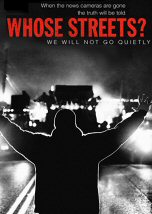
Told by the activists and leaders who live and breathe this movement for justice, Whose Streets? is an unflinching look at the Ferguson uprising. When unarmed teenager Michael Brown is killed by police and left lying in the street for hours, it marks a breaking point for the residents of St. Louis, Missouri. Grief, long-standing racial tensions and renewed anger bring residents together to hold vigil and protest this latest tragedy. Empowered parents, artists, and teachers from around the country come together as freedom fighters. As the national guard descends on Ferguson with military grade weaponry, these young community members become the torchbearers of a new resistance. Whose Streets? is a powerful battle cry from a generation fighting, not for their civil rights, but for the right to live.
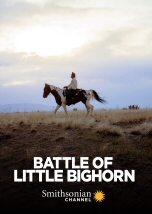
The Battle of Little Bighorn lasted nearly 24 hours on June 25, 1876, but the stage had been set decades earlier as settlers, prospectors, and business people began encroaching on Native Americans' sacred land. From the Lakota Sioux facing broken treaties to the attacks that ultimately led up to Bighorn, follow these events unfold. Then, see how this pivotal moment in history marked the beginning of the end of freedom on the Great Plains, the birth of an American cliche, and an ongoing fight for identity against the tyranny of progress.
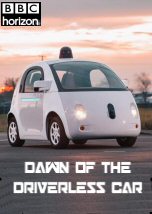
The car has shrunk the world, increased personal freedom and in so many ways expanded our horizons, but there is a flipside. Fumes from car exhausts have helped to destroy our environment, poisoned the air we breathe and killed us in far more straightforward ways. But all that is going to change. Enter a world where cars can drive themselves, a world where we are simply passengers, ferried about by wholesome green compassionate technology which will never ever go wrong. And it is almost here. Explore the artificial intelligence required to replace human drivers for cars themselves, peers into the future driverless world and discovers that, despite the glossy driverless PR (and assuming that they really can be made to work reliably), the reality is that it might not be all good news. From the ethics of driverless car crashes to the impact on jobs, it might be that cars are about to rise up against us in ways that none of us are expecting.













In the first episode, Freeman travels around the world in search of a greater understanding of the concept of freedom. From solitary confinement and forced labor camps, to social taboos and laws that hinder speech and expression, freedom seems to be a constant struggle. As individuals and as entire nations, we are confronted with the question: Will we all ever be truly free?