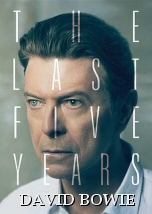
Experience the evolving genius of rock icon David Bowie in this documentary that chronicles the last five years of his life. The film features never-before-seen footage of Bowie as well as conversations with the musicians, producers, and music video directors who worked with him on his final tour back in the early 2000s (when he had a heart attack that compelled him to turn away from live performances); the Man Who Fell to Earth–inspired musical Lazarus; and his final two albums, 2013’s The Next Day and Blackstar, which was released two days before Bowie died of cancer.
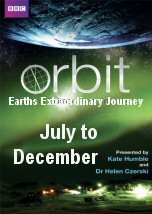
Right now, you're hurtling around the Sun at 64,000 miles an hour. In the next year, you'll travel 584 million miles, to end up back where you started. In this spectacular series, presenters Kate Humble and Dr Helen Czerski follow the Earth's voyage around the Sun for one complete orbit, to witness the astonishing consequences this journey has for us all. From seasonal extremes to destructive weather, they travel the world to experience the great events that are shaped by our journey around the Sun." They venture back in time to show how the Earths orbit has changed, and the astounding effect this has had on the planet. For the first time ever, this astonishing series charts the progress of the Earth as it undertakes its incredible annual orbit around the Sun. From stunning space imagery to in-your-face storm chasing, this series showcases the incredible power of our planets epic journey around the Sun. In this first episode they travel from July to the December solstice, experiencing spectacular weather and the largest tides on Earth. To show how the Earth's orbit affects our lives, Helen jumps out of an aeroplane and Kate briefly becomes the fastest driver on Earth.
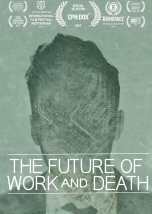
The film explores the growth of exponential technology and where it is taking us. It focuses on how future technology could significantly change the two inevitable features of the human experience; punching the clock and fading away. 'The Future of Work and Death' explores how advanced automation, AI and technological singularity could be achievable in the next 30 years. How job obsolescence and technological unemployment could consequently occur and how digital immortality can occur may not be a thing of science fiction. But what are the socio-political repercussions of these innovations and are we ready for them? Does working less mean living more and is ending ageing incumbent on us? Worldwide experts in the fields of futurology, anthropology, neuroscience and philosophy share their thoughts on these future advancements.
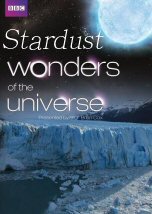
In the second stop in his exploration of the wonders of the universe, Professor Brian Cox goes in search of humanity's very essence to answer the biggest questions of all: what are we? And where do we come from? This film is the story of matter - the stuff of which we are all made. Brian reveals how our origins are entwined with the life cycle of the stars. But he begins his journey here on Earth. In Nepal, he observes a Hindu cremation. Hindu philosophy is based on an eternal cycle of creation and destruction, where the physical elements of the body are recycled on to the next stage. Brian draws a parallel with the life cycle of the stars that led to our own creation. Next, he explains how the Earth's resources have been recycled through the ages. How every atom that makes up everything we see, was at some time a part of something else. Our world is made up of just 92 elements, and these same 92 elements are found throughout the entire universe. We are part of the universe because we are made of the same stuff as the universe.
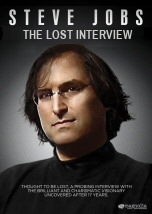
In 1995, during the making of his TV series Triumph of the Nerds about the birth of the PC, Bob Cringely did a memorable hour-long interview with Steve Jobs. It was 10 years since Jobs had left Apple following a bruising struggle with John Sculley, the CEO he had brought into the company. At the time of the interview Jobs was running NeXT, the niche computer company he had founded after leaving Apple. During the interview, Jobs was at his charismatic best - witty, outspoken, visionary. In the end, only a part of the interview was used in the series and the rest was thought lost. But recently a VHS copy was found in the series director's garage. Now, cleaned up with modern technology, and put into context by Cringely.
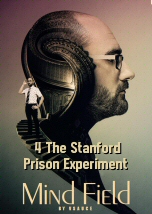
It all begins as a study on the psychology of prison life led by Stanford psychology professor Dr. Philip Zimbardo. 24 volunteers - 12 guards and 12 prisoners - have agreed to spend the next two weeks recreating life in a correctional facility. Normal people can become monsters, given the right situation, that's the standard narrative of the Stanford Prison Experiment, one of the most famous psychological experiments of all time. But what if the cause of its participants' cruel behavior wasn't what we've always been told?












The film features never-before-seen footage of Bowie as well as conversations with the musicians, producers, and music video directors who worked with him on his final tour back in the early 2000s (when he had a heart attack that compelled him to turn away from live performances); the Man Who Fell to Earth–inspired musical Lazarus; and his final two albums, 2013’s The Next Day and Blackstar, which was released two days before Bowie died of cancer.