In the fourth episode, Dromaeosaurs stalk a hadrosaur herd as they cross a freezing river. Male Ornithomimus raid rival nests to bolster their own. Olorotitan raise their offspring on fertile volcanic fields but contend with biting mosquitoes. Troodontids hunt mammals flushed out by a forest fire. A juvenile Antarctopelta scours the forest for a new winter den. Within the snow-covered forest, a tense standoff develops between ancient rivals, Pachyrhinosaurus and Nanuqsaurus.
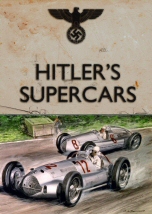
The film tells the story of the ill-fated Nazi Land Speed record attempts. This is a story of engineering excellence, Grand Prix racing, Nazi propaganda, celebrity, and an intense rivalry which would leave a speed record unbroken for 79 years and one of Nazi Germany's best racing drivers dead. During the rise of the Third Reich two German car manufacturers were ordered to build the most high performance vehicles the world had ever seen. What followed was a rivalry that would reap Grand Prix victories, international domination that was a propaganda coup, and provide world fame to its drivers who risked their lives smashing speed records that would stand for 79 years. All under the direct orders of the Fuhrer himself. Bugatti and Alfa Romeo dominated racing before 1934. But the years from 1934 to 1939 were six tumultuous years in which Grand Prix racing was dominated by the German Auto Union, the arranged marriage of Audi, Horch, Wanderer, and DKW, and Mercedes-Benz teams and provided a spectacle of speed, sound and fury never previously attained and never since matched. There are few periods of racing that have excited as much interest, event attendance and sophistication of equipment as the era of the Silver Cars. They were so far ahead of their time that many of their accomplishments were not duplicated until Mercedes went racing again in the early 1950s. There is also something about men who faced the challenges of staying in a cockpit of a highly sophisticated machine capable of 200 mph with no safety systems. They were giants and among them were Italian Tazio Nuvolari and two greatest German pilots of the thirties, Rudolf Caracciola of Mercedes and Auto Union's Bernd Rosemeyer who duelled with faster, more innovative and sleeker machines, developed in wind tunnels. This special documentary charts the rise of Nazi Germany's dominate 'Silver Arrow' Grand Prix and Speed Record cars of the 1930's. Leading motor racing and World War 2 experts James Holland, Richard Williams, Eberhard Reuss and Chris Routledge tell the story of the Nazi funded Auto Union and Mercedes Benz 'National Racing Cars'. Hitler's Supercars interweaves the rise of the Third Reich with the racing exploits it funded and what propaganda messages these racing cars where sending.
Professor Diarmaid MacCulloch - one of the world's leading historians - reveals the origins of Christianity and explores what it means to be a Christian. In the first episode, he overturns the familiar story that it all began when the apostle Paul took Christianity from Jerusalem to Rome. Instead, he shows that the true origins of Christianity lie further east, and that at one point it was poised to triumph in Asia, maybe even in China. The headquarters of Christianity might well have been Baghdad not Rome, and if that had happened then Western Christianity would have been very different.
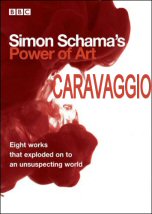
Caravaggio's approach to painting was unconventional. He avoided the standard method of making copies of old sculptures and instead took the more direct approach of painting directly onto canvas without drawing first. He also used people from the street as his models. His dramatic painting was enhanced with intense and theatrical lighting.
Caravaggio's fate was sealed when he killed a man in a duel in 1606. He fled to Naples where he attempted to paint his way out of trouble, he became a Knight, but was then imprisoned in Malta and then finally moved to Sicily. He was pardoned for murder in 1610, but died of a fever when attempting to return to Rome. For me the power of Caravaggio's art is the power of truth, not least the truth about ourselves. If we are ever to hope for redemption we have to start from the recognition that the Goliath competes with the David in all of us."
Join us on an unforgettable voyage through one of the most desolate periods in human history as the rulers, conflicts, and cataclysmic societal breakdown of Early Middle Ages are brought to light. At its height in the second century A.D., the Roman Empire was the beacon of learning, trade, power and prosperity in the western world. But the once-powerful Rome--rotten to the core by the fifth century--lay open to barbarian warriors who came in wave after wave of invasion, slaughtering, stealing, and ultimately, settling. As chaos replaced culture, Europe was beset by famine, plague, persecutions, and a state of war that was so persistent it was only rarely interrupted by peace. The documentary profiles those who battled to shape the future, from the warlords whose armies threatened to case the demise of European society, like Alaric, Charles the Hammer, and Clovis; to the men and women who valiantly tended the flames of justice, knowledge, and innovation including Charlemagne, St. Benedict, Empress Theodora, and other brave souls who fought for peace and enlightenment. It was in the shadows of this turbulent millennium that the seeds of modern civilization were sown.
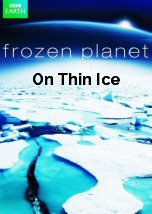
Sir David Attenborough journeys to both Polar Regions to investigate what rising temperatures will mean for the people and wildlife that live there and for the rest of the planet. David starts out at the North Pole, standing on sea ice several metres thick, but which scientists predict could be Open Ocean within the next few decades. The Arctic has been warming at twice the global average, so David heads out with a Norwegian team to see what this means for polar bears. He comes face-to-face with a tranquilised female, and discovers that mothers and cubs are going hungry as the sea ice on which they hunt disappears. In Canada, Inuit hunters have seen with their own eyes what scientists have seen from space; the Arctic Ocean has lost 30% of its summer ice cover over the last 30 years. For some, the melting sea ice will allow access to trillions of dollars worth of oil, gas and minerals. For the rest of us, it means the planet will get warmer, as sea ice is important to reflect back the sun's energy. Next David travels to see what's happening to the ice on land: in Greenland, we follow intrepid ice scientists as they study giant waterfalls of meltwater, which are accelerating iceberg calving events, and ultimately leading to a rise in global sea level. Temperatures have also risen in the Antarctic - David returns to glaciers photographed by the Shackleton expedition and reveals a dramatic retreat over the past century. It's not just the ice that is changing - ice-loving adelie penguins are disappearing, and more temperate gentoo penguins are moving in. Finally, we see the first ever images of the largest recent natural event on our planet - the break up of the Wilkins Ice Shelf, an ice sheet the size of Jamaica, which shattered into hundreds of icebergs in 2009.
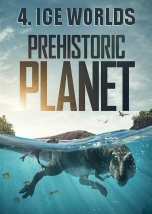









Troodontids hunt mammals flushed out by a forest fire. A juvenile Antarctopelta scours the forest for a new winter den. Within the snow-covered forest, a tense standoff develops between ancient rivals, Pachyrhinosaurus and Nanuqsaurus.