





Last Watched

"The Brain"  Sort by

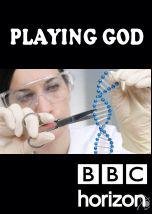
Playing God

   2012    Medicine
Adam Rutherford meets a new creature created by American scientists, the spider-goat. It is part goat, part spider, and its milk can be used to create artificial spider's web. It is part of a new field of research, synthetic biology, with a radical aim: to break down nature into spare parts so that we can rebuild it however we please. This technology is already being used to make bio-diesel to power cars. Other researchers are looking at how we might, one day, control human emotions by sending 'biological machines' into our brains.
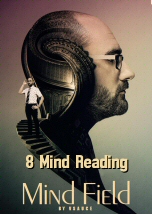
Mind Reading

   2019    Medicine
Mind reading might sound like pseudoscientific, but its scientific counterpart, thought identification, is very much a real thing. It's based in neuroimaging and machine learning, and what's really cool is that experiments in mind reading aren't just about spying on what someone is thinking. They're about figuring out what thoughts are even made of.
When you think of something, what does that mental picture actually look like? What resolution is it in? How high fidelity is a memory, and how do they change over time? In this episode, we are going to look at how reading people's minds can help us answer these questions.
Series: Mind Field

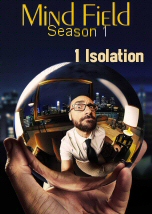
Isolation

   2017    Medicine
Your brain is like a hungry sponge. It's constantly absorbing information. It thrives when stimulated. Between smartphones and books, and movies, and friends and family, thousands of sensations are constantly going into our heads. But what if it all got cut off?. Imagine being confined to a 10-by-10-foot room in complete isolation. No timekeeping devices, no phones, no books, nothing to write on, no windows. Psychologists say that fewer than three days in a room like this can lead to brain damage. I will be staying in this room for three days.
Michael explores the effects of isolation on the human mind by subjecting himself to a very interesting experiment.
Series: Mind Field Season 1

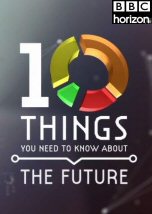
10 Things You Need to Know about the Future

   2017    Technology
Take a look at the issues that will change the way we live our lives in the future. Hannah Fry delves into the data we have today to provide an evidence-based vision of tomorrow. With the help of science experts Hannah tries to discover whether we could ever live forever or if there will ever be a cure for cancer. She finds out how research into the human brain may one day help with mental health, and if it is possible to ever ditch fossil fuels. Hannah and her guests also discover the future of transport - and when, if ever, we really will see flying cars. She discovers whether a robot will take your job or if, as some believe, we will all one day actually become cyborgs. The programme predicts what the weather will be like and discovers if we are on the verge of another mass extinction. Hannah's tenth prediction is something she - and Horizon - are confident will definitely happen, and that is to expect the unexpected!

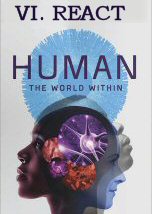
React

   2021    Medicine
How do you react to the world around you? Through the lens of a boxer, a first responder, a cell tower climber and a man with a bionic limb, we'll go deep into the universe of the most powerful machine on earth: the human brain and the vast nervous system it controls.
The human body is full of systems, but there's one system that controls all the others, and it might be the one that truly makes you you: The nervous system.
Series: Human: The World Within

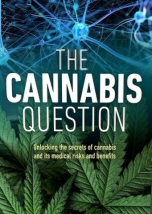
The Cannabis Question

   2021    Medicine
A huge social experiment is underway. Fifty-five million Americans say they currently use cannabis, and that number is expected to grow as voters push for legalization in more and more states. The film investigates the story of cannabis from the criminalization that has disproportionately harmed communities of color to the latest medical understanding of the plant.
What risks does cannabis pose to the developing brain? How much do we know about its potential medical benefits? As cannabis becomes socially accepted, scientists are exploring its long-term health consequences.