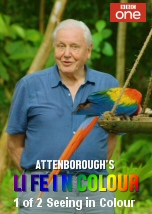
The natural world is full of colours. For us, they are a source of beauty, but for animals they are a tool for survival. David Attenborough reveals the extraordinary ways in which animals use colour: to win a mate, to fight off rivals and to warn enemies. New camera technologies - some developed especially for this series – also allow us to see colours and patterns usually invisible to human eyes. Ultraviolet cameras reveal bright signals on a butterfly’s wings and facial markings on yellow damselfish that are used as secret communication channels. Some animals can also detect polarized light, and specialist cameras can now show us how fiddler crabs see the world, and how mantis shrimp have strange polarization patterns on their bodies to signal to a mate or rival.
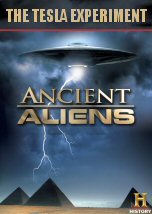
Ancient Aliens explores the controversial theory that extraterrestrials have visited Earth for millions of years. From the age of the dinosaurs to ancient Egypt, from early cave drawings to continued mass sightings. In this episode researchers discuss the possibility that the great technological developments made by inventor Nikola Tesla were inspired by extraterrestrials
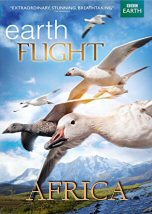
Fly over Africa on the back of a vulture and see the most animal-packed continent with fresh eyes. Arrow-dive with cape gannets among sharks, dolphins and whales as they join the great sardine run. Soar with fish eagles as they discover an S-shaped living island comprised entirely of flamingos, and join them on a spectacular hunt. Fly with kelp gulls as they study the hunting behaviour of the greatest underwater predator of all: the great white shark. On the wings of eagles, fly through the mist-filled Victoria Falls and dive for fish in the mighty Zambezi. Circle with vultures high above the Serengeti as they watch the drama of the wildebeest migration below, and discover what happens when this canny scavenger suddenly becomes prey. Among toxic soda lakes, find out what it is like to be a flamingo, vulnerable to every predator on the continent, including baboons and hyenas. Join these flamingos as they take part in one of the most beautiful dances in the bird world. This is Africa as never seen before - from the wings of birds
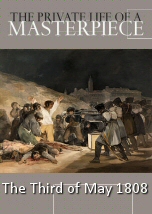
Arguably the most powerful painting about war ever achieved. It portrays the slaughter of civilians after Napoleonic troops entered Madrid in 1808. The programme reveals the historical truths behind the painting and shows exactly how Goya achieved this masterpiece of protest. he painting's content, presentation, and emotional force secure its status as a groundbreaking, archetypal image of the horrors of war. Although it draws on many sources from both high and popular art, The Third of May 1808 marks a clear break from convention. Diverging from the traditions of Christian art and traditional depictions of war, it has no distinct precedent, and is acknowledged as one of the first paintings of the modern era. According to the art historian Kenneth Clark, The Third of May 1808 is 'the first great picture which can be called revolutionary in every sense of the word, in style, in subject, and in intention'. Discover how Goya used drawings by authentic witnesses to depict a real firing squad.
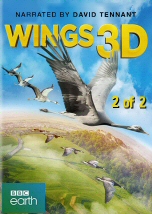
It's a universal dream To soar on wings into the heavens. But it's nothing compared to the reality. Experience our planet as never before: Through the eyes of birds. This is a journey that will embrace the world. A flight across the earth on feathered wings. It's a fantastic voyage following the changing seasons and taking in some of the greatest events on Earth. Experience a year in the life of our planet from the lush tropics to the frozen North and catch a glimpse of our world as never before: From a bird's-eye view.
The story of how the secret of life has been examined through the prism of the most complex organism known - the human body. It begins with attempts to save the lives of gladiators in Ancient Rome, unfolds with the macabre work and near-perfect drawings of Leonardo in the Renaissance, through the idea of the 'life force' of electricity, to the microscopic world of the cell. It reveals how a moral crisis unleashed by work on the nuclear bomb helped trigger a great breakthrough in biology - understanding the structure and workings of DNA.









Ultraviolet cameras reveal bright signals on a butterfly’s wings and facial markings on yellow damselfish that are used as secret communication channels. Some animals can also detect polarized light, and specialist cameras can now show us how fiddler crabs see the world, and how mantis shrimp have strange polarization patterns on their bodies to signal to a mate or rival.