



Last Watched

"The Earth"  Sort by

The Southern Ocean

   2009    Nature
The Southern Ocean, which circles the globe without being blocked by land, is home to the Antarctic Circumpolar Current (ACC), the longest of the world's ocean currents. Also known as the "channel", it connects the Indian, Atlantic and Pacific Ocean basins and exerts a powerful influence over the Earth's climate. The ACC carries 150 times more water around Antarctica than the flow of all the world's rivers combined.
Series: Oceans
Wonders of Life: Home

   2013    Nature
Brian considers what it is about our world that makes it a home for life and asks what ingredients were necessary to transform this once barren planet into the Earth we know today? He reveals that it was a rare chain of events combined with the power of life itself that have made Earth unique amongst the cosmos.
Series: Wonders of Life

The Great Melt

   2009    Nature
Every year, around the world, seasonal changes transform entire landscapes and draw in millions of creatures as these great events unfold. This fantastic series combines the epic scale of Planet Earth and the intimate, emotional stories of charismatic animals as they struggle to survive. Using state of the art technology, these programmes capture the Earth's most dramatic and epic wildlife spectacles and the intimate stories of the animals caught up in them.
The Great Melt: The summer melt of Arctic ice, opening up nearly three million square miles of ocean and land, provides opportunities for millions of animals, including beluga whales, families of Arctic foxes, vast colonies of seabirds, and the fabled Arctic unicorn, the narwhal. For polar bears, however, it is the toughest time of year. Why? How will they survive? A mother polar bear and her cub make their first journey together onto the sea ice. They are looking for ringed seals, their favourite prey. It is a serious business but the cub just wants to play. The melting ice makes it harder for them to hunt and threatens their survival. In a unique aerial sequence, the migration of narwhal with their distinctive unicorn-like tusks is filmed for the first time. The whales' journey is risky as they travel along giant cracks in the ice. If the ice were to close above them, they would drown. Hundreds of beluga whales gather in the river shallows. They rub themselves on smooth pebbles in one of the most bizarre summer spectacles. Guillemot chicks take their first flights from precipitous sea cliff nests to the sea 300 metres below. They attempt to glide to safety but many miss their target. Their loss is a bonus for the hungry Arctic fox family waiting below. As the melt comes to an end the bears gather, waiting for the sea to freeze again. Two 400kg males square up to each other to spar.
Series: Nature Great Events

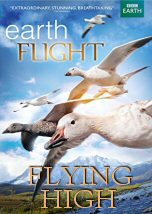
Flying High

   2012    Nature
To fly like a bird, Earthflight not only captured remarkable images of wild flocks but also relied on some extraordinary relationships between people and birds. Filmed over four years, in six continents and more than 40 countries, the Earthflight team used many extraordinary techniques. For some of the unique flying shots, members of the team became part of the flock. The birds followed wherever they went - even in a microlight over Edinburgh and London. In Africa, paragliders floated alongside wild vultures, while a model vulture carried a camera inside the flock. In South America, wild-living macaws, that were rescued as babies, still come back to visit their 'foster mother' as he travels along a jungle river. In Africa, a radio-controlled 'drone' silently infiltrates masses of pink flamingos without disturbing a feather, and microlights and helicopters capture the dramatic moment white storks arrive over Istanbul. In Africa a tame vulture carried a camera across the African bush and recreated the behaviour of his wild relatives. Similarly, in the USA, a flock of hand-reared snow geese followed the migration route of wild flocks and took in the sights and sounds of New York - managing to get lost in Brooklyn
Series: Earthflight

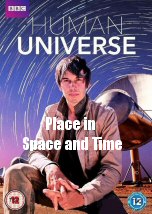
Place in Space and Time

   2014    Science
On a trip to the fortified Moroccan village of Ait-Ben-Haddou in the Atlas Mountains, Professor Brian Cox reveals how by watching the stars' motion across the night sky, it is quite natural for man to think he is at the centre of everything. That view was held for many ages, but innate human curiosity has eventually led to an understanding of mankind's true place in space and time, and an appreciation that Earth is not a focal point but a mere particle of rock in a possibly infinite expanse of space, 13.8 billion years from the beginning of the universe.
Series: Human Universe

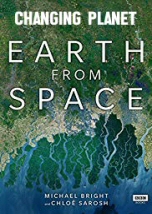
Changing Planet

   2019    Nature    HD
At a time when the Earth’s surface is changing faster than ever in human history, watch cities grow, forest disappear and glaciers melt.
In the ever-growing grey of cities one man is feeding thousands of parakeets; in Sumatra a female orang-utan and her daughter face life in a forest under threat; while in Tanzania local people use satellites to replant a forest, securing the future for a family of chimpanzees. This is our home as we’ve never seen it before.
Series: Earth from Space
The Hunt

The Hunt

2015  Nature
Human universe

Human universe

2014  Technology
Clash of the Gods

Clash of the Gods

2009  History
History of the Eagles

History of the Eagles

2013  History
Leaving Neverland

Leaving Neverland

2019  Culture
The Last Dance

The Last Dance

2020  Culture