










Last Watched

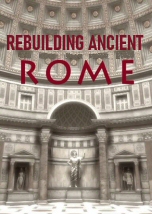
Rebuilding Ancient Rome

   2015    History    HD
Beneath the modern streets of Rome lies a city of breathtaking scale and ambition, once the heart of an empire that shaped the world. In this 15-part journey, archaeologist Dr. Darius Arya becomes your guide into a vivid time machine, where stunning CGI reconstructions resurrect the capital in all its glory. From the steamy elegance of vast bath complexes to the roar of chariot races, from awe-inspiring temples to political halls where history was forged, each episode reveals how engineering brilliance, artistic mastery, and human will transformed humble hills into the Eternal City. This is not just a tour of ruins—it’s Rome as its citizens once knew it.

The Immortals

   2014    Science
This episode covers the nature of how life may have developed on Earth and the possibility of life on other planets. Tyson begins by explaining how the human development of writing systems enabled the transfer of information through generations, describing how Princess Enheduanna ca. 2280 BCE would be one of the first to sign her name to her works, and how Gilgamesh collected stories, including that of Utnapishtim documenting a great flood comparable to the story of Noah's Ark. Tyson explains how DNA similarly records information to propagate life, and postulates theories of how DNA originated on Earth, including evolution from a shallow tide pool, or from the ejecta of meteor collisions from other planets. In the latter case, Tyson explains how comparing the composition of the Nakhla meteorite in 1911 to results collected by the Viking program demonstrated that material from Mars could transit to Earth, and the ability of some microbes to survive the harsh conditions of space. With the motions of solar systems through the galaxy over billions of years, life could conceivably propagate from planet to planet in the same manner. Tyson then moves on to consider if life on other planets could exist. He explains how Project Diana performed in the 1960s showed that radio waves are able to travel in space, and that all of humanity's broadcast signals continue to radiate into space from our planet. Tyson notes that projects have since looked for similar signals potentially emanating from other solar systems. Tyson then explains that the development and lifespan of extraterrestrial civilizations must be considered for such detection to be realized. He notes that civilizations can be wiped out by cosmic events like supernovae, natural disasters such as the Toba disaster, or even self-destruct through war or other means, making probability estimates difficult. Tyson describes how elliptical galaxies, in which some of the oldest red dwarf stars exist, would offer the best chance of finding established civilizations. Tyson concludes that human intelligence properly applied should allow our species to avoid such disasters and enable us to migrate beyond the Earth before the Sun's eventual transformation into a red giant.
Series: Cosmos: A Spacetime Odyssey

Foreigners in their Own Land

   2013    History
One hundred years after Columbus' arrival in the Caribbean, Spanish Conquistadors and Priests, push into North America in search of gold and to spread Catholicism. With the arrival of the British in North America, the two colonial systems produce contrasting societies that come in conflict as Manifest Destiny pushes the U.S into the Mexican territories of the South West. As the Gold Rush floods California with settlers, complex and vital communities are overwhelmed. The elites, including Mariano Vallejo and Apolinaria Lorenzana lose their land. Mexicans and Mexican Americans are treated as second-class citizens, facing discrimination and racial violence. Resistance to this injustice appears in New Mexico as Las Gorras Blancas (The White Caps), burn Anglo ranches and cut through barbed wire to prevent Anglo encroachment. At the same time, New Mexicans manage to transform themselves through education, managing to preserve Hispano culture in New Mexico and their standing in the midst of an era of conquest and dispossession.
Series: Latino Americans

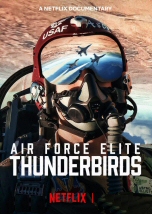
Air Force Elite: Thunderbirds

   2025    Technology
Strap into the cockpit and experience the breathtaking speed, discipline, and danger faced by the most elite pilots in the U.S. Air Force. This thrilling documentary takes you behind the scenes with the Thunderbirds as they prepare for their most demanding season yet. From intense training sessions to high-stakes airshows, witness the grit, sacrifice, and precision that define these sky warriors. With never-before-seen aerial footage and exclusive interviews, it's not just about flying—it's about pushing human limits.

Obi-Wan Kenobi: A Jedi Return

   2022    Art
Step behind the curtain and discover how one of the most iconic stories in the Star Wars universe was brought back to life. Through exclusive behind-the-scenes footage, intimate interviews with cast and crew, and rare glimpses inside the legendary creature shop and props department, this captivating documentary reveals the artistry, passion, and vision that resurrected a beloved Jedi for a new generation.
Whether you're a lifelong fan or a newcomer to the galaxy far, far away, this journey into the heart of the Force will leave you inspired and eager to watch the saga unfold again.

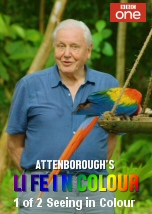
Seeing in Colour

   2021    Nature
The natural world is full of colours. For us, they are a source of beauty, but for animals they are a tool for survival. David Attenborough reveals the extraordinary ways in which animals use colour: to win a mate, to fight off rivals and to warn enemies. New camera technologies - some developed especially for this series – also allow us to see colours and patterns usually invisible to human eyes.
Ultraviolet cameras reveal bright signals on a butterfly’s wings and facial markings on yellow damselfish that are used as secret communication channels. Some animals can also detect polarized light, and specialist cameras can now show us how fiddler crabs see the world, and how mantis shrimp have strange polarization patterns on their bodies to signal to a mate or rival.
Series: Attenborough Life in Colour