







New York's Central Park Tower is the second tallest building in the US, and as engineers and builders race to complete this 1,550-foot-tall mega build, they use cutting-edge science and engineering to battle high altitudes and brutal weather. From the world's longest tunnels to the world's most advanced skyscraper, the series Building Giants reveals the extraordinary innovations that help record-breaking superstructures to be built, and uncovers the inner secrets of how they work.
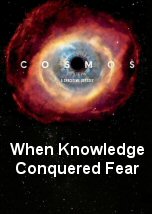
This episode covers the nature of how life may have developed on Earth and the possibility of life on other planets. Tyson begins by explaining how the human development of writing systems enabled the transfer of information through generations, describing how Princess Enheduanna ca. 2280 BCE would be one of the first to sign her name to her works, and how Gilgamesh collected stories, including that of Utnapishtim documenting a great flood comparable to the story of Noah's Ark. Tyson explains how DNA similarly records information to propagate life, and postulates theories of how DNA originated on Earth, including evolution from a shallow tide pool, or from the ejecta of meteor collisions from other planets. In the latter case, Tyson explains how comparing the composition of the Nakhla meteorite in 1911 to results collected by the Viking program demonstrated that material from Mars could transit to Earth, and the ability of some microbes to survive the harsh conditions of space. With the motions of solar systems through the galaxy over billions of years, life could conceivably propagate from planet to planet in the same manner. Tyson then moves on to consider if life on other planets could exist. He explains how Project Diana performed in the 1960s showed that radio waves are able to travel in space, and that all of humanity's broadcast signals continue to radiate into space from our planet. Tyson notes that projects have since looked for similar signals potentially emanating from other solar systems. Tyson then explains that the development and lifespan of extraterrestrial civilizations must be considered for such detection to be realized. He notes that civilizations can be wiped out by cosmic events like supernovae, natural disasters such as the Toba disaster, or even self-destruct through war or other means, making probability estimates difficult. Tyson describes how elliptical galaxies, in which some of the oldest red dwarf stars exist, would offer the best chance of finding established civilizations. Tyson concludes that human intelligence properly applied should allow our species to avoid such disasters and enable us to migrate beyond the Earth before the Sun's eventual transformation into a red giant.
The great mountain ranges are some of the planet's most spectacular landscapes, but they are unforgiving places to live in, and only a few animals have what it takes to live at extreme altitude. Mountain animals are amongst the most elusive in the world, and this film provides unique and intimate glimpses into their secretive lives. Witness the moment four snow leopards come together when a mother and cub become trapped between two rival males. Join grizzly bears as they dance against trees to rub off their winter fur and soar with golden eagles hunting amongst Europe's snow-capped peaks.
In this powerful continuation of his personal journey, Chris Hemsworth takes viewers around the world to test the boundaries of body and mind. Confronted with chronic back pain and concerns about memory decline, he seeks answers not in laboratories but in life-changing challenges designed by scientists, health experts, and elite trainers. From the nerve-racking task of learning to play the drums—culminating in a breathtaking live performance with Ed Sheeran before 70,000 fans—to enduring brutal Special Forces–style trials in South Korea involving electrocution, pepper spray, and freezing waters, each step reveals the fragile balance between vulnerability and resilience. His raw honesty and willingness to fail make the journey as intimate as it is inspiring. On our website, viewers can enjoy the entire adventure with the three episodes combined into a single video, seamlessly following Hemsworth as he explores how to live better, face fear, and unlock the science of resilience and longevity.
In 1971, after being rejected by Hollywood, Bruce Lee returned to his parents' homeland, Hong Kong. Over the next two years, he'd complete four iconic films that would define his legacy, a legacy cut short when he died, stunningly, in the summer of 1973. He was 32 years old. Directed by Bao Nguyen, 'Be Water' is a gripping, fascinating, intimate look at not just those final, defining years of Lee's life, but the complex, often difficult, and seismic journey that led to Lee's ultimate emergence as a singular icon in the histories of film, martial arts, and even the connection between the eastern and western worlds. The film chronicles Lee's earliest days, as the son of a Chinese opera star born while his father was on tour in San Francisco, and then raised in Hong Kong over what became an at times troubled childhood. Sent to live in America at the age of 18, he began teaching Kung Fu in Seattle, and established a following that included his future wife, Linda. His ambition ever rising, Lee eventually made his way to Los Angeles, where he strove to break into American film and television. There, despite some success as a fight choreographer and actor, it was clear Hollywood wasn't ready for an Asian leading man - and so he returned to Hong Kong to make the films that would in fact make him a legend, his international star skyrocketing just as his life was cut short. 'Be Water' is told by the family, friends, and collaborators who knew Bruce Lee best, with an extraordinary trove of archive film providing an evocative, immersive visual tapestry that captures Lee's charisma, his passion, his philosophy, and the eternal beauty and wonder of his art.
Strap into the cockpit and experience the breathtaking speed, discipline, and danger faced by the most elite pilots in the U.S. Air Force. This thrilling documentary takes you behind the scenes with the Thunderbirds as they prepare for their most demanding season yet. From intense training sessions to high-stakes airshows, witness the grit, sacrifice, and precision that define these sky warriors. With never-before-seen aerial footage and exclusive interviews, it's not just about flying—it's about pushing human limits.
From the world's longest tunnels to the world's most advanced skyscraper, the series Building Giants reveals the extraordinary innovations that help record-breaking superstructures to be built, and uncovers the inner secrets of how they work.