Did China hide crucial information about Covid-19 from the world? What began with a handful of mystery pneumonia cases in Wuhan late last year has now left more than half a million dead worldwide. Beijing says it has been open and transparent throughout, but former BBC China Editor Carrie Gracie investigates how it delayed reporting the initial outbreak and evidence that Covid-19 could be spread by people. It also silenced doctors who tried to speak out. The film also hears from one high-level insider who believes the animal market at the centre of the Wuhan outbreak should have been treated as a 'crime scene' and from experts who warn that this crisis may be a 'dress rehearsal' for an even more deadly pandemic in the future.
Thought-provoking documentary on war propaganda: how governments manipulate the facts and how most media let them get away with it. WWI, Vietnam War, post-2001 Afghanistan, post-2003 Iraq, Palestine: a historical account of PR, embedded journalism, lies and cover-ups, but also of courageous journalists who disclose the truth.
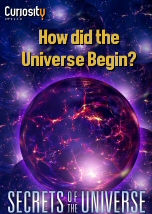
Scientists on the BICEP and Planck missions are attempting to solve a mystery about the earliest moments of our universe, by searching for patterns in the Cosmic Microwave Background (CMB). If successful, the missions will help to answer the biggest question anyone can ask: how did our universe begin?
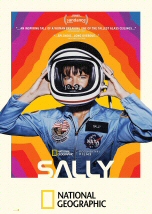
In 1983, the world watched in awe as an astronaut shattered the final frontier of gender. But beyond the headlines and historic liftoff lay a hidden universe of love and struggle. For nearly three decades, a secret bond flourished between two brilliant women determined to protect their truth from a society not yet ready to embrace it. Through intimate interviews, never-before-seen archives, and the candid voice of her lifelong partner, this documentary reveals the untold story of devotion, sacrifice, and quiet revolution behind an icon who inspired millions.
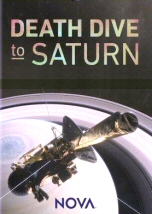
Almost everything we know today about the beautiful giant ringed planet comes from Cassini, the NASA mission that launched in 1997 and arrived at Saturn in 2004. Since then, the space probe has been beaming home miraculous images and scientific data, revealing countless wonders about the planet, its rings and 62 moons - including some that could harbor life. When the mission approached its final days, it attempted one last set of daring maneuvers - diving between the innermost ring and the top of Saturn's atmosphere. Aiming to skim less than 2000 miles above the cloud tops, no spacecraft has ever gone so close to Saturn, and hopes were high for incredible observations that could solve major mysteries about the planet's core. But such a daring maneuver comes with many risks and is no slam dunk. In fact, slamming into rocks in the rings is a real possibility. Join NASA engineers for the tense and triumphant moments as they find out if their bold re-programming has worked, and discover the wonders that Cassini has revealed over the years.
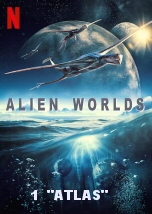
The series, depicted by state of the art CGI techniques, and applying the laws of life on Earth to the rest of the galaxy, blends fact with science fiction and conceptualizes what alien life might be like on other planets. In the prologue, astronomer Didier Queloz makes an appearance to discuss the discoveries of exoplanets and how they are analyzed in the real world. In Episode 1, the fictional world imagined is Atlas, a world with higher gravity than Earth and a thicker atmosphere leading to airborne creatures. In explaining the aliens of Atlas, the episode also explores the handicap principle in insects, and shows a rehabilitative form of falconry as captive falcons are trained to live in the wild.





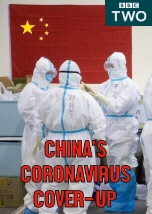


The film also hears from one high-level insider who believes the animal market at the centre of the Wuhan outbreak should have been treated as a 'crime scene' and from experts who warn that this crisis may be a 'dress rehearsal' for an even more deadly pandemic in the future.