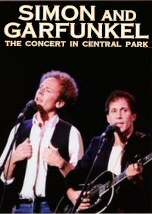
The film is the long-awaited reunion concert of the renowned folk pop music duo, more than a decade after their separation as musical performers. It was recorded on the 19th September 1981 at a free benefit concert on the Great Lawn in Central Park, New York City, where the pair performed in front of an audience reported at the time as 500,000 people. The film includes two songs that had not appeared on the album. Rolling Stone called the concert 'one of the finest performances, one that vividly recaptured another time, an era when well-crafted, melodic pop bore meanings that stretched beyond the musical sphere and into the realms of culture and politics.'
Al-Khalili travels to northern Syria to discover how, a thousand years ago, the great astronomer and mathematician Al-Biruni estimated the size of the earth to within a few hundred miles of the correct figure. He discovers how medieval Islamic scholars helped turn the magical and occult practice of alchemy into modern chemistry. In Cairo, he tells the story of the extraordinary physicist Ibn al-Haytham, who helped establish the modern science of optics and proved one of the most fundamental principles in physics - that light travels in straight lines. Prof Al-Khalili argues that these scholars are among the first people to insist that all scientific theories are backed up by careful experimental observation, bringing a rigour to science that didn't really exist before.
Rome was once a largely democratic society, with regular elections. This Republic lasted for 500 years, but then came Tiberius Gracchus. He believed in the ideals of the Republic - fairness, decency and justice for everyone -but was appalled by Rome's aristocrats' treatment of the poor. So he unleashed the power of the mob upon the streets of Rome, with devastating consequences.
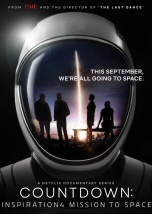
Follow the four civilians as they launch into space on a three-day trip orbiting Earth and reaching an altitude higher than that of the International Space Station. The SpaceX Dragon mission, dubbed Inspiration4, is making history as the first all-civilian mission to orbit. In the first episode, preparations begin for the mission. The commander is Jared Isaacman, a billionaire entrepreneur who purchased the flight for all four passengers, and the second crew member is a 29-year-old cancer survivor, Hayley Arceneaux.
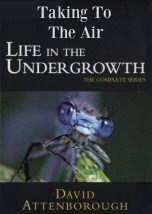
As the early June sun begins to set over a calm river in Central Hungary, masses of ghostly shapes emerge from their larval cases to take to the air for the first time. They are mayflies and in a spectacular display, thousands of them demonstrate how the very first wings were used.
From the stunning aerobatics of hoverflies in an English garden to the mass migration of purple crow butterflies in the valleys of Taiwan, this episode tells the tale of the first animals ever to take to the air. Unique footage reveals the lightning fast reactions of bluebottles and hoverflies, filmed with one of the world's fastest cameras, and Sir David Attenborough handles the world's largest (and perhaps most ferocious) insect - the Titan beetle.
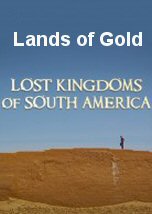
Through the mountains and jungles of Colombia, Cooper goes in search of the truth behind one of the greatest stories ever told - the legend of El Dorado. His journey takes him from Bogota to the Caribbean coast, through territories once dominated by two cultures, the Muisca and the Tairona, who flourished for centuries before the arrival of the Spanish in the 16th century. Cooper reveals forgotten peoples who valued gold in a way the Western world still struggles to understand, travelling to an astonishing lost city and meeting the last survivors of an ancient civilisation.









Rolling Stone called the concert 'one of the finest performances, one that vividly recaptured another time, an era when well-crafted, melodic pop bore meanings that stretched beyond the musical sphere and into the realms of culture and politics.'