




Last Watched

"Biology"  Sort by

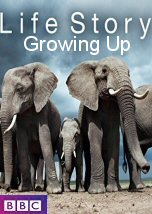
Growing Up

   2014    Nature
David Attenborough brings us the universal story that unites each of us with every animal on the planet, the story of the greatest of all adventures - the journey through life. For animals there is just one goal in life - to continue their bloodline in the form of offspring, the next best thing to immortality. The series shows how animals attempt to overcome the challenges that face them at each of the six crucial stages of life as they strive towards ultimate success." In the journey towards adulthood, a moment comes for all animals when they must strike out on their own. With their parents absent they must learn to survive in a dangerous world. At this stage of life every small success may mean the difference between life and death.
Series: Life Story
The Silk Spinners

   2005    Nature
Silk is the invertebrates' great invention, used in a range of ways from from the protective stalks of lacewing eggs to the amazing hanging threads of New Zealand's 'glow worms'. Spiders, though, have taken silk-spinning to extremes. The common wolf spider has no web, but the female is a gentle parent, encasing her eggs in silk and carrying the precious bundle wherever she goes. The bolas spider uses a ball of sticky silk soaked in a copy of moth pheromone to lure its prey. Millions of communal spiders live and feed together in a vast, towering web - an arachnophobe's nightmare.
Series: Life in the Undergrowth

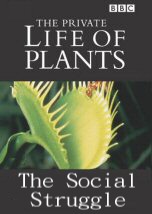
The Social Struggle

   1995    Nature
Fourth episode examines how plants either share environments harmoniously or compete for dominance within them. Attenborough highlights the 1987 hurricane and the devastation it caused. However, for some species, it was that opportunity for which they had lain dormant for many years. The space left by uprooted trees is soon filled by others who move relatively swiftly towards the light. The oak is one of the strongest and longest-lived, and other, lesser plants nearby must wait until the spring to flourish before the light above is extinguished by leaves. Tropical forests are green throughout the year, so brute force is needed for a successful climb to the top of the canopy: the rattan is an example that has the longest stem of any plant. As its name suggests, the strangler fig 'throttles' its host by growing around it and cutting off essential water and light. Some can take advantage of a fallen tree by setting down roots on the now horizontal trunk and getting nutriment from the surrounding moss and the fungi on the dead bark. The mountain ash (eucalyptus regnans) grows so tall, that regeneration becomes a considerable problem. It is easily flammable, so its solution is to shed its seeds during a forest fire and sacrifice itself. It therefore relies on the periodic near-destruction of its surroundings in order to survive. Attenborough observes that catastrophes such as fire and drought, while initially detrimental to wildlife, eventually allow for deserted habitats to be reborn.
Series: The Private Life of Plants

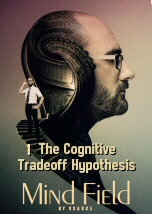
The Cognitive Tradeoff Hypothesis

   2019    Science
Join us on a journey into the mysterious depths of the human psyche as we investigate the strange and surprising terrain of the Mind Field.
Chimps and Humans can be traced biologically back to a common ancestor. The Cognitive Tradeoff Hypothesis theorizes about the two different paths of development - particularly cognitive development - that occurred in these two species after the split. Chimps stayed in the trees and developed some extraordinary cognitive capabilities which are shown by the research work of Japanese scientists, while humans came down into the savanna and developed social capabilities and language.
The hypothesis is that humans 'traded' some aspects of cognitive capabilities by re-purposing areas of the brain that had evolved in the context of other uses. Those capabilities are kept in chimps and are far surpassing that of normal humans. This is shown by the research work of scientists at the Primate Research Center connected with Kyoto University.
Series: Mind Field

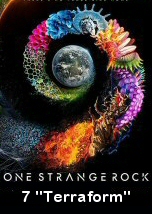
Terraform

   2018    Science
We sure lucked out with Planet Earth. Blue skies, rolling hills, water everywhere. But our home didn't come like this out of the box. Earth was a real fixer-upper, and it took some seriously hard work to build this paradise. Nearly four billion years of renovation. Some tiny, some huge, to make this house a home. Creatures on Earth don't just live and die. They actually change the world around them.
The story of how for nearly 4 billion years, microbes, plants and animals have emerged and sculpted the planet's surface and atmosphere in the strangest of ways.
Series: One Strange Rock

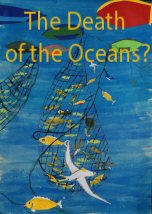
The Death of the Oceans

   2010    Nature
Sir David Attenborough reveals the findings of one of the most ambitious scientific studies of our time - an investigation into what is happening to our oceans. He looks at whether it is too late to save their remarkable biodiversity. Attenborough explores some of the ways in which we are affecting marine life - from over-fishing to the acidification of sea water. The film also uncovers the disturbing story of how shipping noise is deafening whales and dolphins, affecting their survival in the future.
The Cell

The Cell

  Science
Ancient Aliens

Ancient Aliens

2014  Culture
Cosmos

Cosmos

1980  Culture
Art of Eternity

Art of Eternity

2007  Art
Earth at Night in Color

Earth at Night in Color

2020  Nature
Space Race

Space Race

2005  Technology
Senna

Senna

2010  Culture