












Last Watched

"Physics"  Sort by

Strangest Things

   2008    Science
From stars, galaxies and moons to subatomic particles, black holes and invisible phenomena, discover the most bizarre, mysterious and exotic things in our universe
Series: The Universe
Stephen Hawking: A Brief History of Mine

   2013    History
This new feature-length biographical film tells the extraordinary and dramatic story of the planet's most famous living scientist, told for the first time in his own words and by those closest to him. Made with unique access to his private life, this is an intimate and moving journey into Stephen Hawking's past and present. Interviewees include Stephen Hawking's sister Mary, his ex-wife Jane, carers and students, as well as colleagues such as Roger Penrose, plus Apollo astronaut Buzz Aldrin, actors Benedict Cumberbatch and Jim Carrey, and Sir Richard Branson This inspirational portrait of an iconic figure relates Hawking's incredible personal journey from boyhood underachiever to scientific genius and multi-million-selling author. And it charts how he overcame being diagnosed with motor neurone disease - and being given just two years to live - to make amazing scientific discoveries and become a symbol of triumph over adversity. Born exactly 300 years after the death of Galileo, Hawking grew up in a family some regarded as eccentric. Always asking questions, he was nicknamed 'Einstein' at school. Hawking blossomed at Oxford, although he only spent an hour a day studying. He noticed that he was becoming clumsy and fell over for no apparent reason. He was diagnosed with motor neurone disease, but nevertheless started a family and embarked on his academic career, finding himself at the heart of a searing scientific debate about the origins of the universe. And as he lost the use of his body, Hawking had to find new ways to think. He went on to write the huge bestseller A Brief History of Time, and the film reveals the high and lows of his resulting fame and fortune.

Expanded Horizons

   2018    Science
Dr Hannah Fry travels down the fastest zip wire in the world to learn more about Newton's ideas on gravity. His discoveries revealed the movement of the planets was regular and predictable. James Clerk Maxwell unified the ideas of electricity and magnetism, and explained what light was. As if that wasn't enough, he also predicted the existence of radio waves. His tools of the trade were nothing more than pure mathematics. All strong evidence for maths being discovered.
But in the 19th century, maths is turned on its head when new types of geometry are invented. No longer is the kind of geometry we learned in school the final say on the subject. If maths is more like a game, albeit a complicated one, where we can change the rules, surely this points to maths being something we invent - a product of the human mind. To try and answer this question, Hannah travels to Halle in Germany on the trail of perhaps one of the greatest mathematicians of the 20th century, Georg Cantor. He showed that infinity, far from being infinitely big, actually comes in different sizes, some bigger than others. This increasingly weird world is feeling more and more like something we've invented. But if that's the case, why is maths so uncannily good at predicting the world around us? Invented or discovered, this question just got a lot harder to answer.
Series: Magic Numbers

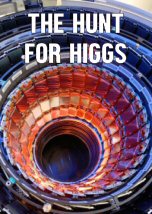
The Hunt For Higgs

   2012    Science
Go with us behind the scenes at CERN to follow one of the most epic and expensive scientific quests of all time: the search for the Higgs particle, believed to give mass to everything in our universe. However, the hunt for Higgs is part of a much grander search for how the universe works. It promises to help answer questions like why we exist and is a vital part of a Grand Unified Theory of nature". At the heart of the pursuit of the elusive particle is the same feature that makes snowflakes beautiful and human faces attractive: the simple and enchanting idea of symmetry. Presenter Jim Al-Khalil

The Time Travel

   2010    Science
One of the Universe's most enduring mysteries is Time Travel. In this episode, we explore the possibilities. Discover why Time Travel into the future is unavoidable in the Einsteinian world of Relativity. As for the past... the laws of physics do not tell us it's impossible, but the bizarre consequences of going into the past and altering the future make for mind-bending science. Finally, we go for the future by traveling to the nearest star, 4.3 light years away... in only 45 days. Our destination may be an Earth-like planet; a planet scientists are now hunting for, and may find in the next 3 to 4 years.
Series: The Universe

Unexplained Mysteries

   2008    Science
Explore the myths, misconceptions, truths & amazing mysteries of our unique universe. Could life exist on Mars? Is time travel possible & does Einstein's theory of relativity support it?
Series: The Universe
Apocalypse: World War 1

Apocalypse: World War 1

2014  History
Arnold

Arnold

2023  History
Senna

Senna

2010  Culture
Vietnam in HD

Vietnam in HD

2011  History
The Universe

The Universe

2010  Science
Life In Cold Blood

Life In Cold Blood

2008  Nature
Dinosaur Planet

Dinosaur Planet

2003  Science