A bizarre 3,000 year-old gold relic crafted with intricately designed cryptic patterns is believed to form a highly complex celestial code; using advanced imaging technology, experts speculate that it could be an ancient device for predicting the future. Professor Timothy Koeth at Maryland University received a package containing a curiously heavy two-inch black cube. It comes with a message: "Taken from Germany from the nuclear reactor that Hitler tried to build."
Moral psychology isn't always an easy thing to study. Experiments that actually puts people in what feels like a real scenario may get realistic results, but researchers must always balance the benefits of what we could learn with the safety and well-being of the people they study. Often what we learn from moral psychology experiments doesn't make humans look good. We are imperfect creatures. But the more we learn about why and how we make the moral choices that we do, the better we'll be able to tackle difficult questions in the future.
It sounds like a Hollywood blockbuster: a deadly asteroid is on a collision course with Earth. But in reality, it's only a matter of time before a giant space rock threatens to wipe out civilization. An asteroid took out the dinosaurs sixty-five million years ago. Are we next? This episode analyzes the threat and explores the many ways--from a nuclear bomb to ingenious new technology--that experts are proposing to stop Armageddon
A new force threatens our perfect planet. In the past, five mass extinction events were caused by cataclysmic volcanic eruptions. It was not the lava or ash that wiped out life, but an invisible gas released by volcanoes: carbon dioxide. Almost every part of modern life depends on energy created by burning fossil fuels, and this produces CO2 in huge amounts. Humans are changing our planet so rapidly, it’s affecting earth’s life support systems: our weather, our oceans and the living world. The greatest change to be made is in how we create energy, and the planet is brimming with natural power that can help us do just that. It’s these forces of nature - the wind, the sun, waves and geothermal energy - that hold the key to our future. Through compelling animal-led stories and expert interviews, we discover how CO2 is destabilising our planet. We meet rescued orphaned elephants in Kenya, victims of ever worsening droughts, and join ocean patrols off the coast of Gabon fighting to save endangered sharks. In the Amazon, we witness wildlife teams saving animals in the shrinking forests, and in San Diego we enter a cryogenic zoo preserving the DNA of endangered species before they become extinct.
The end is coming. But which cosmic catastrophe will deliver the death blow? Were the Vikings right to fear the frozen apocalypse of an endless winter? Did the Buddhists correctly predict a fiery end to life on Earth? Or will the thunderous Christian vision of Armageddon come crashing down from the stars? Which ancient prophesy do scientists believe accurately foretells our doom? And how close are we to the end of the world? This film explores all the possibilities Apocalyptic Visions to the Future.
The meteoric rise of renewable energy has consequences for our electricity supply. While coal and gas fired power stations can generate electricity whenever you need it, renewables are intermittent by nature. So we need a backup plan for when the wind stops or the sun goes down. All over the world, engineers and scientists are racing to solve one key problem; how to safely and efficiently store electricity at a huge scale but at a low cost. The quest is producing some truly remarkable ideas and this episode details three of them.












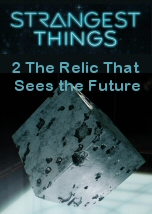


Professor Timothy Koeth at Maryland University received a package containing a curiously heavy two-inch black cube. It comes with a message: "Taken from Germany from the nuclear reactor that Hitler tried to build."