This illuminating ten-part series tells the story of World War ll through the ten most pivotal turning points in the conflict. Gripping story-telling illustrated with exquisitely restored and colourised archived films and supported by a global cast of stellar historians bring this crucially important era in history to life. In the first chapter, Britain and France declare war when Hitler invades Poland. In May 1940 the Germans attack Holland and Belgium as a decoy. As the Wehrmacht comes through the Ardennes and the Luftwaffe strikes in force, French leaders are caught like rabbits in headlights. The Germans are on a drug called Pervitin, which beats off fatigue, and reach the Atlantic coast. There is a danger that the Germans will encircle the Allies and cut them off from the sea. But Hitler issues his Halt Order and some 340,000 Allies are evacuated.
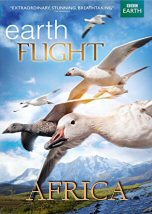
Fly over Africa on the back of a vulture and see the most animal-packed continent with fresh eyes. Arrow-dive with cape gannets among sharks, dolphins and whales as they join the great sardine run. Soar with fish eagles as they discover an S-shaped living island comprised entirely of flamingos, and join them on a spectacular hunt. Fly with kelp gulls as they study the hunting behaviour of the greatest underwater predator of all: the great white shark. On the wings of eagles, fly through the mist-filled Victoria Falls and dive for fish in the mighty Zambezi. Circle with vultures high above the Serengeti as they watch the drama of the wildebeest migration below, and discover what happens when this canny scavenger suddenly becomes prey. Among toxic soda lakes, find out what it is like to be a flamingo, vulnerable to every predator on the continent, including baboons and hyenas. Join these flamingos as they take part in one of the most beautiful dances in the bird world. This is Africa as never seen before - from the wings of birds
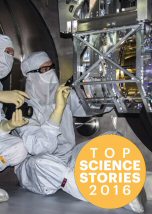
From the detection of gravitational waves generated in space over a billion years ago, to discoveries in genetics here on Earth, we've collected the most compelling science breakthroughs and advances of 2016.
Thanks to magnificent, hard-working scientists and researchers around the world, science keeps marching ever forward. And this year saw some discoveries that are absolutely brimming with the promise of greater discoveries, breakthroughs and quality of life in the future.
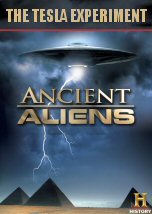
Ancient Aliens explores the controversial theory that extraterrestrials have visited Earth for millions of years. From the age of the dinosaurs to ancient Egypt, from early cave drawings to continued mass sightings. In this episode researchers discuss the possibility that the great technological developments made by inventor Nikola Tesla were inspired by extraterrestrials
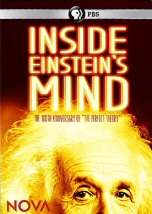
On November 25th, 1915, Einstein published his greatest work: General Relativity. The theory transformed our understanding of nature’s laws and the entire history of the cosmos, reaching back to the origin of time itself. Now, in celebration of the 100th anniversary of Einstein’s achievement, discover the inside story of Einstein’s masterpiece". The story begins with the intuitive thought experiments that set Einstein off on his quest and traces the revolution in cosmology that is still playing out in today’s labs and observatories. Discover the simple but powerful ideas at the heart of relativity, illuminating the theory—and Einstein’s brilliance—as never before. From the first spark of an idea to the discovery of the expanding universe, the Big Bang, black holes, and dark energy, NOVA uncovers the inspired insights and brilliant breakthroughs of “the perfect theory.”
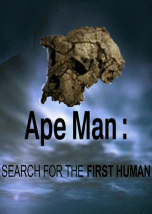
After eight grueling years of hunting in the hot, wind-scoured desert of central Africa, an international team of researchers has uncovered one of the most sensational fossil finds in living memory: the well-preserved 7 million years old skull of a chimp-size animal, probably a male, that doesn't fit any known species. According to paleontologist Michel Brunet of the University of Poitiers in France, whose team reported the find in Nature last week, there is no way it could have been an ape of any kind. It was almost certainly a hominid — a member of a subdivision of the primate family whose only living representative is modern man.





















In the first chapter, Britain and France declare war when Hitler invades Poland. In May 1940 the Germans attack Holland and Belgium as a decoy. As the Wehrmacht comes through the Ardennes and the Luftwaffe strikes in force, French leaders are caught like rabbits in headlights. The Germans are on a drug called Pervitin, which beats off fatigue, and reach the Atlantic coast. There is a danger that the Germans will encircle the Allies and cut them off from the sea. But Hitler issues his Halt Order and some 340,000 Allies are evacuated.