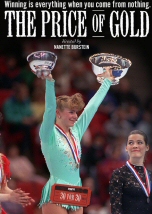
The world couldn't keep its eyes off two athletes at the 1994 Winter Games in Lillehammer - Nancy Kerrigan, the elegant brunette and Tonya Harding, the feisty blonde engulfed in scandal. Just weeks before the Olympics on January 6, 1994 at the U.S. Figure Skating Championships, Kerrigan was stunningly clubbed on the right knee by an unknown assailant and left wailing, 'Why, why, why?' As the bizarre 'why' mystery unraveled, it was revealed that Harding's ex-husband, Jeff Gillooly, had plotted the attack with his misfit friends to literally eliminate Kerrigan from the competition. Now two decades later, The Price of Gold takes a fresh look at the worldwide spectacle that elevated the popularity of professional figure skating and has Harding still facing questions over what she knew when she knew it.
Ancient Aliens explores the controversial theory that extraterrestrials have visited Earth for millions of years. From the age of the dinosaurs to ancient Egypt, from early cave drawings to continued mass sightings. In this episode researchers discuss the possibility that the great technological developments made by inventor Nikola Tesla were inspired by extraterrestrials
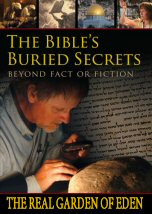
Can we find the Garden of Eden? Bible scholar Dr Francesca Stavrakopoulou thinks so. In the final episode of her series re-examining conventional readings of the Bible, she argues that the Garden of Eden has nothing to do with the origins of humanity, but is rather a story concealing dramatic events about a particular figure in a particular place, two and half thousand years ago. Marshalling compelling evidence from archaeology, Islam and the Bible text itself, she identifies and visits the exact site of Eden. It's a revolutionary theory which challenges some of the most cherished preconceptions about Eden in both Christianity and western culture.
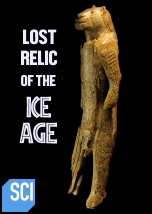
An Ice Age relic found in a mysterious cave is evidence of prehistoric humans' connection to the supernatural. Using cutting-edge tech, experts investigate this 40,000-year-old treasure to reveal why it was made and the long-lost myths it represents. In the summer of 1939, a team of explorers unearthed hundred of mammoth ivory fragments within a cave in Germany. Due to the start of World War II, the explorers were forced to abandon their findings, and the fragments laid forgotten in a museum. Decades later, as archeologists began piecing the fragments together, an extraordinary artifact emerged -- a figure with both animal and human features, now known as the 'Lion man.'
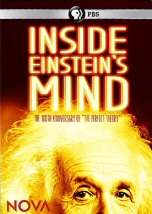
On November 25th, 1915, Einstein published his greatest work: General Relativity. The theory transformed our understanding of nature’s laws and the entire history of the cosmos, reaching back to the origin of time itself. Now, in celebration of the 100th anniversary of Einstein’s achievement, discover the inside story of Einstein’s masterpiece". The story begins with the intuitive thought experiments that set Einstein off on his quest and traces the revolution in cosmology that is still playing out in today’s labs and observatories. Discover the simple but powerful ideas at the heart of relativity, illuminating the theory—and Einstein’s brilliance—as never before. From the first spark of an idea to the discovery of the expanding universe, the Big Bang, black holes, and dark energy, NOVA uncovers the inspired insights and brilliant breakthroughs of “the perfect theory.”
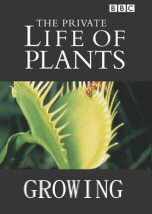
The second episode is about how plants gain their sustenance. Sunlight is one of the essential requirements if a seed is to germinate, and Attenborough highlights the cheese plant as an example whose young shoots head for the nearest tree trunk and then climb to the top of the forest canopy, developing its leaves en route. Using sunshine, air, water and a few minerals, the leaves are, in effect, the "factories" that produce food. However, some, such as the begonia, can thrive without much light. To gain moisture, plants typically use their roots to probe underground. Trees pump water up pipes that run inside their trunks, and Attenborough observes that a sycamore can do this at the rate of 450 litres an hour — in total silence. Too much rainfall can clog up a leaf's pores, and many have specially designed 'gutters' to cope with it. However, their biggest threat is from animals, and some require extreme methods of defence, such as spines, camouflage, or poison. Some can move quickly to deter predators: the mimosa can fold its leaves instantly when touched, and the Venus flytrap eats insects by closing its leaves around its prey when triggered. Another carnivorous plant is the trumpet pitcher that snares insects when they fall into its tubular leaves. Attenborough visits Borneo to see the largest pitcher of them all, Nepenthes rajah, whose traps contain up to two litres of water and have been known to kill small rodents.













As the bizarre 'why' mystery unraveled, it was revealed that Harding's ex-husband, Jeff Gillooly, had plotted the attack with his misfit friends to literally eliminate Kerrigan from the competition. Now two decades later, The Price of Gold takes a fresh look at the worldwide spectacle that elevated the popularity of professional figure skating and has Harding still facing questions over what she knew when she knew it.