






Last Watched

One Voice in the Cosmic Fugue

   1980    Science
Sagan discusses the story of the Heike crab and artificial selection of crabs resembling samurai warriors, as an opening into a larger discussion of evolution through natural selection (and the pitfalls of intelligent design). Among the topics are the development of life on the Cosmic Calendar and the Cambrian explosion; the function of DNA in growth; genetic replication, repairs, and mutation; the common biochemistry of terrestrial organisms; the creation of the molecules of life in the Miller-Urey experiment; and speculation on alien life (such as life in Jupiter's clouds). In the Cosmos Update ten years later, Sagan remarks on RNA also controlling chemical reactions and reproducing itself and the different roles of comets (potentially carrying organic molecules or causing the Cretaceous–Paleogene extinction event).
Series: Cosmos
Arrival

   2010    Science
Sir Attenborough's journey begins in a forest near his childhood home in Leicester, where a fossil discovery transformed our understanding of the evolution of complex life. Travelling to the fog bound coastline of Newfoundland and the Australian outback, Sir Attenborough unearths the earliest forms of animal life to exist on Earth. These bizarre and wonderful creatures are brought to life with the help of cutting edge scientific technology and photorealistic visual effects. From the first animal forms that moved to the first mouths that ate, these were creatures that evolved the traits and tools that allow all animals, including ourselves, to survive to this day.
Series: First Life

Mystery of the Dead Planets

   2021    Science    HD
The season 8 of Space Deepest Secrets shares the stories of deep-space explorers who are risking their careers, and even their lives, to lead humanity to worlds yet to be seen.
In the first episode, astronomers are laying the groundwork to locate a new planet for the human race to inhabit, and the more alien worlds they discover and encounter, the more they unmask the mysterious and truly destructive nature of the cosmos.
Series: Space Deepest Secrets Series 8

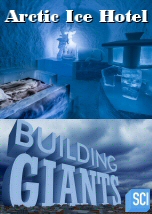
Arctic Ice Hotel

   2019    Technology
Deep inside the arctic circle, this team of elite engineers Is embarking on an epic endeavor. They're attempting to build a unique structure, one of the largest snow and ice hotels in the world. Constructed from more than 15,000 tons of snow and ice, spanning over 26,000 square feet, they are pushing to complete this ambitious build in an unheard-of six weeks.
Engineers brave the cold and nights of the Arctic Circle to build the Ice Hotel. Using cutting-edge tech, they'll construct this modern marvel in just six weeks.
Series: Building Giants

Top Science Stories of 2016

   2016    Science
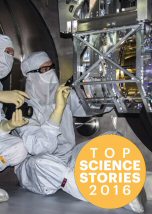
From the detection of gravitational waves generated in space over a billion years ago, to discoveries in genetics here on Earth, we've collected the most compelling science breakthroughs and advances of 2016. Thanks to magnificent, hard-working scientists and researchers around the world, science keeps marching ever forward. And this year saw some discoveries that are absolutely brimming with the promise of greater discoveries, breakthroughs and quality of life in the future.
Series: Top Science Stories

Super Small Animals

   2022    Nature
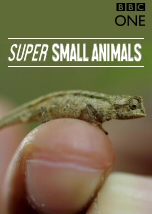
From a primate that’s no bigger than a mouse, to a chameleon that can fit on your fingertip, the natural world is full of fantastically small animals. Biologist Patrick Aryee explores the fascinating secrets behind these miniature marvels and shows that they’re not the underdogs you might think they are. Super Small Animals follows him as he meets the leading experts on these pint sized superstars, and finds out what makes them some of the most successful on the planet.
First up, he reveals the huge benefits that being small can bring. There’s the little lemur whose diminutive frame helps it to exploit a unique gap in the eco-system, the tiny hummingbird that uses its size to out-maneuver the competition, and the world’s smallest seahorse that never has to leave home. He also explores why small animals are proportionally the strongest in the world, and introduces a peanut-sized beetle that can pull over a thousand times its own weight.
Next he explores the challenges that animals face when they shrink in size, and the ingenious ways they overcome them. We find out how the smallest armadillo in the world manages to control its temperature in the searing desert sun, and the how the world’s smallest fish can survive in nothing more than a puddle, because it never really grows up. Patrick meets a secretive hippo that lives in the dense jungle, and looks like it’s been shrunk in the wash, and some of the world’s smallest snakes that give birth to enormous babies. He also meets a scientist that studies how really tiny spiders have a surprising trick that enables them to travel an incredible 40 miles per day, using almost no energy.
Then there are the animals that refuse to be pigeon holed as small, and manage to punch way above their weight. He puts some astonishing invertebrates to the test, to see how they work together to become much bigger than the sum of their parts and meets a pint-sized predator that takes on some of the largest and most dangerous creatures on the planet, getting hands on to discover how its build helps it to be brave. Finally he uncovers the incredible lengths that deep sea anglerfish go to in order to be big and small at the same time, and has an endearing encounter with a tiny carnivore that manages to be small in just one direction.
Whether their size helps them to hunt, hide or survive, all these remarkable animals prove that good things really do come in small packages.