Professor Brian Cox continues his epic exploration of the cosmos by looking at the faint band of light that sweeps across the night sky - our own galaxy, the Milky Way. The Sun is just one of almost 400 billion stars that form this vast, majestic disk of light, our own home in the universe. Thanks to a cutting-edge space we’re finally able to reveal the Milky Way’s dramatic history and predict its cataclysmic future. Our galaxy started out a fraction of the size it is today, and Gaia telescope has revealed how it grew over the eons. Beautifully rendered VFX based on the very latest Gaia data has uncovered the remarkable story of our galaxy’s evolution. As our young galaxy encountered rival galaxies, it experienced a series of violent growth spurts and intense periods of cataclysmic change while battling to survive. Each time our galaxy feeds, a new era of star formation begins, fuelled by incoming torrents of fresh gas and energy. And there is another collision to come. Another, larger galaxy is coming our way. Andromeda is heading straight for us at a quarter of a million miles per hour. The Milky Way’s long-term fate is in the balance.
Ideas about time and space are explored in the changes that constellations undergo over time, the redshift and blue shift measured in interstellar objects, time dilation in Albert Einstein's theory of relativity, the designs of both Leonardo da Vinci and spacecraft that could travel near light speed, time travel and its hypothetical effects on human history, the origins of the Solar System, the history of life, and the immensity of space. In Cosmos Update, the idea of faster-than-light travel by wormholes (researched by Kip Thorne and shown in Sagan’s novel Contact) is discussed.
The documentary chronicles the fall of the Atari Corporation through the lens of one of the biggest mysteries of all time, dubbed 'The Great Video Game Burial of 1983'. As the story goes, the Atari Corporation, faced with an overwhelmingly negative response to 'E.T.', the video game for the Atari 2600, disposed of hundreds of thousands of unsold game cartridges by burying them in the small town of Alamogordo, New Mexico.
Humans have long gazed up at the night sky, wondering whether other lifeforms and intelligences could be thriving on worlds far beyond our own. But over the last few decades, ultra-sensitive telescopes and dogged detective work have transformed alien planet-hunting from science fiction into hard fact. We expected to find worlds similar to the planets in our own solar system, but we instead discovered a riot of exotic worlds. Vivid animation based on data from the most successful planet hunter of them all, the Kepler space telescope, brings these worlds into view: puffy planets with the density of polystyrene, unstable worlds orbiting two suns and 1,000-degree, broiling gas giants with skies whipped into titanic winds. But perhaps the most startling discovery was the number of worlds that may be contenders for a second Earth, at the right distance from their sun to have that ingredient so crucial for life as we know it, liquid water. Amongst them, we witness the most tantalizing discovery of all: a so-called ‘super-Earth’, situated in the Goldilocks zone - the area just the right distance from a sun to potentially support life - and with the faint signal of water in its atmosphere.
Frequent security expos feature companies like Megvii and its facial- recognition technology. They show off cameras with A.I. that can track cars, and identify individuals by face, or just by the way they walk. In China it's been projected that over 600 million cameras will be deployed by 2020. Here, they may be used to discourage jaywalking, but they also serve to remind people that the state is watching. Matching with the most advanced artificial intelligence algorithm, they can actually use this data, real-time data, to pick up a face or pick up a action. A.I. is a technology that can be used for good and for evil. So, how do governments limit themselves in, on the one hand, using this A.I. technology and the database to maintain a safe environment for its citizens, but not to encroach on a individual's rights and privacies?
Our universe seems real. But what if it’s a videogame? Scientists in a variety of fields are taking seriously the possibility that we live in a virtual reality. Maybe the Big Bang was just the moment someone flipped the switch and turned on our universe. Maybe what looks random has already been programmed to happen. If some advanced civilization did design and program our universe, would we ever know? Scientists are looking for glitches in the laws of the universe that may uncover its hidden code.













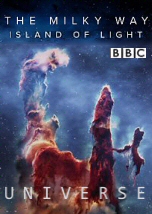





Our galaxy started out a fraction of the size it is today, and Gaia telescope has revealed how it grew over the eons. Beautifully rendered VFX based on the very latest Gaia data has uncovered the remarkable story of our galaxy’s evolution. As our young galaxy encountered rival galaxies, it experienced a series of violent growth spurts and intense periods of cataclysmic change while battling to survive. Each time our galaxy feeds, a new era of star formation begins, fuelled by incoming torrents of fresh gas and energy. And there is another collision to come. Another, larger galaxy is coming our way. Andromeda is heading straight for us at a quarter of a million miles per hour. The Milky Way’s long-term fate is in the balance.