


Last Watched

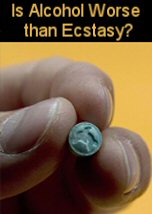
Is Alcohol Worse than Ecstasy

   2008    Medicine
The drug policies have remained unchanged over the last 40 years so should they be reformed in the light of new research? Recent research has analysed the link between the harmful effects of drugs relative to their current classification by law with some startling conclusions. Perhaps most startling of all is that alcohol, solvents and tobacco (all unclassified drugs) are rated more dangerous than ecstasy, 4-MTA and LSD (all class A drugs).
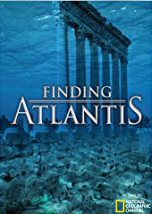

Finding Atlantis

   2011    History
Could the fabled lost city of Atlantis have been located? Professor Freund explained how he led a pursuit to find the lost civilisation, believed by many to be an ancient Greek myth, by using deep-ground radar, digital mapping and satellite imagery. He contends that Atlantis, described by Plato in 360BC, in Spain's DonaƱa National Park, north of Cadiz, and was wiped out by a giant tsunami. Plato wrote it had been destroyed by a natural disaster in 9,000BC. Experts are now surveying marshlands in Spain to look for proof of the ancient city.

Atari Game Over

   2014    Technology
The documentary chronicles the fall of the Atari Corporation through the lens of one of the biggest mysteries of all time, dubbed 'The Great Video Game Burial of 1983'. As the story goes, the Atari Corporation, faced with an overwhelmingly negative response to 'E.T.', the video game for the Atari 2600, disposed of hundreds of thousands of unsold game cartridges by burying them in the small town of Alamogordo, New Mexico.

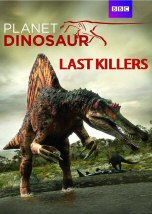
Last Killers

   2011    Science
In late Cretaceous Canada, in what will be known as Dinosaur Provincial Park, a Daspletosaurus stalks a Chasmosaurus in a forest, but loses the element of surprise and is forced to retreat. The Chasmosaurus comes across a younger Daspletosaurus, before being ambushed by a group of the tyrannosaurids. The episode then cuts to the high Arctic, where Edmontosaurus are hunted by a large species of Troodon. The theropods attack at night, separating a juvenile from the herd and severely wounding it, only to be driven away by an adult. In the morning, they return to eat the carcass of the juvenile, which died during the night. The episode returns to the Daspletosaurus, who chase and bring down the Chasmosaurus. The larger adults bully the youngsters off the carcass, forcing them to wait until they have finished. The episode then cuts to Madagascar, where a mother Majungasaurus (an Abelisaurid) and her two offspring chase a group of Rahonavis off a carcass. However, they are temporarily driven off themselves by a male Majungasaurus. But, after he steals some food from one of the young, the female attacks him, before she and her young cannibalise his body. The episode returns once again to North America, where the Daspletosaurus are waiting for the annual migration of Centrosaurus. They attack during a rainstorm, killing some of the ceratopsians. The Centrosaurus make it to a flooded river and begin to swim across, and although many make it to the other side, some are caught by giant crocodilians or are severely wounded by floating debris and thus drown, or drown for unseen reasons. In the morning, the carcasses attract scavengers, including the Daspletosaurus. A montage is then shown of Daspletosaurus and Majungasaurus, the narrator saying that together, the tyrannosaurids and abelisaurids were the last of the killer dinosaurs.
Series: Planet Dinosaur

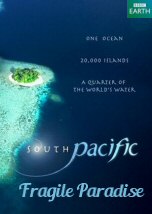
South Pacific Fragile Paradise

   2009    Nature
The extraordinary wildlife, culture and history of this immense, fascinating ocean and its myriad islands are revealed in stunning detail. With its coral reefs, turquoise lagoons and dramatic oceanic atolls, the South Pacific is the archetypal paradise. It is still relatively healthy and teeming with fish, but it is a fragile paradise. International fishing fleets are taking a serious toll on the sharks, albatross and tuna, and there are other insidious threats to these bountiful seas. We look at what is being done to preserve the ocean and its wildlife.

Cryptocurrency

   2018    Technology
Bitcoin, the beautiful anonymity of cash, but cash that wasn't printed by governments. Instead, it was made by a bit of code, powered by citizens of the internet, and you could trust it. Today, anyone can buy cryptocurrency. A few signups, type in your credit card number, and trade in your money for digital cash. And with a few more steps, you can use Bitcoin to buy what the majority of Bitcoin is spent on: Illegal services. Virtual currencies can pose challenges for law enforcement, given the appeal they have among those seeking to conceal.
Is digital cash the next revolution? Learn about this anonymous currency and why it's so coveted.
Series: Explained