



Last Watched

"Ants"  Sort by

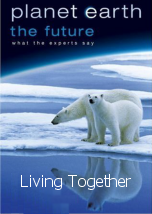
Living Together

   2006    Nature
The documentary deals with the future of conservation. It begins by looking at previous efforts. The 'Save The Whales' campaign, which started in the 1960s, is seen to have had a limited effect, as whaling continues and fish stocks also decline. In the 1990s, as head of the Kenya Wildlife Service, Richard Leakey took on the poachers by employing armed units. Although it was successful in saving elephants, the policy was detrimental to the Maasai people, who were forced from their land. The need for "fortress" areas is questioned, and the recently highlighted Raja Ampat coral reef in Indonesia is an example. The more tourism it generates, the greater the potential for damage — and inevitable coastal construction. Sustainable development is viewed as controversial, and one contributor perceives it to currently be a "contradiction in terms". Trophy hunting is also contentious. Those that support it argue that it generates wealth for local economies, while its opponents point to the reducing numbers of species such as the markhor. Ecotourism is shown to be beneficial, as it is in the interests of its providers to protect their environments. However, in some areas, such as the Borneo rainforests, the great diversity of species is being replaced by monocultures. The role of both religion and the media in conservation is argued to be extremely important. Contributors to the programme admit a degree of worry about the future, but also optimism.
The Lives of the Stars

   1980    Science
The simple act of making an apple pie is extrapolated into the atoms and subatomic particles (electrons, protons, and neutrons) necessary. Many of the ingredients necessary are formed of chemical elements formed in the life and deaths of stars (such as our own Sun), resulting in massive red giants and supernovae or collapsing into white dwarfs, neutron stars, pulsars, and even black holes. These produce all sorts of phenomena, such as radioactivity, cosmic rays, and even the curving of spacetime by gravity. Cosmos Update mentions the supernova SN 1987A and neutrino astronomy.
Series: Cosmos

Edge of the Universe

   2019    Science
Does the universe, have a limit? Does the universe have an edge? Looking out to the edge of the universe is tremendously important to understand our place in the cosmos and to understand the universe itself.
Inflation was a formative moment for our universe. By the time it stopped, the universe's basic characteristics were set. There could be regions of the greater universe where inflation didn't stop then. Occasionally a little region will stop inflating and just expand at the normal rate. We could imagine a super large-scale structure where there's different regions of the universe, domains, and each domain has different local constants and laws of physics.
Series: How the Universe Works Series 8

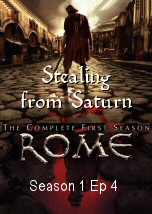
Stealing from Saturn

       History
Pompey wants to find out what happened to the gold from the Roman Treasury and sends his son Quintus to Rome to find out what happened. Atia and her family have stayed behind when Pompey and others fled and she now throws a party for her triumphant uncle, Julius Caesar. She clearly has her sights set on the great leader and is puzzled when he sends her a guest list that includes Servilia of the Junii. She soon finds out why.
Series: Rome

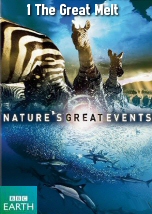
The Great Melt

   2009    Nature
Every year, around the world, seasonal changes transform entire landscapes and draw in millions of creatures as these great events unfold. This fantastic series combines the epic scale of Planet Earth and the intimate, emotional stories of charismatic animals as they struggle to survive. Using state of the art technology, these programmes capture the Earth's most dramatic and epic wildlife spectacles and the intimate stories of the animals caught up in them.
The Great Melt: The summer melt of Arctic ice, opening up nearly three million square miles of ocean and land, provides opportunities for millions of animals, including beluga whales, families of Arctic foxes, vast colonies of seabirds, and the fabled Arctic unicorn, the narwhal. For polar bears, however, it is the toughest time of year. Why? How will they survive? A mother polar bear and her cub make their first journey together onto the sea ice. They are looking for ringed seals, their favourite prey. It is a serious business but the cub just wants to play. The melting ice makes it harder for them to hunt and threatens their survival. In a unique aerial sequence, the migration of narwhal with their distinctive unicorn-like tusks is filmed for the first time. The whales' journey is risky as they travel along giant cracks in the ice. If the ice were to close above them, they would drown. Hundreds of beluga whales gather in the river shallows. They rub themselves on smooth pebbles in one of the most bizarre summer spectacles. Guillemot chicks take their first flights from precipitous sea cliff nests to the sea 300 metres below. They attempt to glide to safety but many miss their target. Their loss is a bonus for the hungry Arctic fox family waiting below. As the melt comes to an end the bears gather, waiting for the sea to freeze again. Two 400kg males square up to each other to spar.
Series: Nature Great Events

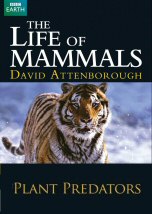
Plant Predators

   2002    Nature
The plant eaters take on the largely indigestible, spiny and poisonous defences of plants with some spectacular physical adaptations to diet. Plant Predators demonstrates the particular (and often peculiar) adaptations of herbivores
Series: The Life of Mammals
Cosmos

Cosmos

1980  Science
The Sky at Night

The Sky at Night

2025  Science
The Sky at Night

The Sky at Night

2024  Science
The Human Body

The Human Body

1998  Medicine
Leaving Neverland

Leaving Neverland

2019  Culture
How the Universe Works

How the Universe Works

2014  Science
Apocalypse: World War 1

Apocalypse: World War 1

2014  History