








Last Watched

"Light"  Sort by

The Art Of The Impossible

   2015    Art
Sir Roger Penrose is more than just a fan of MC Escher's mind-bending art. During the course of a long creative collaboration, the British mathematician and the Dutch artist exchanged ideas and inspirations. Some of Escher's most iconic images have their origin in Penrose's mathematical sketches - while the artist's work has served as a starting point for the professor's own explorations of new scientific ideas". To coincide with the first ever Escher retrospective in the UK, Penrose takes us on a personal journey through Escher's greatest masterpieces - marvelling at his intuitive brilliance and the penetrating light it still sheds on complex mathematical concepts.

Project Greenglow The Quest for Gravity Control

   2016    Science
For centuries, the precise workings of gravity have confounded the greatest scientific minds - from Newton to Faraday and Einstein - and the idea of controlling gravity has been seen as little more than a fanciful dream. Yet in the mid 1990s, UK defence manufacturer BAE Systems began a ground-breaking project code-named Greenglow. Nasa was simultaneously running its own Breakthrough Propulsion Physics Project". It was concerned with potential space applications of new physics, including concepts like 'faster-than-light travel' and 'warp drives'. Looking into the past and projecting into the future, Horizon explores science's long-standing obsession with the idea of gravity control. It looks at recent breakthroughs in the search for loopholes in conventional physics and examines how the groundwork carried out by Project Greenglow has helped change our understanding of the universe. Gravity control may sound like science fiction, but the research that began with Project Greenglow is very much ongoing, and the dream of flying cars and journeys to the stars no longer seems quite so distant.

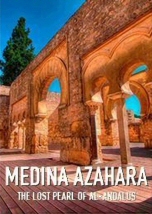
Medina Azahara: The Lost Pearl of al-Andalus

   2022    History    HD
Madinat al-Zahra was given its Arabic name, which means "The Shining City," by the 10th century caliph Abd al-Rahman III, who had it built. Nicknamed the "Versailles of Andalusia", Medina Azahara, located in Cordoba, Spain, is today one of the most important Islamic archaeological sites. This unique capital city, built four centuries before the Alhambra in the mid-10th century, is the object of a new excavation campaign.
Five years ago, a team of European archaeologists began a new excavation project at this World Heritage site. For over 100 years, excavations here have concentrated inside the Caliph's palace. This new excavation project is focused outside the palace walls, in areas of the city never before studied. A massive new building came to light, its function unknown. Beyond the mystery of this building, the very location of this city is an enigma in itself. Why was a Muslim city of such importance built in a then primarily Christian area? The site is a complete urban complex including infrastructure, buildings, decoration, and objects of daily use. By following this mission and revealing the mysteries of this lost city, this film traces the history of the golden age of al-Andalus.

Inside the Milky Way

   2011    Science
Embark on an astounding journey across 100,000 light-years to witness key moments in the history of the Milky Way. Using cutting-edge science, National Geographic constructs a 3-D state-of-the-art CGI model of our galaxy. We'll peer into the heart of the Milky Way on the hunt for super-massive black holes, watch how stars are born and die, fly out and above the plane of our galaxy to understand its true shape and scour its dusty spiral arms for the possibility of life

Super Telescope: Mission to the Edge of the Universe

   2022    Technology
As NASA releases the first images from the James Webb Space Telescope, this film tells the inside story of the telescope's construction and the astronomers taking its first picture of distant stars and galaxies. Will it be the deepest image of our universe ever taken? The successor to Hubble, and 100 times more powerful, the James Webb is the most technically advanced telescope ever built. It will look further back in time than Hubble to an era around 200 million years after the Big Bang, when the first stars and galaxies appeared. Webb's primary mission is to capture the faint light from these objects on the edge of our visible universe so that scientists can learn how they formed, but its instruments are so sensitive it could also be the first telescope to detect signs of life on a distant planet.
The James Webb Telescope is an £8 billion gamble on the skills of its engineering team. It’s the first telescope designed to unfold in space – a complicated two-week operation in which 178 release devices must all work - 107 of them on the telescope's sun shield alone. If just one fails, the expensive telescope could become a giant piece of space junk.
From its conception in the late 1980s, the construction of Webb has posed a huge technical challenge. The team must build a mirror six times larger than Hubble’s and construct a vast sun shield the size of a tennis court, fold them up so they fit into an Ariane 5 rocket, then find a way to unfold them in space. This film tells the inside story of the James Webb Space Telescope in the words of the engineers who built it and the astronomers who will use it.

Galapagos: Islands that Changed the World

   2006    Nature
From flightless cormorants hunting underwater to giant tortoises courting on the rim of an active volcano, a look at the hidden side of Galapagos, revealing why it is such a fascinating showcase for evolution.
Series: Galapagos
Prehistoric Planet

Prehistoric Planet

2022  Science
Most Wanted: Teen Hacker

Most Wanted: Teen Hacker

2025  Technology
Modern Masters

Modern Masters

2024  Art
Evolution

Evolution

2004  Science
The Green Planet

The Green Planet

2022  Nature
Leaving Neverland

Leaving Neverland

2019  Culture