
Last Watched

"Rat"  Sort by

Baraka

       Culture
Without words, Ron Fricke shows us the world, with an emphasis not on 'where,' but on 'what's there.' It begins with morning, natural landscapes and people at prayer: volcanoes, water falls, veldts, and forests; several hundred Balinese Hindu men perform kecak, the monkey chant. Indigenous peoples apply body paint; whole villages dance. The film moves to destruction of nature via logging, blasting, and strip mining. Images of poverty, rapid urban life, and factories give way to war, concentration camps, and mass graves. Ancient ruins come into view, and then a sacred river where pilgrims bathe and funeral pyres burn. Prayer and nature return. A monk rings a huge bell; stars wheel across the sky. (Click CC for places description)

When Knowledge Conquered Fear

   2014    Science
The episode begins with Tyson describing how pattern recognition manifested in early civilization as using astronomy and astrology to predict the passing of the seasons, including how the passage of a comet was often taken as an omen. Tyson continues to explain that the origin of comets only became known in the 20th century due to the work of Jan Oort and his hypothesis of the Oort cloud. Tyson then continues to relate the collaboration between Edmond Halley and Isaac Newton in the last part of the 17th century in Cambridge. The collaboration would result in the publication of Philosophiæ Naturalis Principia Mathematica, the first major work to describe the laws of physics in mathematical terms, despite objections and claims of plagiarism from Robert Hooke and financial difficulties of the Royal Society of London. Tyson explains how this work challenged the prevailing notion that God had planned out the heavens, but would end up influencing many factors of modern life, including space flight. Tyson further describes Halley's contributions including determining Earth's distance to the sun, the motion of stars and predicting the orbit of then-unnamed Halley's Comet using Newton's laws. Tyson contrasts these scientific approaches to understanding the galaxy compared to what earlier civilizations had done, and considers this advancement as mankind's first steps into exploring the universe. The episode ends with an animation of the Milky Way and Andromeda galaxies' merging based on the principles of Newton's laws.
Series: Cosmos: A Spacetime Odyssey

What is with Wheat

   2016    Medicine
Our wheat has changed dramatically, it doesn't even resemble what it used to look like. Not only are we seeing more wheat and gluten sensitivity, there is also a strong connection between gluten and autoimmune diseases. Tens of thousands of people are suffering with ill health and don't realise it's a result of the food choices they are making. Some assume it is part of their genetic make-up or the body changing as they get older.
People need to become educated, knowledgeable and aware. They need to start making changes to improve the health of their children and future generations.

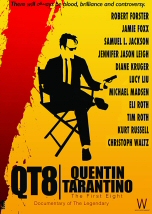
QT8: The First Eight

   2019    History
The film chronicles the life of Quentin Tarantino, from his start at Video Archives up to the releasing of Once Upon a Time in Hollywood. The documentary features interviews from his frequent collaborators of his films. The filmmaker Richard Linklater explores Quentin Tarantino from his trendsetting work on Reservoir Dogs and examines how his films have changed the movie making landscape forever.

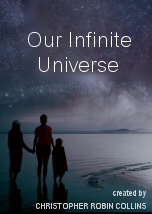
Our Infinite Universe

   2022    Science
This entertaining and engaging, high quality documentary film explores one of the most significant unanswered questions of our time 'Does infinity exist?' and if so, what are the implications of an infinite universe. If our universe is infinite, then what is the likelihood of other life? Could there be other civilizations just like ours or is it possible that we are the only intelligent life anywhere in our vast and likely infinite universe? Conversations with leading thinkers from multiple disciplines reveal the latest in scientific research, in this engaging and visually stunning film.

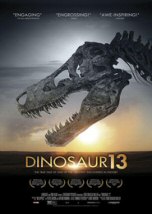
Dinosaur 13

   2014    Science
American paleontologist Pete Larson and his team discovered the largest and most complete Tyrannosaurus rex ever found (nicknamed 'Sue') while digging in the badlands of South Dakota. However the skeleton was seized from Larson by the federal government, followed by a ten-year-long battle with the FBI, the National Park Service, the Bureau of Indian Affairs, and Maurice Williams, on whose property the bones were discovered. Pete Larson also spent 18 months in prison." After the film aired, The Society of Vertebrate Paleontology, a society of professional academic paleontologists, issued a statement of full support for legally protecting fossils on public land and criticized Dinosaur 13 for implying that government regulations impede paleontological science
Warrior Graveyard

Warrior Graveyard

  History
The Keepers

The Keepers

2017  Culture
Arnold

Arnold

2023  History
Unknown

Unknown

2023  Science
Order and Disorder

Order and Disorder

2012  Science
Wild Russia

Wild Russia

2009  Nature
Space

Space

2001  Science