








Last Watched

The Queen of Sheba

   2005    History
The Queen of Sheba - an exotic and mysterious woman of power - is immortalised in the world's great religious works, among them the Hebrew Bible and the Muslim Koran. She also appears in Turkish and Persian painting, in Kabbalistic treatises, and in medieval Christian mystical works, where she is viewed as the embodiment of Divine Wisdom and a foreteller of the cult of the Holy Cross. In Africa and Arabia her tale is still told to this day and, indeed, her tale has been told and retold in many lands for nearly 3,000 years.
Series: Myths and Heroes
Cod is Dead

   2018    Nature
In the last 50 years, we have doubled the amount of fish we consume. Globally, billions of people rely on seafood as their primary source of protein. But the oceans can't keep up with so much demand. Around the world, fish stocks have plummeted and fisheries are crashing. People lost out. There was an industry just completely ravaged.
As the global fish supply dwindles, the industry faces a crisis on all sides - including crooked moguls, dubious imports and divisive regulations.
Series: Rotten

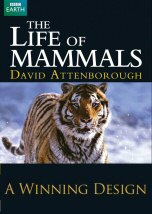
A Winning Design

   2002    Nature
A Winning Design clarifies what makes a mammal different from reptiles and birds. No, it isn't egg-laying: both the platypus and the echidna are egg-laying mammals; it's their ability to adapt. And it's this adaptability that becomes the crux of the remainder of the series. From the tiniest bat to the massive blue whale, all mammals share the ability to nurture their young on milk and regulate their own temperatures.
Series: The Life of Mammals

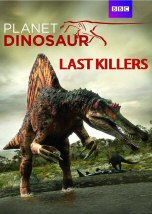
Last Killers

   2011    Science
In late Cretaceous Canada, in what will be known as Dinosaur Provincial Park, a Daspletosaurus stalks a Chasmosaurus in a forest, but loses the element of surprise and is forced to retreat. The Chasmosaurus comes across a younger Daspletosaurus, before being ambushed by a group of the tyrannosaurids. The episode then cuts to the high Arctic, where Edmontosaurus are hunted by a large species of Troodon. The theropods attack at night, separating a juvenile from the herd and severely wounding it, only to be driven away by an adult. In the morning, they return to eat the carcass of the juvenile, which died during the night. The episode returns to the Daspletosaurus, who chase and bring down the Chasmosaurus. The larger adults bully the youngsters off the carcass, forcing them to wait until they have finished. The episode then cuts to Madagascar, where a mother Majungasaurus (an Abelisaurid) and her two offspring chase a group of Rahonavis off a carcass. However, they are temporarily driven off themselves by a male Majungasaurus. But, after he steals some food from one of the young, the female attacks him, before she and her young cannibalise his body. The episode returns once again to North America, where the Daspletosaurus are waiting for the annual migration of Centrosaurus. They attack during a rainstorm, killing some of the ceratopsians. The Centrosaurus make it to a flooded river and begin to swim across, and although many make it to the other side, some are caught by giant crocodilians or are severely wounded by floating debris and thus drown, or drown for unseen reasons. In the morning, the carcasses attract scavengers, including the Daspletosaurus. A montage is then shown of Daspletosaurus and Majungasaurus, the narrator saying that together, the tyrannosaurids and abelisaurids were the last of the killer dinosaurs.
Series: Planet Dinosaur

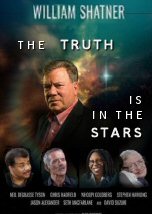
The Truth Is in the Stars

   2017    Culture
Join the original Captain Kirk, William Shatner, as he interviews renowned scientists and celebrities about the enduring influence of Star Trek on popular culture, innovation, and creativity. The film chronicles Shatner’s journey around the world interviewing scientists and film industry people about how Star Trek inspired them. Along the way he collects questions to ask and learns a bit about physics. Discover how Star Trek’s optimistic vision for the future has influenced leading minds including Prof. Stephen Hawking, Neil deGrasse Tyson, Chris Hadfield, David Suzuki, and many more.

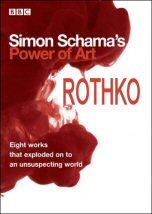
Rothko

   2006    Art
Rothko is known for his abstract expressionism paintings, but he moved through more traditional styles in his early career, including Surrealist paintings in the 1940s. In 1947 he embarked on the first of his large abstract 'colour-field' paintings, formalising their structure further in the 1950s. Rothko had huge success with largescale solo shows, but committed suicide in 1970.
Series: Power of Art
Leaving Neverland

Leaving Neverland

2019  Culture
Rome

Rome

  History
D-Day

D-Day

2013  History
Marilyn and the Mob

Marilyn and the Mob

2026  History
Natural World

Natural World

2017  Nature
Bronze Age

Bronze Age

2016  History
Breakthrough

Breakthrough

2019  Medicine