




Last Watched

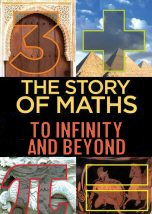
The Story of Maths To Infinity and Beyond

   2008    Science
In the fourth episode, Professor Marcus du Sautoy concludes his investigation into the history of mathematics with a look at some of the great unsolved problems that confronted mathematicians in the 20th century. After exploring Georg Cantor's work on infinity and Henri Poincare's work on chaos theory, he sees how mathematics was itself thrown into chaos by the discoveries of Kurt Godel and Paul Cohen, before completing his journey by considering some unsolved problems of maths today, including the Riemann Hypothesis.
Series: The Story of Maths

Shopping

   2021    Nature
Jeremy Clarkson decides to open a farm shop to sell his own produce. This sounds like it should be easy. It isn’t. Discover the shortest farm shop business in history.
Series: Clarkson Farm

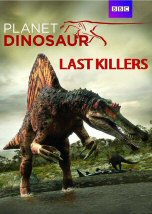
Last Killers

   2011    Science
In late Cretaceous Canada, in what will be known as Dinosaur Provincial Park, a Daspletosaurus stalks a Chasmosaurus in a forest, but loses the element of surprise and is forced to retreat. The Chasmosaurus comes across a younger Daspletosaurus, before being ambushed by a group of the tyrannosaurids. The episode then cuts to the high Arctic, where Edmontosaurus are hunted by a large species of Troodon. The theropods attack at night, separating a juvenile from the herd and severely wounding it, only to be driven away by an adult. In the morning, they return to eat the carcass of the juvenile, which died during the night. The episode returns to the Daspletosaurus, who chase and bring down the Chasmosaurus. The larger adults bully the youngsters off the carcass, forcing them to wait until they have finished. The episode then cuts to Madagascar, where a mother Majungasaurus (an Abelisaurid) and her two offspring chase a group of Rahonavis off a carcass. However, they are temporarily driven off themselves by a male Majungasaurus. But, after he steals some food from one of the young, the female attacks him, before she and her young cannibalise his body. The episode returns once again to North America, where the Daspletosaurus are waiting for the annual migration of Centrosaurus. They attack during a rainstorm, killing some of the ceratopsians. The Centrosaurus make it to a flooded river and begin to swim across, and although many make it to the other side, some are caught by giant crocodilians or are severely wounded by floating debris and thus drown, or drown for unseen reasons. In the morning, the carcasses attract scavengers, including the Daspletosaurus. A montage is then shown of Daspletosaurus and Majungasaurus, the narrator saying that together, the tyrannosaurids and abelisaurids were the last of the killer dinosaurs.
Series: Planet Dinosaur

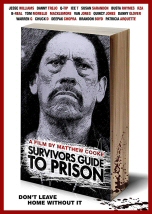
Survivors Guide to Prison 1of2

   2018    Culture
Following the stories of Bruce Lisker and Reggie Cole who spent year after year in prison for murders they didn't commit - audiences get a harrowing look at how barbaric the US justice system is. The film ultimately asks how we can survive the prison model at all, and looks at better solutions for conflict resolution, harm reduction, crime and more. Hosted by filmmaker Matthew Cooke and guest hosting representatives from the massive range of Americans joining forces to change this broken system.
Series: Survivors Guide to Prison

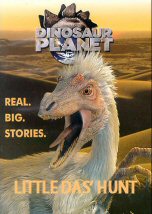
Little Das Hunt

   2003    Science
SETTING: 72 million years ago, near present-day Montana. As a young male daspletosaurus, it's Das' job to herd unsuspecting prey towards the rest of the pack. But he's easily distracted and ruins several hunts getting him in deep trouble with his mother, the pack leader. When a volcano threatens, the dinosaurs are unprepared.
Series: Dinosaur Planet

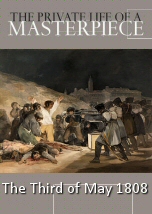
The Third of May 1808

   2004    Art
Arguably the most powerful painting about war ever achieved. It portrays the slaughter of civilians after Napoleonic troops entered Madrid in 1808. The programme reveals the historical truths behind the painting and shows exactly how Goya achieved this masterpiece of protest. he painting's content, presentation, and emotional force secure its status as a groundbreaking, archetypal image of the horrors of war. Although it draws on many sources from both high and popular art, The Third of May 1808 marks a clear break from convention. Diverging from the traditions of Christian art and traditional depictions of war, it has no distinct precedent, and is acknowledged as one of the first paintings of the modern era.
According to the art historian Kenneth Clark, The Third of May 1808 is 'the first great picture which can be called revolutionary in every sense of the word, in style, in subject, and in intention'. Discover how Goya used drawings by authentic witnesses to depict a real firing squad.
Series: The Private Life of a Masterpiece