Arguably the most powerful painting about war ever achieved. It portrays the slaughter of civilians after Napoleonic troops entered Madrid in 1808. The programme reveals the historical truths behind the painting and shows exactly how Goya achieved this masterpiece of protest. he painting's content, presentation, and emotional force secure its status as a groundbreaking, archetypal image of the horrors of war. Although it draws on many sources from both high and popular art, The Third of May 1808 marks a clear break from convention. Diverging from the traditions of Christian art and traditional depictions of war, it has no distinct precedent, and is acknowledged as one of the first paintings of the modern era. According to the art historian Kenneth Clark, The Third of May 1808 is 'the first great picture which can be called revolutionary in every sense of the word, in style, in subject, and in intention'. Discover how Goya used drawings by authentic witnesses to depict a real firing squad.
Dr Francesca Stavrakopoulou asks whether the ancient Israelites believed in one God as the Bible claims. She puts the Bible text under the microscope, examining what the original Hebrew said, and explores archaeological sites in Syria and the Sinai which are shedding new light on the beliefs of the people of the Bible. Was the God of Abraham unique? Were the ancient Israelites polytheists? And is it all possible that God had another half?
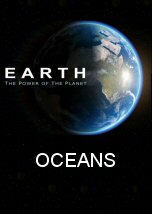
Earth’s oceans help make our planet different from every other planet in the solar system. As far as we know, no other place is the right temp for liquid water, the most essential ingredient for life to exist. The oceans are Earth’s primary stabilizing force, and their immense power helps to shape the appearance and behavior of the entire planet and everything living on it. And they are also the planet's great unknown - their deepest points have been visited less than the surface of the moon.
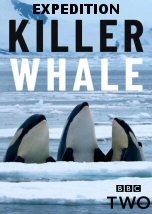
In Antarctica, one the most sophisticated hunting behaviours in the animal kingdom takes place – killer whales creating waves to wash seals off pieces of floating ice. A team of scientists and filmmakers travel heads to these freezing waters to find out more about these unique animals and how they do it. But their mission is not just to deepen our understanding of this extraordinary hunting behaviour. The team are also intent on learning more about the secret – and more tender side – of the lives of these killer whales.
Rothko is known for his abstract expressionism paintings, but he moved through more traditional styles in his early career, including Surrealist paintings in the 1940s. In 1947 he embarked on the first of his large abstract 'colour-field' paintings, formalising their structure further in the 1950s. Rothko had huge success with largescale solo shows, but committed suicide in 1970.
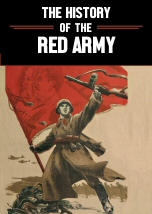
The fascinating history of the military force of the Soviet Union. For 70 years, the Red Army was one of the foundations of the USSR, an instrument of fear as well as admiration, a symbol of liberation as well as coercion. While everyone knows that Trotsky's name is attached to its creation, most of its past is made up of military defeats and failures, contrary to the common idea. This documentary explores its history, combining epic narrative and deconstruction of the myth.






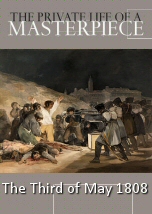


According to the art historian Kenneth Clark, The Third of May 1808 is 'the first great picture which can be called revolutionary in every sense of the word, in style, in subject, and in intention'. Discover how Goya used drawings by authentic witnesses to depict a real firing squad.