Superman is really the all-father of superheroes. He is the Odin from which all else springs forward. Without Superman, there's no Marvel or DC, no billion-dollar blockbusters. His logo is one of the three most recognizable symbols on the planet, and it stands shoulder to shoulder with the crucifix and the Jewish star. Superman became a worldwide phenomenon and was created by two working-class kids from Cleveland, Jerry Siegel and Joe Shuster. Superman is for justice and it's kind of ironic that there was a great injustice done to his creators. Siegel and Shuster lost everything, and just like Superman, they demanded justice. They fought for years to receive proper credit and compensation.
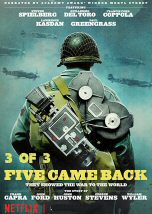
The five directors, John Ford, William Wyler, John Huston, Frank Capra, and George Stevens, return to Hollywood after the war but are forever haunted by what they saw. Ford goes on a drinking bender after filming the carnage at D-Day. Stevens is wholly unprepared for the horrors of Dachau and realizes he is not there to film propaganda but to capture evidence of crimes against humanity. Wyler, who lost his hearing during the war, fears his career is over. Huston chronicles soldiers suffering from postraumatic stress disorder in the film Let There Be Light, only to have it suppressed by the U.S. government.
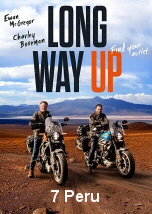
Ewan and Charley make their way to Peru from Bolivia, and the scenery is just beautiful. Ewan wanted to visit Machu Picchu since he was a kid and decides to show the world the Incan citadel set high in the Andes Mountains. Next up, they make their way to the Cutivireni, a community of Ashaninka people in the Amazon rainforest, with its carbon program to limit the magnitude or rate of global warming and its related effects.
'Crude Awakening'- To combat the worst environmental disaster in American history, BP and the Coast Guard dumped nearly 2 million gallons of a chemical dispersant called Corexit into the Gulf. But instead of helping clean up the spill, Corexit made things worse. Shane Smith heads to Louisiana to report on the lasting effects of the BP oil spill. 'The Enemy of My Enemy' - Yemen, the fractured state in the Arabian peninsula, is at the top of the worry list for President Obama's national security team, and the rise of Al Qaeda there is only half the reason why. The real trouble is a current threat posed by the little-known Houthi rebel movement in the north of the country - a grassroots army, allegedly funded by Iran, that has never granted access to any other Western film crew before. Ben Anderson goes deep into Houthi-controlled territory to learn about the group that's fighting, and beating, Al Qaeda in the east, Saudi Arabia in the north, and Yemen's central government in the south.
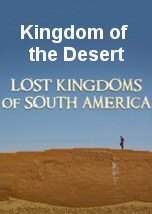
In the spectacular deserts of coastal Peru, archaeologist Dr Jago Cooper explores the dramatic rise and fall of Chimor, the first empire of South America. His journey begins among the ruins of a vast lost city once home to an all-powerful monarchy, whose subjects transformed the desert landscape, created gold and silver treasures and believed so strongly in the power of their gods that they made the most shocking of sacrifices. Chimor thrived despite facing some of the most extreme climate conditions in the world, but not even this powerful empire could withstand the forces that eventually destroyed it.
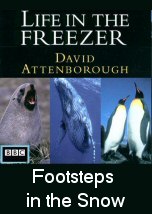
This episode discusses the human exploration of Antarctica, in particular the mission led by Captain Robert Falcon Scott, whose team died on the way back from the South Pole. It shows the scientific work in the modern human bases in Antarctica, especially Mawson Base and its observation of Adelie Penguins (partially through tracking devices). The second half of the episode describes how the series was made. Most crucial was of course the camera work. To get access to the wildlife of the sea, for example, boats, divers, suspended capsules and remotely controlled cameras mounted on inflatables were used. Particularly dangerous to divers were Leopard Seals and other predators. The film concludes that although working in Antarctica is now much easier than during the early days of exploration, human footsteps on the continent are still exceedingly rare in part because of international treaties prohibiting industrial exploitation.








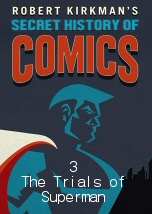






Superman is for justice and it's kind of ironic that there was a great injustice done to his creators. Siegel and Shuster lost everything, and just like Superman, they demanded justice. They fought for years to receive proper credit and compensation.