The series follows the tragedy that occurred when terrorists attacked at the annual Boston Marathon on April 15, 2013. They carried out the attack by placing two homemade pressure cooker bombs which detonated near the finish line of the race 14 seconds and 210 yards (190 m) apart. That resulted in three fatalities and hundreds injured, including 17 who lost limbs. With the help of archive footage, interviews with investigators, witnesses, survivors, and occasional reenactments, it offers details about the FBI investigation into what was quickly deemed a domestic terrorist attack. In the first episode, hours after the blasts, investigators pore over evidence. One photo and a few seconds of footage lead to a breakthrough - and an agonizing choice.
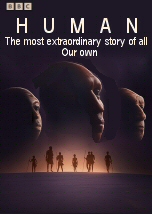
Spanning five gripping episodes presented together in one seamless video, this sweeping journey explores 300,000 years of human evolution, revealing groundbreaking discoveries that are reshaping everything we thought we knew about our origins. From the first appearance of Homo sapiens in Africa—at a time when at least six other human species walked the Earth—to the dramatic encounters with Neanderthals and the mysteries of their disappearance, each chapter uncovers the epic struggle for survival and dominance. As the Ice Age grips the planet, humanity pushes into the Americas, braving the harshest conditions in history. Finally, as the ice recedes, a transformation begins: the shift from wandering hunters to the builders of the first permanent settlements. This story brings to life the triumphs, dangers, and defining moments that made us who we are today.
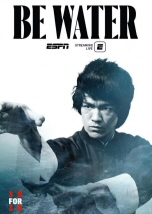
In 1971, after being rejected by Hollywood, Bruce Lee returned to his parents' homeland, Hong Kong. Over the next two years, he'd complete four iconic films that would define his legacy, a legacy cut short when he died, stunningly, in the summer of 1973. He was 32 years old. Directed by Bao Nguyen, 'Be Water' is a gripping, fascinating, intimate look at not just those final, defining years of Lee's life, but the complex, often difficult, and seismic journey that led to Lee's ultimate emergence as a singular icon in the histories of film, martial arts, and even the connection between the eastern and western worlds. The film chronicles Lee's earliest days, as the son of a Chinese opera star born while his father was on tour in San Francisco, and then raised in Hong Kong over what became an at times troubled childhood. Sent to live in America at the age of 18, he began teaching Kung Fu in Seattle, and established a following that included his future wife, Linda. His ambition ever rising, Lee eventually made his way to Los Angeles, where he strove to break into American film and television. There, despite some success as a fight choreographer and actor, it was clear Hollywood wasn't ready for an Asian leading man - and so he returned to Hong Kong to make the films that would in fact make him a legend, his international star skyrocketing just as his life was cut short. 'Be Water' is told by the family, friends, and collaborators who knew Bruce Lee best, with an extraordinary trove of archive film providing an evocative, immersive visual tapestry that captures Lee's charisma, his passion, his philosophy, and the eternal beauty and wonder of his art.
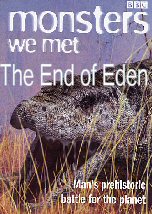
New Zealand - 850 years ago New Zealand was the last major land mass to be discovered and colonised by humans. A mere 850 years ago, Polynesian seafarers arrived in a land with no terrestrial mammals. New Zealand was a land of birds, and its avian rulers were giants: huge herbivorous moas were hunted by Haast's eagle - the largest eagle the world has ever seen. But within the space of only 100-400 years, the eagle, all the moas and over 20 other species of birds were gone. Had mankind become the monster?
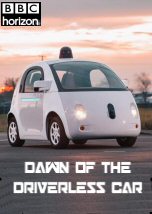
The car has shrunk the world, increased personal freedom and in so many ways expanded our horizons, but there is a flipside. Fumes from car exhausts have helped to destroy our environment, poisoned the air we breathe and killed us in far more straightforward ways. But all that is going to change. Enter a world where cars can drive themselves, a world where we are simply passengers, ferried about by wholesome green compassionate technology which will never ever go wrong. And it is almost here. Explore the artificial intelligence required to replace human drivers for cars themselves, peers into the future driverless world and discovers that, despite the glossy driverless PR (and assuming that they really can be made to work reliably), the reality is that it might not be all good news. From the ethics of driverless car crashes to the impact on jobs, it might be that cars are about to rise up against us in ways that none of us are expecting.
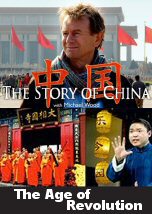
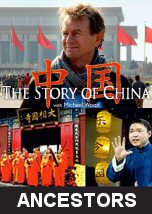
Between 1850 and 1950, three cataclysmic revolutions shook China to the core, but out of them, today's China emerged. The film begins in Canton with the meeting of a US missionary and a Chinese student. Inspired by the Christian story and calling himself God's second son, Hong unleashed the bloodiest war of the 19th century, the Taiping Rebellion. As imperial China weakened, foreign influence grew. Treaty ports expanded, bringing growth and wealth, trams, railways and western sensibilities. But this provoked another surge of violence, the Boxer Rebellion, an attack against the foreigners, which was crushed by those same foreigners, who extorted a huge indemnity - $60 billion in today's money. Then in 1912, the empire fell, and many groups contested China's future. In World War I, China sent 100,000 men to the western front, only to be humiliated at Versailles when German colonies in China were handed to Japan. Between the two world wars, the disparity between rich and poor, city and countryside increased. We visit Hong Kong's Peninsular Hotel in the jazz age and then follow Mao on the Long March to Yan'an, the heartland of revolution. World War II came to China two years earlier than it did in the west. Wood talks to a survivor of the Japanese massacre of Nanjing in 1937 and then charts the triumph of the communists, before ending the story with Mao's death and the boom time of the last 30 years. The series ends with the warmth of the Chinese family and, at Beijing's Altar of Heaven, a final haunting glimpse of eternal China.


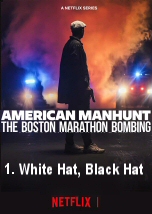



In the first episode, hours after the blasts, investigators pore over evidence. One photo and a few seconds of footage lead to a breakthrough - and an agonizing choice.