Three years in the making, Francis Whately’s film is a social and musical history of (probably) the world’s greatest music festival, as told by its principal curators, Michael and Emily Eavis, and many of the key artists who’ve appeared there between 1970 and 2019 – Billie Eilish, Thom Yorke, Florence Welch, Dua Lipa, The Levellers, Aswad, Orbital, Fatboy Slim, Linda Lewis, Noel Gallagher, Ed O’Brien, Chris Martin, Stormzy and more. Balancing the driving forces of social conscience and hedonism, Glastonbury has always been both a world apart and a barometer of the state of the nation. Looking at the hippie days, CND, the contribution of the travellers, dance music, Britpop, The Wall, the impact of television and the first black British solo headliner, this film takes viewers backstage and deep into the archive to reveal the forces that have driven this alternative nation between utopia and dystopia, the greatest night of your life and a muddy field in the middle of nowhere. This is not a chronological plod through the festival’s evolution so much as a thematic and story-driven exploration of the peaks and troughs, and the agonies and ecstasies, that have shaped Glastonbury’s 50 years and counting.
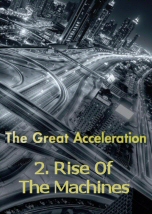
From the first transistor to deep learning networks, the rise of computing power over the last 50 years has been so phenomenal it's changed everything from the way we communicate to how our appliances interact. Fuelled by giant leaps forward in computer technology, the race is on. As the progress of machines continues to accelerate, so will the pace of change.
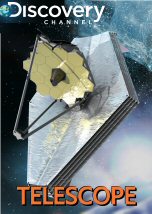
A dynamic journey behind the scenes of the next step in the evolution of telescopes: NASA's James Webb Space Telescope. A new generation has been inspired to design and build this massive instrument, which is 100 times more powerful than the Hubble Space Telescope and will be a veritable time machine, capable of looking back on the origins of our universe and identifying signatures of potential life on planets far outside our solar system". With unprecedented access to the people and technologies that power its creation, including astrophysicists, engineers at Northrop Grumman, and personnel from NASA'S Goddard Space Flight Center and the Space Telescope Science Institute, the operations center for Hubble and Webb, Telescope spotlights the high-stakes mission of building this massive new scientific instrument. The film is a comprehensive look at the dynamic history of 400 years of telescopes starting with Galileo in 1609. The Webb is the next great telescope in society's ongoing mission to see farther into the universe and answer fundamental questions that have haunted mankind from the beginning of time. Directed by Oscar nominated filmmaker Nathaniel Kahn
The search for extraterrestrial life is an age-old quest. But recent breakthroughs make today an era like no other in the history of astronomy. From the exhilarating probing of our own solar system and the Kepler mission’s astounding discovery of thousands of extrasolar planets, to the next-generation telescopes under development, the prospects for finding life beyond Earth have never been stronger. Still, daunting hurdles remain. How can we study anything light years away, let alone a little planet? In the vast universe, where should we even start to look? Is our failure to hear any other voices in the galaxy a sign that we are special? Join leading explorers now searching the galaxy for life and intelligence on other planets—and asks, if we do find other life in the universe... what would that mean?
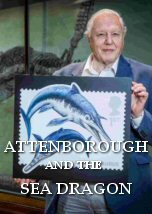
A remarkable 200-million-year-old fossil - the bones of an ichthyosaur, a giant sea dragon - has been discovered on the Jurassic coast of Britain. David Attenborough joins the hunt to bring this ancient creature's story to life. Using state-of-the-art imaging technology and CGI, the team reconstruct the skeleton and create the most detailed animation of an ichthyosaur ever made. Along the way, the team stumble into a 200-million-year-old murder mystery - and only painstaking forensic investigation can unravel the story of this extraordinary creature's fate.
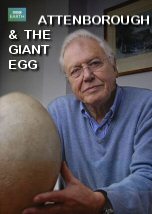
David Attenborough returns to the island of Madagascar on a very personal quest. In 1960, he visited the island to film one of his first ever wildlife series - Zoo Quest. Whilst he was there, he acquired a giant egg belonging to an extinct bird known as the 'elephant bird' - the largest bird that ever lived. It has been one of his most treasured possessions ever since. Fifty years older, he now returns to the island to find out more about this amazing creature and to see how the island has changed. Could the elephant bird's fate provide lessons that may help protect Madagascar's remaining wildlife? Using Zoo Quest archive and specially shot location footage, this film follows David as he revisits scenes from his youth and meets people at the front line of wildlife protection. On his return, scientists at Oxford University are able to reveal for the first time how old David's egg actually is, and what that might tell us about the legendary elephant bird.




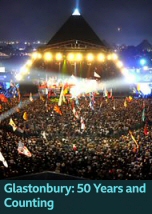




Balancing the driving forces of social conscience and hedonism, Glastonbury has always been both a world apart and a barometer of the state of the nation. Looking at the hippie days, CND, the contribution of the travellers, dance music, Britpop, The Wall, the impact of television and the first black British solo headliner, this film takes viewers backstage and deep into the archive to reveal the forces that have driven this alternative nation between utopia and dystopia, the greatest night of your life and a muddy field in the middle of nowhere.
This is not a chronological plod through the festival’s evolution so much as a thematic and story-driven exploration of the peaks and troughs, and the agonies and ecstasies, that have shaped Glastonbury’s 50 years and counting.