





Last Watched

"ELE"  Sort by

The Story of the Jews: In the Beginning

   2013    History
With optional Hebrew subtitles. Simon Schama explores the history of the Jewish experience from ancient times to the present day. This programme begins the tale 3,000 years ago, with the emergence of a tribal people in a contested land and their extraordinary book, the Hebrew Bible, a chronicle of their stormy relationship with a faceless, formless, jealous God. It was loyalty to this 'God of Words' that defined the distinct identity of the ancient Jews and preserved it despite all that history could throw their way". The story unfolds with a dazzling cast of historical characters: Sigmund Freud dying in exile in London; Victorian evangelicals and explorers following 'in the footsteps' of Moses; Jewish mercenaries living, prospering and intermarrying in the pagan land of Egypt; Messianic Jews dreaming of the Apocalypse; and a Jewish historian, Josephus, who witnessed first-hand the moment when the apocalypse finally came and the Romans destroyed the Jewish High Temple in Jerusalem.
Series: The Story of the Jews
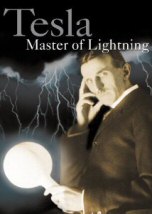
Tesla: Master of Lightning

   2007    History
The story of Nikola Tesla, the great scientist, visionary, and inventor who gave the world alternating current electricity, as well as being the father of radio. The film tells the story of this man's astonishing genius, his visions and inventions. Tesla's own scientific and autobiographical writings, as well as archival photographs and re-enactments are used to tell the story. A native of Austro-Hungary, Tesla came to America in 1884. Working first with Edison, the two inventors fell out over Edison's insistence on using direct current. Tesla took his alternating current vision to Westinghouse. Tesla worked to unlock the secrets of energy and electricity. The film follows Tesla's exploits and eccentricities, which made him a darling of the press. Largely forgotten today in spite of the great debt the modern world owes him, the film pays tribute to this overlooked genius

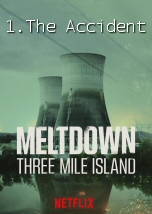
The Accident

   2022    Technology
This documentary series explores the Three Mile Island Accident that occurred in Pennsylvania on March 28, 1979, suffering a partial meltdown of the reactor core on the same day. It also reveals how this accident unfolded in real time, its impact on the community and the personal account of the chief engineer and whistleblower, Richard Parks, who had the courage to speak out and avert a catastrophe for the East Coast.
This first episode explains how in 1979, a breakdown at the power plant causes confusion and the release of radiation. Fear spreads, as do suspicions that the authorities are hiding the truth.
Series: Meltdown: Three Mile Island

The Search for Intelligent Life on Earth

   2020    Nature
Episode 7 focuses specifically on first contact and the search for intelligent life in the vastness of the cosmos. Are humans ready to make first contact with other intelligent beings? Is our technology even sophisticated enough to detect communication signals from another world? Who are we to search for alien intelligence when we can't even recognize or respect the consciousness all around us, or even beneath our feet.
Neil deGrasse Tyson reveals the hidden underground network that is a collaboration of four kingdoms of life, and a true first contact story between humans and beings who communicate in a symbolic language and have maintained a representative democracy for many tens of millions of years.
Series: Cosmos: Possible Worlds

The World Set Free

   2014    Nature
This episode explores the nature of the greenhouse effect (discovered by Joseph Fourier and Svante Arrhenius), and the evidence demonstrating the existence of global warming from humanity's influence. Tyson begins by describing the long-term history of the planet Venus; based on readings from the Venera series of probes to the planet, the planet had once had an ocean and an atmosphere, but due to the release of carbon dioxide from volcanic eruptions, the runaway greenhouse effect on Venus caused the surface temperatures to increase and boiled away the oceans. Tyson then notes the delicate nature of the amount of carbon dioxide in the atmosphere can influence Earth's climate due to the greenhouse effect, and that levels of carbon dioxide have been increasing since the start of the 20th century. Evidence has shown this to be from mankind's consumption of oil, coal, and gas instead of from volcanic eruptions due to the isotopic signature of the carbon dioxide. The increase in carbon dioxide has led to an increase in temperatures, in turn leading to positive feedback loops of the melting polar ice caps and dethawing of the permafrost to increase carbon dioxide levels. Tyson then notes that humans have discovered means of harvesting solar power, such as Augustin Mouchot's solar-driven motor in the 19th century, and Frank Shuman's solar-based steam generator in the 1910's. Tyson points out that in both cases, the economics and ease of using cheap coal and oil caused these inventions to be overlooked at the time. Today, solar and wind-power systems would be able to collect enough solar energy from the sun easily. Tyson then compares the motivation for switching to these cleaner forms of energy to the efforts of the Space race and emphasizes that it is not too late for humanity to correct its course.
Series: Cosmos: A Spacetime Odyssey

In Search of Beethoven I

   2009    Art
'In Search of Beethoven': takes a comprehensive look at the composer's life through historical research and Beethoven's biography and letters, but with the emphasis always on the performance -- and interpretation -- of Beethoven's music. From his early piano concertos through the "Moonlight Sonata," "Für Elise," and the immortal notes of the Fifth and Ninth Symphonies, Beethoven's music remains as beloved, popular, and relevant as any work of art has ever been. "In Search of Beethoven" brings together the world's leading performers and experts on Beethoven to reveal new insights into this celebrated composer.
Series: In Search of Beethoven