The film takes viewers on an enchanting journey through the life and legendary career of one of cinema's greatest composers. Directed by John Williams' longtime friend Laurent Bouzereau, it delves deeply into the music that has defined iconic film franchises like “Star Wars”, “Jurassic Park”, and “Harry Potter”. Featuring interviews with esteemed artists and filmmakers profoundly influenced by Williams' timeless compositions, the film explores his extraordinary ability to bring emotion, depth, and grandeur to the screen through his symphonic genius. Archival footage and behind-the-scenes moments illustrate how his unforgettable scores became integral to the movies, revealing just how vital his contributions have been to modern cinema. This intimate tribute captures Williams’ journey from jazz pianist to cultural icon, showcasing the groundbreaking impact of his classical compositions in Hollywood and beyond. From his collaborative masterpieces with Steven Spielberg and George Lucas to his unique approach of composing by hand, "Music By John Williams" highlights the relentless passion and meticulous craft that have defined his career. Personal stories from colleagues, friends, and family, along with moments of Williams conducting before adoring fans, paint a vivid portrait of a man who has shaped our cinematic experiences for over half a century. For anyone captivated by the power of music in film, this documentary is an inspiring and nostalgic celebration of an unparalleled legacy.
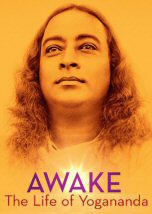
We live our lives pursuing happiness 'out there' as if it is a commodity.
We have become slaves to our own desires and craving. Happiness isn't something that can be pursued or purchased like a cheap suit. This is Maya, illusion, the endless play of form. In the Buddhist tradition, Samsara, or the endless cycle of suffering is perpetuated by the craving of pleasure and aversion to pain. Freud referred to this as the "pleasure principle." Everything we do is an attempt to create pleasure, to gain something that we want, or to push away something that is undesirable that we don't want. Even a simple organism like the paramecium does this. It is called response to stimulus. Unlike a paramecium, humans have more choice. We are free to think, and that is the heart of the problem. It is the thinking about what we want that has gotten out of control. The dilemma of modern society is that we seek to understand the world, not in terms of archaic inner consciousness, but by quantifying and qualifying what we perceive to be the external world by using scientific means and thought.
Thinking has only led to more thinking and more questions. We seek to know the innermost forces which create the world and guide its course. But we conceive of this essence as outside of ourselves, not as a living thing, intrinsic to our own nature. It was the famous psychiatrist Carl Jung who
said, "one who looks outside dreams, one who looks inside awakes." It is not wrong to desire to be awake, to be happy. What is wrong is to look for happiness outside when it can only be found inside.
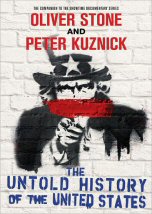
The series is a re-examination of some of the under-reported and darkest parts of American modern history using little known documents and newly uncovered archival material, looking beyond official versions of events to the deeper causes and implications and exploring how events from the past still have resonant themes for the present day. This episode addresses the historical backround, consequences and reasons behind the use of atomic bombs against the Japanese in the second world war.
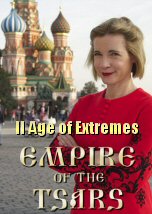
Lucy Worsley continues her journey through Russia in the footsteps of the Romanovs, the most powerful royal dynasty in modern European history. In this episode she examines the extraordinary reign of Catherine the Great, and the traumatic conflict with napoleonic France that provides the setting for the novel War and Peace. At the magnificent palace of Peterhof near St Petersburg, Lucy charts the meteoric rise of Catherine the Great, who seized the Russian throne from her husband Peter III in 1762 and became the most powerful woman in the world. Catherine was a woman of huge passions - for art, for her adopted country (she was German by birth) and for her many lovers. Catherine expanded her empire through military victories overseas, while at home she encouraged education and introduced smallpox inoculation to Russia. But Catherine struggled to introduce deeper reforms, and the institution of serfdom remained largely unchanged. Lucy explains how this injustice fuelled a violent rebellion. Nevertheless, Catherine left Russia more powerful on the world stage than ever. But all she had achieved looked set to be undone when Napoleon invaded Russia in 1812. Lucy relives the pivotal battle of Borodino, when the Russian army finally confronted the French forces; the traumatic destruction of Moscow; and, under Catherine's grandson Alexander, the eventual victory over the French that provided the Romanov dynasty with its most glorious hour.
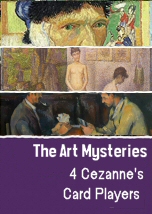
One of Cezanne’s best-known pictures, but it is also one of his most mysterious. Why did the so-called father of modern art paint two old men hunched over a game of cards? What is the picture trying to tell us? By exploring Cezanne’s puzzling religious beliefs and his passion for Mary Magdalene, the patron saint of Provence, Waldemar Januszczak uncovers the surprising secrets of a haunting masterpiece.
Professor Jim Al-Khalili investigates one of the most important concepts in the world today - information. He discovers how we harnessed the power of symbols, everything from the first alphabet to the electric telegraph through to the modern digital age. But on this journey he learns that information isn't just about human communication, it's woven very profoundly into the fabric of reality.













This intimate tribute captures Williams’ journey from jazz pianist to cultural icon, showcasing the groundbreaking impact of his classical compositions in Hollywood and beyond. From his collaborative masterpieces with Steven Spielberg and George Lucas to his unique approach of composing by hand, "Music By John Williams" highlights the relentless passion and meticulous craft that have defined his career. Personal stories from colleagues, friends, and family, along with moments of Williams conducting before adoring fans, paint a vivid portrait of a man who has shaped our cinematic experiences for over half a century. For anyone captivated by the power of music in film, this documentary is an inspiring and nostalgic celebration of an unparalleled legacy.