


Last Watched

Speed Limits

   2010    Science
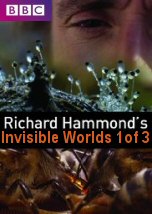
Richard Hammond explores the extraordinary wonders of the world of detail hidden in the blink of an eye. It takes our brain around a hundred and fifty milliseconds to process what we see. We're not aware of this time lag going on, but in those few milliseconds, there are extraordinary things happening that completely pass us by. But what if we could break through this speed limit? Bend and stretch time in ways never thought possible. What new marvels would we see? Now, using the latest high-speed cameras, Richard takes us on a journey beyond our eye's limits, letting us see secrets hidden in every element of our planet. A world where thin air can shatter rock. And water can tear through metal. A world where the fastest thing on earth lies right beneath our feet. And where a spectacular celestial display is finally captured, even though many have claimed it doesn't even exist.
Series: Invisible Worlds
Art of Spain: The Dark Heart

   2008    Art
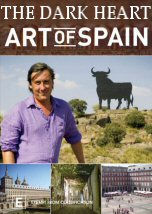
Graham-Dixon journeys to the country’s scorched centre to explore Spanish art of the 16th and 17th centuries. From the mystical world of El Greco to the tender genius of Velazquez, this was a moment so extraordinary it became known as the Golden Age. But beneath the glittering surface was a dark and savage heart. Travelling from the architectural jewel of Toledo to majestic Madrid, Andrew Graham-Dixon traces the rise and fall of the Spanish Empire, the brutal conquest of the New World, and the religious madness of the Inquisition, to discover how a history so violent could produce some of the most beautiful art ever seen.
Series: Art of Spain

Solving the Secrets

   2012    Nature    3D    HD
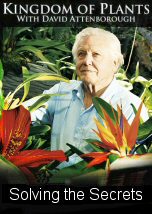
Bladderwort utricularia is a pond-dweller that is among the fastest known, its traps snapping shut in less than a millisecond. As the seasons change, David demonstrates how plants operate on a different time scale to us; how they modify their lives according to the time of year. We discover insects’ hidden links with plants, both as pests and pollinators. UV-sensitive 3D cameras reveal the invisible alter-ego of plants and their flowers’ mesmerizing patterns; a parallel-dimension of strange colours and stunning patterns through which plants communicate with them. With the aid of visual effects, David steps among the swirling vortices of plant scent; communication signals with which plants are inextricably plugged in to the natural world. And using a tuning fork, he demonstrates how plants and insects can even communicate with music. As autumn envelopes the Gardens, fungi reveal themselves not as the enemies of plants but their vital allies. In Kew’s atmospheric Fungarium, David discovers a specimen that has the power of mind control and another that lives underground where it has grown to be so big it can be counted as the largest single organism on the planet. It is 6 times bigger than Kew Gardens itself.
Series: Kingdom of Plants

Depeche Mode Live in Berlin 1of3

   2014    Art
Depeche Mode: Live in Berlin was filmed on location at the O2 World Berlin on November 25th and 27th, 2013 during the band's extremely successful 'Delta Machine' Tour which saw them play to over 2.4 million people in 32 countries.
Series: Depeche Mode: Live in Berlin

The DNA Switch

   2019    Medicine    HD
Destiny is beyond our control, our fate already set, perhaps from the onset of disease or being born with a special ability. You may think our lives are determined by the genes we're born with, but that is not the case. In the non-coding 98% of our DNA, we have countless switches to promote or suppress the physiological reactions of our bodies. Interestingly, we can change the states of these switches through our own efforts and even can affect the DNA conditions of our offspring before their birth.
Explore the hottest area of bioscience, genomics with stunning live image, quality CGI, the forefront research, and real human stories.
Series: Dynamic Genomes Series

Monster we met: The End of Eden

   2006    Science
New Zealand - 850 years ago New Zealand was the last major land mass to be discovered and colonised by humans. A mere 850 years ago, Polynesian seafarers arrived in a land with no terrestrial mammals. New Zealand was a land of birds, and its avian rulers were giants: huge herbivorous moas were hunted by Haast's eagle - the largest eagle the world has ever seen. But within the space of only 100-400 years, the eagle, all the moas and over 20 other species of birds were gone. Had mankind become the monster?
Rome

Rome

  History
Speed

Speed

2019  Technology
Long Way Up

Long Way Up

2020  Culture
Bronze Age

Bronze Age

2016  History
The Story of China

The Story of China

2016  History
Leaving Neverland

Leaving Neverland

2019  Culture