Destiny is beyond our control, our fate already set, perhaps from the onset of disease or being born with a special ability. You may think our lives are determined by the genes we're born with, but that is not the case. In the non-coding 98% of our DNA, we have countless switches to promote or suppress the physiological reactions of our bodies. Interestingly, we can change the states of these switches through our own efforts and even can affect the DNA conditions of our offspring before their birth. Explore the hottest area of bioscience, genomics with stunning live image, quality CGI, the forefront research, and real human stories.
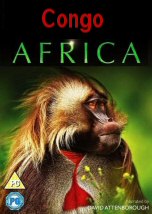
The very heart of Africa is covered in dense tropical rainforest. The animals that live here find the most ingenious ways to carve out their space in a claustrophobic landscape. Danger lurks in every shadow, but some animals thrive here, from honey-stealing chimps to birds with a lineage as old as the dinosaurs, thundering elephants and kick-boxing frogs. Here in the Congo, no matter how tough the competition, you must stand up and fight for yourself and your patch.
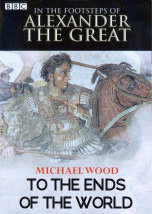
Between 1850 and 1950, three cataclysmic revolutions shook China to the core, but out of them, today's China emerged. The film begins in Canton with the meeting of a US missionary and a Chinese student. Inspired by the Christian story and calling himself God's second son, Hong unleashed the bloodiest war of the 19th century, the Taiping Rebellion. As imperial China weakened, foreign influence grew. Treaty ports expanded, bringing growth and wealth, trams, railways and western sensibilities. But this provoked another surge of violence, the Boxer Rebellion, an attack against the foreigners, which was crushed by those same foreigners, who extorted a huge indemnity - $60 billion in today's money. Then in 1912, the empire fell, and many groups contested China's future. In World War I, China sent 100,000 men to the western front, only to be humiliated at Versailles when German colonies in China were handed to Japan. Between the two world wars, the disparity between rich and poor, city and countryside increased. We visit Hong Kong's Peninsular Hotel in the jazz age and then follow Mao on the Long March to Yan'an, the heartland of revolution. World War II came to China two years earlier than it did in the west. Wood talks to a survivor of the Japanese massacre of Nanjing in 1937 and then charts the triumph of the communists, before ending the story with Mao's death and the boom time of the last 30 years. The series ends with the warmth of the Chinese family and, at Beijing's Altar of Heaven, a final haunting glimpse of eternal China.
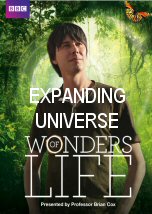
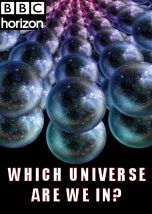
It is one of the most unnerving discoveries in space science - that most of the universe is missing. We live in a material world, so instinctively we know what normal matter is - the world around us, the planets, stars and interstellar dust. But scientists currently estimate that 95 per cent of everything in the universe is actually - one way or another - invisible. Some of this is ordinary matter that we just can't easily see. But there's also stuff that's much more weird. For instance, there's a new kind of matter we think is out there, but whose very existence is still largely hypothetical - dark matter. And most mysteriously of all, scientists think there is an unknown form of energy pervading the universe that we know so little about, all it has so far is a name - dark energy. Embark on a tour of this invisible universe, and shows how its existence - or lack of it - will define the fate of the entire universe.
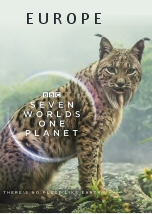
Earthflight departs on its grand European tour, using a host of techniques including taking extraordinary footage from microlites as they fly alongside imprinted birds. Among other wonders, cameras soar with cranes and geese over Venice, the white cliffs of Dover and Edinburgh. White storks leave Africa and struggle to reach Istanbul, the gateway to Europe, while cranes take an easier route over the monkey-guarded Rock of Gibraltar. In France, the white horses of the Camargue make a splash around the new arrivals. In Rome, the heat of the city lures 20 million starlings that perform nature's greatest aerial display to outwit peregrines. In Hungary, sand martins grab mayflies from the air; and at Bass Rock, gannets create Britain's greatest natural spectacle as they dive in exquisite slow-motion. The story takes an emotional turn as storks and swallows wait for their partners to return and indulge in a spot of DIY to impress. Finally, geese touch down in Svalbard to raise a family. To protect their young, a squadron of birds assemble to see off polar bears. With views of birds flying over the Loire Valley, London docklands and the bulb fieds of Holland, this is Europe as never before.
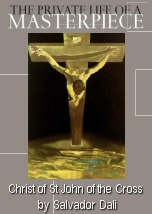
Salvador Dali's strange crucifixion is often called the greatest religious painting of the 20th century. Yet its artist was a notorious blasphemer some of whose work had outraged the Catholic Church. The Christ of St John of the Cross by Salvador Dali is the first of two extraordinary crucifixions painted by Dali in the early 1950s. The painting is based on a 'cosmic dream' Dali is said to have had, in which the nucleus of the atom was a figure of Christ himself. The painting offers a surrealist view of the crucifixion of Christ, and is based on a drawing by the 16th century Spanish friar Saint John of the Cross. But Dali's vision was somewhat unique, using an unusual artistic perspective in which Christ is seen from above. His Christ of St. John of The Cross was inspired by a weird mix of Spanish mysticism and nuclear physics, with his Christ being modelled by a Hollywood stuntman. It's also a masterpiece of painting technique.


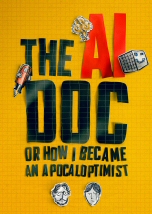
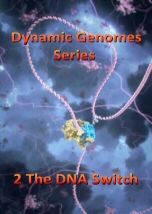
Explore the hottest area of bioscience, genomics with stunning live image, quality CGI, the forefront research, and real human stories.