




Last Watched

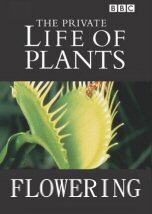
Flowering

   1995    Nature
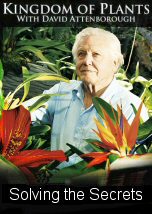
The third episode is devoted to the ways in which plants reproduce. Pollen and a stigma are the two components needed for fertilisation. Most plants carry both these within their flowers and rely on animals to transport the pollen from one to the stigma of another. To do this, they attract their couriers with colour, scent and nectar. It isn't just birds that help pollination: some mammals and reptiles also do so. However, it is mostly insects that are recruited to carry out the task. To ensure that pollen is not wasted by being delivered to the wrong flower, some species of plant have developed exclusive relationships with their visitors, and the gentian and its attendant carpenter bees is one example. Since pollen can be expensive to produce in terms of calories, some plants, such as orchids, ration it by means of pollinia and a strategically placed landing platform. Other orchids offer no reward for pollination, but instead mislead their guests by mimicking their markings and aroma, thus enticing males to 'mate' with them (Pseudocopulation). The most extreme fertilisation method is one of imprisonment, and one plant that uses it is the dead horse arum. It is often found near gull colonies, and mimics the appearance and smell of rotting flesh. Blow-flies are attracted to it, and are forced to stay the night before being allowed to depart in the morning, laden with pollen. Finally, Attenborough introduces the world's largest inflorescence: that of the titan arum.
Series: The Private Life of Plants

Dont Grow Old

   2010    Medicine
For centuries scientists have been attempting to come up with an elixir of youth. Now remarkable discoveries are suggesting that ageing is something flexible that can ultimately be manipulated. The scientists are attempting to piece together why we age and more vitally for all of us, what we can do to prevent it. But which theory will prevail? Does the real key to controlling how we age lie with a five-year-old boy with an extraordinary ageing disease or with a self-experimenting Harvard professor? Could one of these breakthroughs really see our lives extend past 120 years?

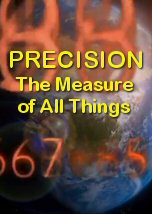
Precision the Measure of All Things

   2013    Science
Professor Marcus du Sautoy explores why we are driven to measure and quantify the world around us and why we have reduced the universe to just a handful of fundamental units of measurement. He tells the story of the metre and the second - how an astonishing journey across revolutionary France gave birth to the metre, and how scientists today are continuing to redefine the measurement of time and length, with extraordinary results.

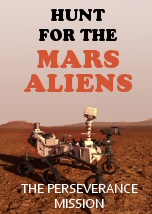
Hunt for the Mars Aliens

   2020    Technology    HD
NASA's brand-new Mars rover is on the hunt for alien life, and with the help of cutting-edge engineering, scientists embark on a search for fossilized remains, which might prove the Red Planet was once home to a vast ocean and extraterrestrial life. Perseverance carries seven scientific instruments to study the Martian surface at Jezero crater. It carries several cameras and two microphones. The rover is accompanied by the helicopter Ingenuity, which will help Perseverance to scout for locations to study.
Series: Space Deepest Secrets

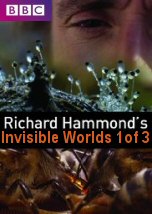
Speed Limits

   2010    Science
Richard Hammond explores the extraordinary wonders of the world of detail hidden in the blink of an eye. It takes our brain around a hundred and fifty milliseconds to process what we see. We're not aware of this time lag going on, but in those few milliseconds, there are extraordinary things happening that completely pass us by. But what if we could break through this speed limit? Bend and stretch time in ways never thought possible. What new marvels would we see? Now, using the latest high-speed cameras, Richard takes us on a journey beyond our eye's limits, letting us see secrets hidden in every element of our planet. A world where thin air can shatter rock. And water can tear through metal. A world where the fastest thing on earth lies right beneath our feet. And where a spectacular celestial display is finally captured, even though many have claimed it doesn't even exist.
Series: Invisible Worlds

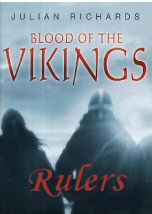
Blood Of The Vikings: Rulers

   2001    History
Julian Richards recalls how, after years of raiding, England's resistance was so weakened that, in the early 11th century, the Vikings were finally able to seize the throne. In other parts of the British Isles however, they gained and maintained power by integration.
Series: Blood of the Vikings
Reel Rock

Reel Rock

2014  Culture
Dangerous knowledge

Dangerous knowledge

2007  Science
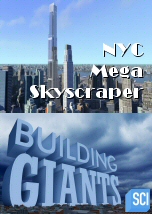
Building Giants

Building Giants

2019  Technology
Secrets of the Dead

Secrets of the Dead

2017  History
Earth from Space

Earth from Space

2019  Nature
Leaving Neverland

Leaving Neverland

2019  Culture