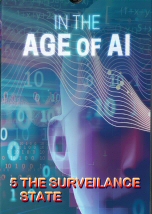
Artificially intelligent machines are taking over. They’re influencing our everyday lives in profound and often invisible ways. They can read handwriting, interpret emotions, play games, and even act as personal assistants. They are in our phones, our cars, our doctors’ offices, our banks, our web searches... the list goes on and is rapidly growing ever longer. But how does today’s A.I. actually work—and is it truly intelligent? And for that matter, what is intelligence? The world’s brightest computer programmers are trying to build brighter machines by reverse-engineering the brain and by inventing completely new kinds of computers, with exponentially greater speed and processing power. The documentary looks at how far we’ve come and where machines are headed as their software becomes ever more... cerebral. How close are we from a world in which computers take over—from diagnosing cancer to driving our cars to targeting weapons? If we place more and more of our lives under the control of these artificial brains, what are we putting at risk?
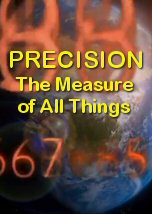
Professor Marcus du Sautoy explores why we are driven to measure and quantify the world around us and why we have reduced the universe to just a handful of fundamental units of measurement. He tells the story of the metre and the second - how an astonishing journey across revolutionary France gave birth to the metre, and how scientists today are continuing to redefine the measurement of time and length, with extraordinary results.
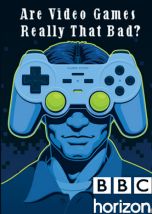
The video game industry is a global phenomenon. There are over 1.2 billion gamers across the planet, with sales projected soon to pass $100 billion per year. But their very popularity fuels the controversy that surrounds them. They frequently stand accused of corrupting the young - of causing violence and addiction. But is this true? The scientific community is deeply divided". Some are convinced that video games incite aggression. Others insist they have no effect whatsoever on real-world violence. But away from the controversy, there is a growing body of evidence that suggests video games may help keep the brain sharp, and could soon revolutionise how we combat mental decline as we age.
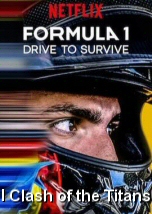
Drivers, managers and team owners live life in the fast lane — both on and off the track — during this cutthroat new season of Formula 1 racing. In the first episode, the 2021 Formula 1 season begins at the Bahrain Grand Prix, where drivers give it everything to take the first checkered flag of the year.
Richard Hammond explores the extraordinary wonders of the world of detail hidden in the blink of an eye. It takes our brain around a hundred and fifty milliseconds to process what we see. We're not aware of this time lag going on, but in those few milliseconds, there are extraordinary things happening that completely pass us by. But what if we could break through this speed limit? Bend and stretch time in ways never thought possible. What new marvels would we see? Now, using the latest high-speed cameras, Richard takes us on a journey beyond our eye's limits, letting us see secrets hidden in every element of our planet. A world where thin air can shatter rock. And water can tear through metal. A world where the fastest thing on earth lies right beneath our feet. And where a spectacular celestial display is finally captured, even though many have claimed it doesn't even exist.















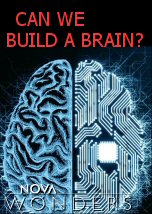









The world’s brightest computer programmers are trying to build brighter machines by reverse-engineering the brain and by inventing completely new kinds of computers, with exponentially greater speed and processing power. The documentary looks at how far we’ve come and where machines are headed as their software becomes ever more... cerebral. How close are we from a world in which computers take over—from diagnosing cancer to driving our cars to targeting weapons? If we place more and more of our lives under the control of these artificial brains, what are we putting at risk?