Artificially intelligent machines are taking over. They’re influencing our everyday lives in profound and often invisible ways. They can read handwriting, interpret emotions, play games, and even act as personal assistants. They are in our phones, our cars, our doctors’ offices, our banks, our web searches... the list goes on and is rapidly growing ever longer. But how does today’s A.I. actually work—and is it truly intelligent? And for that matter, what is intelligence? The world’s brightest computer programmers are trying to build brighter machines by reverse-engineering the brain and by inventing completely new kinds of computers, with exponentially greater speed and processing power. The documentary looks at how far we’ve come and where machines are headed as their software becomes ever more... cerebral. How close are we from a world in which computers take over—from diagnosing cancer to driving our cars to targeting weapons? If we place more and more of our lives under the control of these artificial brains, what are we putting at risk?
Julian Richards recalls how, after years of raiding, England's resistance was so weakened that, in the early 11th century, the Vikings were finally able to seize the throne. In other parts of the British Isles however, they gained and maintained power by integration.
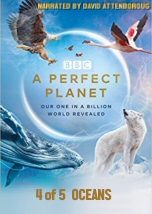
Oceans are the largest ecosystem on earth, covering two thirds of our world’s surface and providing half the oxygen in our atmosphere. They are home to as much as 80 per cent of all life on earth, and nearly three billion people rely on them for their primary source of food. But our planet’s oceans would be little more than stagnant wastelands, and life on planet earth would cease to exist, were it not for one simple factor: a global network of powerful ocean currents. Every drop of seawater on earth rides these currents, taking 1,000 years to complete a single circuit. Without the constant mixing of currents, tides and waves, our oceans would stop supporting life - and a healthy ocean is vital to a healthy planet.
The video game industry is a global phenomenon. There are over 1.2 billion gamers across the planet, with sales projected soon to pass $100 billion per year. But their very popularity fuels the controversy that surrounds them. They frequently stand accused of corrupting the young - of causing violence and addiction. But is this true? The scientific community is deeply divided". Some are convinced that video games incite aggression. Others insist they have no effect whatsoever on real-world violence. But away from the controversy, there is a growing body of evidence that suggests video games may help keep the brain sharp, and could soon revolutionise how we combat mental decline as we age.
About 340 million years ago a brand new family of animals was evolving in the primeval swamps. They were to go one step further than the amphibians who had emerged onto dry and before them. For they would eventually completely cut their ties with water. They were the ancestors of todays lizards. They evolved scaly impermeable skins and moved up into the forests. They diversified into a multitude of different shapes and sizes. They developed signalling systems to communicate with one another. And they squabbled as animals do. For food they hunted insects that were already well established on the land in great numbers. And here without returning to water they produced their families. They powered their bodies not only with food but with the heat that they drew directly from the sun.
As they diversified so they spread into the harshest of the lands habitats. The baking waterless deserts which eventually they would come to dominate. Discover jacky lizards that wave, wrestling beaded lizards and the the world's smallest chameleon, which is no bigger than his thumbnail, and the biggest lizard in Australia.
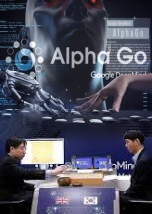
With more board configurations than there are atoms in the observable universe, the ancient Chinese game of 'Go' has long been considered a grand challenge for artificial intelligence. On March 9, 2016, the worlds of Go and AI collided in South Korea for an extraordinary best-of-five-game competition, coined the Google DeepMind Challenge Match. Hundreds of millions of people around the world watched as a legendary Go master took on an unproven AI challenger for the first time in history. AlphaGo chronicles a journey from the halls of Cambridge, through the backstreets of Bordeaux, past the coding terminals of DeepMind in London, and, ultimately, to the seven-day tournament in Seoul. As the drama unfolds, more questions emerge: What can artificial intelligence reveal about a 3000-year-old game? What can it teach us about human mind?




















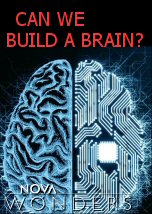







The world’s brightest computer programmers are trying to build brighter machines by reverse-engineering the brain and by inventing completely new kinds of computers, with exponentially greater speed and processing power. The documentary looks at how far we’ve come and where machines are headed as their software becomes ever more... cerebral. How close are we from a world in which computers take over—from diagnosing cancer to driving our cars to targeting weapons? If we place more and more of our lives under the control of these artificial brains, what are we putting at risk?