











Last Watched

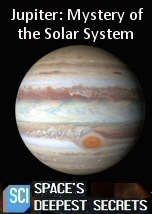
Jupiter: Mystery of the Solar System

   2020    Science    HD
Jupiter is a turbulent world of monster magnetic fields and endless mega storms. Generations of astronomers have attempted to solve the mysteries of Jupiter, the most fierce and extreme planet in the Solar System. And now, NASA's Juno probe is revealing new evidence that could unlock the secrets of why this planet is so strange. With Juno, we're able to see Jupiter from the inside out and reach deep into its core to reveal how it grew.
Series: Space Deepest Secrets
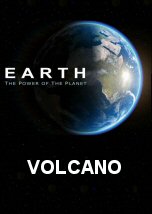

Volcano

   2007    Nature
Volcanoes are one of nature’s most awesome and destructive forces, but they are also the life force and architect of our planet. They can raise up great mountains and create new land, or they can level cities and destroy entire civilizations. They provide a glimpse of the power of Earth’s internal heat source, without which it would have become a dead planet millions of years ago. In this episode, Iain takes us on a journey to some of the most dramatic places on Earth, starting in Ethiopia.
Series: Earth, The Power of the Planet

Japan at War

       History
Japan's role in World War II gets a whole new perspective in this consisting entirely of full colour footage, including colour films from Japan that were recently discovered. As the visuals of the world war take on a new vivid immediateness, the story of the rise of the militarists in Japan is told through the personal writings of the Japanese themselves. From the first overconfident tastes of victory, to the devastating losses that led to an unthinkable defeat amidst the ruins, the Pacific Theater of World War II is told through the Japanese's eyes.

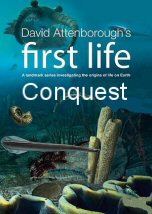
Conquest

   2010    Science
Attenborough's journey continues in Canada's Rocky Mountains, where fossils document an explosion in animal diversity never seen before or since. Travelling from there to North Africa, the rainforests of Australia and the east coast of Scotland, Attenborough discovers how animals evolved to conquer not only the oceans but also the land and air. These remote and fascinating creatures are brought to life as never before with the help of cutting-edge scientific technology and photorealistic visual effects. From the first large predators to the first legs on land, these were creatures that evolved the traits and tools that allow all animals, including ourselves, to survive to this day.
Series: First Life

Oceans

   2021    Nature
Oceans are the largest ecosystem on earth, covering two thirds of our world’s surface and providing half the oxygen in our atmosphere. They are home to as much as 80 per cent of all life on earth, and nearly three billion people rely on them for their primary source of food.
But our planet’s oceans would be little more than stagnant wastelands, and life on planet earth would cease to exist, were it not for one simple factor: a global network of powerful ocean currents. Every drop of seawater on earth rides these currents, taking 1,000 years to complete a single circuit. Without the constant mixing of currents, tides and waves, our oceans would stop supporting life - and a healthy ocean is vital to a healthy planet.
Series: A Perfect Planet

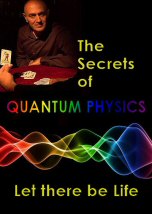
Let there be Life

   2014    Science
Professor of physics Jim Al-Khalili investigates the most accurate and yet perplexing scientific theory ever - quantum physics, the perplexing theory of sub-atomic particles. Turning his attention to the world of nature, can quantum mechanics explain the greatest mysteries in biology? The European robin navigates using one of the most bizarre effects in physics - quantum entanglement, a process which seems to defy common sense. Jim finds that even the most personal of human experiences - our sense of smell - is touched by ethereal quantum vibrations. According to new experiments it seems that our quantum noses are listening to smells. Jim discovers that the most famous law of quantum physics - the uncertainty principle - is obeyed by plants and trees as they capture sunlight during the vital process of photosynthesis. Jim wonders if the strange laws of the sub-atomic world, which allow objects to tunnel through impassable barriers in defiance of common sense, could effect the mechanism by which living species evolve?
Series: The Secrets of Quantum Physics