



Last Watched

Dont Grow Old

   2010    Medicine
For centuries scientists have been attempting to come up with an elixir of youth. Now remarkable discoveries are suggesting that ageing is something flexible that can ultimately be manipulated. The scientists are attempting to piece together why we age and more vitally for all of us, what we can do to prevent it. But which theory will prevail? Does the real key to controlling how we age lie with a five-year-old boy with an extraordinary ageing disease or with a self-experimenting Harvard professor? Could one of these breakthroughs really see our lives extend past 120 years?
Vice: Killer Kids

   2013    Culture
Follows Vice journalists Shane Smith, Ryan Duffy and Suroosh Alvi as they go to different parts of the world telling us surprising and shocking stories. In Afghanistan, the Taliban has ramped up its use of children in suicide bombing terrorist attacks. Ranging from teenagers to children as young as six years old, they are routinely manipulated and lied to as they are sent to blow up their targets. The Philippines are the most dangerous place in the world to run for office, as politicians are routinely killed by their rivals.
Series: Vice

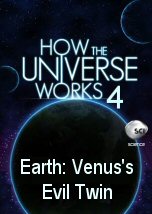
Earth: Venus Evil Twin

   2015    Science
There is a hellish planet in our solar system; covered in thick dense clouds and roasted by colossal temperatures. It will be inevitable that the Earth will someday not only be like Venus, but actually put it to shame. A billion years from now, Earth's oceans will boil off, triggering a runaway greenhouse effect, and the temperature will be so high, its all surface will melt. In the distance future, Earth could be the evil twin of Venus. To understand how our world will be destroyed we need to look at what happened to Venus.
Series: How the Universe Works Season 4

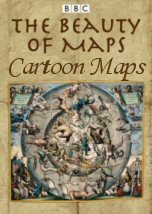
Cartoon Maps

   2010    Culture
The series concludes by delving into the world of satirical maps. How did maps take on a new form, not as geographical tools, but as devices for humour, satire or storytelling? Graphic Artist Fred Rose perfectly captured the public mood in 1880 with his General Election maps featuring Gladstone and Disraeli, using the maps to comment upon crucial election issues still familiar to us today. Technology was on the satirist's side with the advent of high-speed printing allowing for larger runs at lower cost. In 1877, when Rose produced his 'Serio Comic Map of Europe at War', maps began to take on a new direction and form, reflecting a changing world. Rose's map exploited these possibilities to the full using a combination of creatures and human figures to represent each European nation. The personification of Russia as a grotesque-looking octopus, extending its tentacles around the surrounding nations, perfectly symbolised the threat the country posed to its neighbours.
Series: The Beauty of Maps

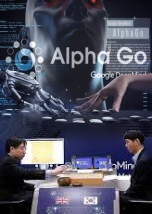
AlphaGo

   2017    Technology
With more board configurations than there are atoms in the observable universe, the ancient Chinese game of 'Go' has long been considered a grand challenge for artificial intelligence. On March 9, 2016, the worlds of Go and AI collided in South Korea for an extraordinary best-of-five-game competition, coined the Google DeepMind Challenge Match. Hundreds of millions of people around the world watched as a legendary Go master took on an unproven AI challenger for the first time in history.
AlphaGo chronicles a journey from the halls of Cambridge, through the backstreets of Bordeaux, past the coding terminals of DeepMind in London, and, ultimately, to the seven-day tournament in Seoul. As the drama unfolds, more questions emerge: What can artificial intelligence reveal about a 3000-year-old game? What can it teach us about human mind?

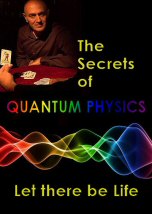
Let there be Life

   2014    Science
Professor of physics Jim Al-Khalili investigates the most accurate and yet perplexing scientific theory ever - quantum physics, the perplexing theory of sub-atomic particles. Turning his attention to the world of nature, can quantum mechanics explain the greatest mysteries in biology? The European robin navigates using one of the most bizarre effects in physics - quantum entanglement, a process which seems to defy common sense. Jim finds that even the most personal of human experiences - our sense of smell - is touched by ethereal quantum vibrations. According to new experiments it seems that our quantum noses are listening to smells. Jim discovers that the most famous law of quantum physics - the uncertainty principle - is obeyed by plants and trees as they capture sunlight during the vital process of photosynthesis. Jim wonders if the strange laws of the sub-atomic world, which allow objects to tunnel through impassable barriers in defiance of common sense, could effect the mechanism by which living species evolve?
Series: The Secrets of Quantum Physics