Episode three explores the mind of one of the most fanatical of all Nazis and the insight that gives into the psychology of dictatorship. Hess is brought to Nuremberg from the UK where he had flown 4 years earlier much to the bemusement of the British. Overy explains that they must have quickly realised he was not normal. In the intervening time Hess’s mental state has further deteriorated and when interviewed by Chief Interrogator Colonel John Amen proclaims amnesia. Chief Interpreter Richard Sonnenfeldt explains that they brought in Göring to confront Hess but that he too failed to make an impression. Psychopathologist Prof. Edgar Jones proposes Hess’s behaviour patterns may be his way of escaping reality as he is forced to face the extent of the atrocities and choose between accepting his part of the blame or forsaking his Führer. However, as history Professor Robert Gellatel explains it is difficult to construct a case against Hess as he was imprisoned in England when the worst of the atrocities were carried out so British Prosecutor Mervyn Griffith-Jones must argue a conspiracy charge linking the pre-1939 persecutions to the post-1939 atrocities and a crimes against peace charge proving the flight to Scotland was merely a ruse.
Grasslands cover one quarter of all land and support the vast gatherings of wildlife, but to survive here animals must endure the most hostile seasonal changes on the planet. From Asia's bizarre-looking Saiga antelope to the giant anteaters of Brazil, grassland animals have adapted in extraordinary ways to cope with these extremes. In the flooded Okavango, lions take on formidable buffalo in epic battles, on the savannah bee-eaters take advantage of elephants to help catch insects and, on the freezing northern tundra, caribou embark on great migrations shadowed by hungry Arctic wolves.
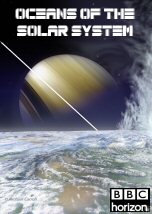
The oceans define the earth. They are crucial to life and we used to think that they were unique to our blue planet. But we were wrong. It has recently been discovered that there are oceans all over our solar system, and they are very similar to our own. And now scientists are going on an epic journey in search of new life in places that never seemed possible. Nasa is even planning to dive to the depths of a strange, distant ocean in a remarkable submarine. Discover that the hunt for oceans in space is marking the dawn of a new era in the search for alien life.
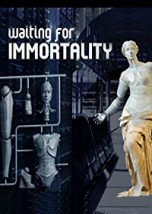
Eternal life is humanity’s oldest dream. It may be finally coming true. Today, at least in the West, the quest for immortality has shifted from the metaphysical to the technical and the scientific. In this film we will investigate the advancement of this research in laboratories around the world. With cryonics technology improving, human cloning now possible, mind uploading and digital brain simulation thriving, reversing the aging of cells and organs feasible, immortality may seem right around the corner.
In some countries, such as the US, Russia and Europe, private companies are financing and promoting the promise of immortality or at least a longer life expectancy. Are they selling a reality or utopia? We will meet scientists, neurophysiologists, computer specialists, geneticists, and biologists, and also hopefuls of immortal life, futurists, sociologists and businessmen. We will film different research laboratories and cities built for the aging; we will interview the experts as well as the anonymous men and women who speak about their relationship with life and death and those who simply embody it.
In a world where nothing seems to ever work out as you had hoped, The Rehearsal features Nathan Fielder helping ordinary people rehearse difficult conversations or life events through the use of sets and actors hired to recreate real situations. The situations can be trivial, like confessing to a lie about educational history, or more complex, like raising a child. Fielder commissions extravagant sets with every detail recreated. He hires actors to inhabit these sets and practice different dialogue trees with his clients dozens of times. Information used to train the actors and build the sets is often collected without the subjects' knowledge. In the firs episode, Nathan Fielder helps Kor Skeete, a Brooklyn-based trivia aficionado who wants to confess to his bar trivia team that he lied about having a master's degree. Nathan reveals an elaborate method of rehearsals involving an actor (K. Todd Freeman) playing a 'fake Kor'. To help Kor rehearse the difficult conversation with his teammate Tricia to clean this long-held lie, Nathan creates simulations of trivia night with a fake Tricia in a full-scale replica of the Alligator Lounge, a Brooklyn bar. Kor overcomes his fears and makes his confession to the real Tricia.
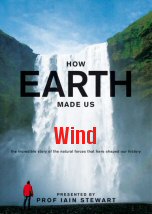
Iain sets sail on one of the fastest racing boats ever built to explore the story of our turbulent relationship with the wind. Travelling to iconic locations including the Sahara desert, the coast of West Africa and the South Pacific, Iain discovers how people have exploited the power of the wind for thousands of years. The wind is a force which at first sight appears chaotic. But the patterns that lie within the atmosphere have shaped the destiny of continents, and lie at the heart of some of the greatest turning points in human history.
























Psychopathologist Prof. Edgar Jones proposes Hess’s behaviour patterns may be his way of escaping reality as he is forced to face the extent of the atrocities and choose between accepting his part of the blame or forsaking his Führer. However, as history Professor Robert Gellatel explains it is difficult to construct a case against Hess as he was imprisoned in England when the worst of the atrocities were carried out so British Prosecutor Mervyn Griffith-Jones must argue a conspiracy charge linking the pre-1939 persecutions to the post-1939 atrocities and a crimes against peace charge proving the flight to Scotland was merely a ruse.