Last Watched

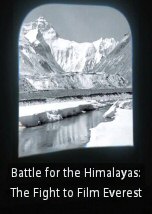
Battle for the Himalayas: The Fight to Film Everest

   2015    History
Between the 1920s and the 1960s the world's great powers sent vast military-style expeditions to conquer the peaks of the Himalayas, with Everest at their head. This was a great game played - camera in hand - by Imperial Britain, Nazi Germany and superpower America. As a result, Himalayan mountaineering's most iconic, epic and tragic moments didn't just go down in history, but were caught on film - from the deaths of Mallory and Irvine on Everest in 1924, to Everest's final conquest in 1953 by Hillary and Tensing. Using footage never before seen on British television, this is the story how of how film-makers turned the great peaks into great propaganda.

Orange Juice no Pulp

   2022    Culture
In a world where nothing seems to ever work out as you had hoped, The Rehearsal features Nathan Fielder helping ordinary people rehearse difficult conversations or life events through the use of sets and actors hired to recreate real situations. The situations can be trivial, like confessing to a lie about educational history, or more complex, like raising a child. Fielder commissions extravagant sets with every detail recreated. He hires actors to inhabit these sets and practice different dialogue trees with his clients dozens of times. Information used to train the actors and build the sets is often collected without the subjects' knowledge.
In the firs episode, Nathan Fielder helps Kor Skeete, a Brooklyn-based trivia aficionado who wants to confess to his bar trivia team that he lied about having a master's degree. Nathan reveals an elaborate method of rehearsals involving an actor (K. Todd Freeman) playing a 'fake Kor'. To help Kor rehearse the difficult conversation with his teammate Tricia to clean this long-held lie, Nathan creates simulations of trivia night with a fake Tricia in a full-scale replica of the Alligator Lounge, a Brooklyn bar. Kor overcomes his fears and makes his confession to the real Tricia.
Series: The Rehearsal

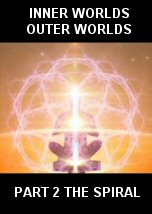
The Spiral

   2012    Science
The Pythagorian philosopher Plato hinted enigmatically that there was a golden key that unified all of the mysteries of the universe. It is this golden key that we will return to time and again throughout our exploration. The golden key is the intelligence of the logos, the source of the primordial om. One could say that it is the mind of God. With our limited senses we are observing only the outer manifestation of the hidden mechanics of self similarity. The source of this divine symmetry is the greatest mystery of our existence.
Series: Inner Worlds Outer Worlds

Look Who is Driving

   2019    Technology
After years of anticipation, autonomous vehicles are now being tested on public roads around the world. As ambitious innovators race to develop what they see as the next high-tech pot of gold, some experts warn there are still daunting challenges ahead, including how to train artificial intelligence to be better than humans at making life-and-death decisions.
How do self-driving cars work? How close are we to large-scale deployment of them? And will we ever be able to trust AI with our lives?

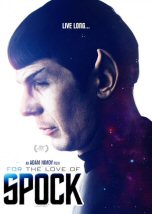
For the Love of Spock

   2016    History
Last year, just before Thanksgiving, I approached my dad, Leonard Nimoy, about the possibility of working together on a film about Mr. Spock. I had skimmed through some of the books on the making of Star Trek and felt there was so much more to explore about the creation and development of Mr. Spock. And the timing seemed right, as the 50th anniversary of Star Trek the original series was not that far away. Dad agreed that now was the right time, and that he was 100% committed to collaborating with me on this project. He also reminded me that we were (then) just days away from the 50th anniversary of the start of production on 'The Cage,' the original pilot for Star Trek in which dad first appeared as Mr. Spock.

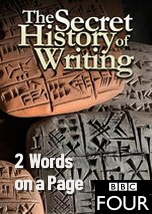
Words on a Page

   2020    History
Writing itself is 5,000 years old, and for most of that time words were written by hand using a variety of tools. The Romans were able to run an empire thanks to documents written on papyrus. Scroll books could be made quite cheaply and, as a result, ancient Rome had a thriving written culture. With the fall of the Roman Empire, papyrus became more difficult to obtain. Europeans were forced to turn to a much more expensive surface on which to write: Parchment. Medieval handwritten books could cost as much as a house, they also represent a limitation on literacy and scholarship.
No such limitations were felt in China, where paper had been invented in the second century. Paper was the foundation of Chinese culture and power, and for centuries how to make it was kept secret. When the secret was out, paper mills soon sprang up across central Asia. The result was an intellectual flourishing known as the Islamic Golden Age. Muslim scholars made discoveries in biology, geology, astronomy and mathematics. By contrast, Europe was an intellectual backwater.
That changed with Gutenberg’s development of movable type printing. The letters of the Latin alphabet have very simple block-like shapes, which made it relatively simple to turn them into type pieces. When printers tried to use movable type to print Arabic texts, they found themselves hampered by the cursive nature of Arabic writing. The success of movable type printing in Europe led to a thousand-fold increase in the availability of information, which produced an explosion of ideas that led directly to the European Scientific Revolution and the Industrial Revolution that followed.
Series: The Secret History of Writing
Ancient Apocalypse

Ancient Apocalypse

2024  History
Formula 1 Season four

Formula 1 Season four

2022  Culture
Absolute Zero

Absolute Zero

2007  Technology
Wild Russia

Wild Russia

2009  Nature
Prehistoric Planet

Prehistoric Planet

2022  Science
Planet Earth

Planet Earth

2007  Nature
Life In Cold Blood

Life In Cold Blood

2008  Nature