

Last Watched

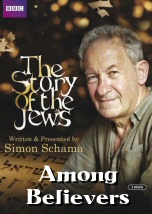
Among Believers

   2013    History
With optional Hebrew subtitles. The story of medieval Jews struggling to preserve their identity--and sometimes their lives--under the rule of Christianity and Islam. Whether labelled 'Christ-killers' by the Christians or 'dhimmi' (non-Muslim citizens of an Islamic community) by the Muslims, diaspora Jews built new lives and invented new ways of being Jewish in exile in the face of discrimination, blood-libels and persecution interspersed with periods of tolerance, protection and peaceful co-existence. Drawing on some of the documents they left behind, this episode offers a vivid portrait of Jewish bankers, merchants, doctors, poets and artists flourishing in Lincoln, Cordoba, Venice and Cairo and tells the story of their mass expulsion from Spain in 1492.
Series: The Story of the Jews
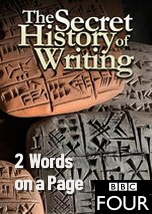
Words on a Page

   2020    History
Writing itself is 5,000 years old, and for most of that time words were written by hand using a variety of tools. The Romans were able to run an empire thanks to documents written on papyrus. Scroll books could be made quite cheaply and, as a result, ancient Rome had a thriving written culture. With the fall of the Roman Empire, papyrus became more difficult to obtain. Europeans were forced to turn to a much more expensive surface on which to write: Parchment. Medieval handwritten books could cost as much as a house, they also represent a limitation on literacy and scholarship.
No such limitations were felt in China, where paper had been invented in the second century. Paper was the foundation of Chinese culture and power, and for centuries how to make it was kept secret. When the secret was out, paper mills soon sprang up across central Asia. The result was an intellectual flourishing known as the Islamic Golden Age. Muslim scholars made discoveries in biology, geology, astronomy and mathematics. By contrast, Europe was an intellectual backwater.
That changed with Gutenberg’s development of movable type printing. The letters of the Latin alphabet have very simple block-like shapes, which made it relatively simple to turn them into type pieces. When printers tried to use movable type to print Arabic texts, they found themselves hampered by the cursive nature of Arabic writing. The success of movable type printing in Europe led to a thousand-fold increase in the availability of information, which produced an explosion of ideas that led directly to the European Scientific Revolution and the Industrial Revolution that followed.
Series: The Secret History of Writing

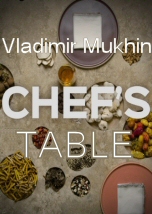
Vladimir Mukhin

   2017    Art
A powerful depiction of Vladimir Mukhin's struggle to resuscitate an almost forgotten russian cuisine, going against the established tradition. Be prepared for stunning images of culinary creations at White Rabbit, some will leave you uneased.
A fifth-generation chef, Mukhin worked in his father’s kitchen as a young man, preparing Soviet-era classics. So, like generations of youths before him, Mukhin had to rebel against the old man. He left his small hometown of Essentuki for Moscow and became obsessed with modern techniques and food from across Europe. It wasn’t until he worked as a sous chef in France, when he collaborated on a menu with chef Christian Etienne, that Mukhin realized Russian cuisine could exist within modern cooking. 'His French clients who ate it were amazed,' he says. ¡They loved his Russian cooking.'
Series: Chef's Table

Misunderstood Predators

   2017    Nature    HD
Discover our extraordinary world through a stunning cinematic experience— -following the journeys of acclaimed photographers pursuing their personal projects. Their aim: changing people's perceptions through art. From the art of sacred nature, to the demons of the deep and the juxtaposition of life and death. Over the years Eric Cheng has dived with the planet's most magnificent creatures. Now he is determined to use his photography to tell the true story of the most misrepresented and demonised species.
Series: Tales by Light Season 2

Battle for the Himalayas: The Fight to Film Everest

   2015    History
Between the 1920s and the 1960s the world's great powers sent vast military-style expeditions to conquer the peaks of the Himalayas, with Everest at their head. This was a great game played - camera in hand - by Imperial Britain, Nazi Germany and superpower America. As a result, Himalayan mountaineering's most iconic, epic and tragic moments didn't just go down in history, but were caught on film - from the deaths of Mallory and Irvine on Everest in 1924, to Everest's final conquest in 1953 by Hillary and Tensing. Using footage never before seen on British television, this is the story how of how film-makers turned the great peaks into great propaganda.

Pan(dem)icking

   2021    Nature
As Covid-19 puts Britain on lockdown, Jeremy Clarkson suddenly finds that his biggest worries aren’t all related to the upcoming lambing season. 'If you're involved in food production, you are key worker. We're gonna save the nation!... I've smoked a million cigarettes and I've had pneumonia. If I get it , there's not a lot of hope... Am I panic buying? I bought five tins of sardines the other day'.
Series: Clarkson Farm