




Last Watched

The Grasslands

   2011    Culture
Grasslands feed the world. Over thousands of years, we humans have learned to grow grains on the grasslands and domesticate the creatures that live there. Our success has propelled our population to almost seven billion people. But this episode reveals that, even today, life in the 'Garden of Eden' isn't always rosy. We walk with the Dorobo people of Kenya as they bravely attempt to scare off a pride of hungry lions from their freshly caught kill. We gallop across the Steppe with extraordinary Mongolian horsemen who were 'born in the saddle'. And in a perfect partnership with nature built up over generations Maasai children must literally talk to the birds! The honeyguide leads them to find sweet treats, but they'll have to repay the favour.
Series: Human Planet
Return to the Moon

   2019    Technology    HD
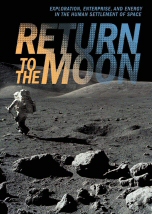
The Apollo equipment has sat abandoned on the lunar surface for over 40 years. Now there is a renewed excitement and drive to return to the moon. This time, not to just plant a flag, but to colonize. How would we accomplish this? And why would we do it?
The race is on to colonize the Moon, to uncover its hidden riches and discover if humanity can really survive on another world. The Moon is our gateway to our solar system, it's the stepping stone we have to become a multi-planetary species.

Music by John Williams

   2024    Art    HD
The film takes viewers on an enchanting journey through the life and legendary career of one of cinema's greatest composers. Directed by John Williams' longtime friend Laurent Bouzereau, it delves deeply into the music that has defined iconic film franchises like “Star Wars”, “Jurassic Park”, and “Harry Potter”. Featuring interviews with esteemed artists and filmmakers profoundly influenced by Williams' timeless compositions, the film explores his extraordinary ability to bring emotion, depth, and grandeur to the screen through his symphonic genius. Archival footage and behind-the-scenes moments illustrate how his unforgettable scores became integral to the movies, revealing just how vital his contributions have been to modern cinema.
This intimate tribute captures Williams’ journey from jazz pianist to cultural icon, showcasing the groundbreaking impact of his classical compositions in Hollywood and beyond. From his collaborative masterpieces with Steven Spielberg and George Lucas to his unique approach of composing by hand, "Music By John Williams" highlights the relentless passion and meticulous craft that have defined his career. Personal stories from colleagues, friends, and family, along with moments of Williams conducting before adoring fans, paint a vivid portrait of a man who has shaped our cinematic experiences for over half a century. For anyone captivated by the power of music in film, this documentary is an inspiring and nostalgic celebration of an unparalleled legacy.

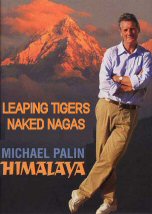
Leaping Tigers Naked Nagas

   2004    Culture
Following the Yangtze along Tiger Leaping Gorge into Yunnan in China, Palin reaches the easternmost end of the Himalayas. He gets a medical check-up before exploring medieval Lijiang with the director of the local orchestra. Heading over Myanmar to Nagaland in India he rides the steam train to Tipong Coalmine. In Assam he rides an elephant and then stays in a strange monastery.
Series: Himalaya with Michael Palin

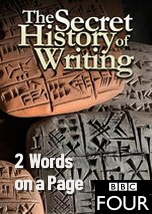
Words on a Page

   2020    History
Writing itself is 5,000 years old, and for most of that time words were written by hand using a variety of tools. The Romans were able to run an empire thanks to documents written on papyrus. Scroll books could be made quite cheaply and, as a result, ancient Rome had a thriving written culture. With the fall of the Roman Empire, papyrus became more difficult to obtain. Europeans were forced to turn to a much more expensive surface on which to write: Parchment. Medieval handwritten books could cost as much as a house, they also represent a limitation on literacy and scholarship.
No such limitations were felt in China, where paper had been invented in the second century. Paper was the foundation of Chinese culture and power, and for centuries how to make it was kept secret. When the secret was out, paper mills soon sprang up across central Asia. The result was an intellectual flourishing known as the Islamic Golden Age. Muslim scholars made discoveries in biology, geology, astronomy and mathematics. By contrast, Europe was an intellectual backwater.
That changed with Gutenberg’s development of movable type printing. The letters of the Latin alphabet have very simple block-like shapes, which made it relatively simple to turn them into type pieces. When printers tried to use movable type to print Arabic texts, they found themselves hampered by the cursive nature of Arabic writing. The success of movable type printing in Europe led to a thousand-fold increase in the availability of information, which produced an explosion of ideas that led directly to the European Scientific Revolution and the Industrial Revolution that followed.
Series: The Secret History of Writing

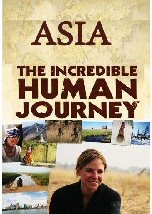
The Incredible Human Journey: Asia

   2009    History
The journey continues into Asia, the world's greatest land mass, in a quest to discover how early hunter-gatherers managed to survive in one of the most inhospitable places on earth - the Arctic region of Northern Siberia. Alice also explores what may have occurred during human migration to produce Chinese physical characteristics, and considers a controversial claim about Chinese evolution: that the Chinese do not share the same African ancestry as other peoples.
Series: The Incredible Human Journey
Planet Earth

Planet Earth

2007  Nature
Zeitgeist

Zeitgeist

2007  Culture
Rafa

Rafa

2026  History
The Story of India

The Story of India

2007  History
Vikings Season 2

Vikings Season 2

2014  History
Trainwreck

Trainwreck

2025  History